 Ferndale
 Roof Repair Built Around Everson's Weather, Not a National Playbook
Everson sits in the part of Whatcom County where marine moisture off the Sound and cold air funneling down from the foothills meet, and that combination is hard on roofs. Homes here deal with driving, wind-pushed rain that finds its way under loose or lifted shingles, long stretches of damp, low-sun weather that keeps moss and algae growing for most of the year, and freeze-thaw swings in winter that can widen small cracks into real leaks. A roof repair that works in a drier climate often doesn't hold up here, because it doesn't account for how long a roof stays wet and how much biological growth it has to shed.
We work on roofs in and around Ferndale and Everson regularly, which means we're not guessing at how a Whatcom County roof ages. We see the same failure points repeat: north-facing slopes that never fully dry out, valleys that collect needles and moss, and flashing around chimneys and vents that was sealed with caulk instead of properly integrated metal work. Good repair work here starts with understanding those patterns, not just patching the spot that's currently dripping.
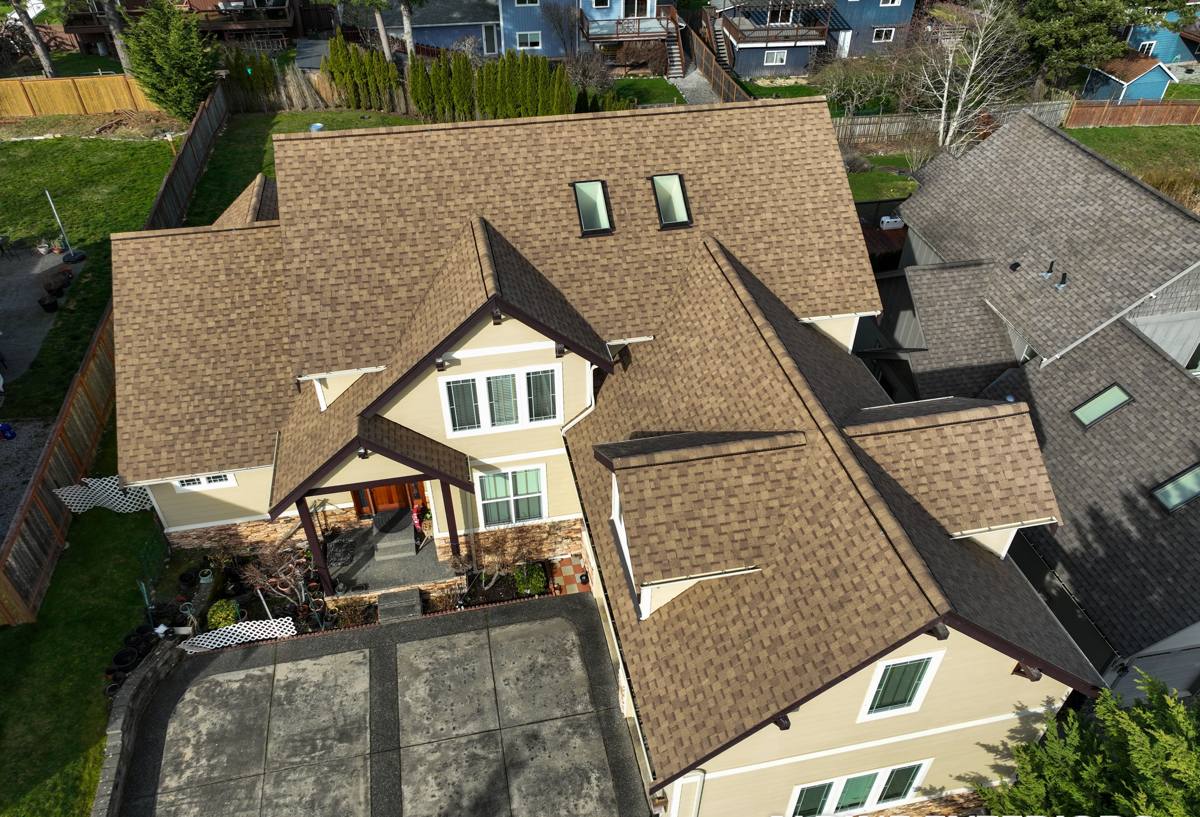
Signs an Everson Roof Needs Repair Now, Not Later
Roof problems in this climate rarely announce themselves with a dramatic leak on day one. They show up as small, easy-to-ignore signs that get more expensive the longer they sit. If you're seeing any of the following, it's worth having a roof looked at before the next big rain event:
- Dark streaking or thick moss growth, especially on shaded or north-facing slopes
- Granules collecting in gutters or at downspout outlets
- Shingles that look curled, cupped, or lifted at the edges
- Soft or discolored spots on ceilings or in the attic after a hard rain
- Daylight visible through the roof deck from inside the attic
- Rust staining or gaps around flashing at chimneys, vents, or skylights
- Sagging along a ridge line or in a valley
Any one of these on its own might be minor. Several together, or one that's been ignored for a season or two, usually means water has already gotten past the surface layer and into the underlayment or decking.
Why Small Leaks Turn Into Big Repairs Here
In a drier region, a small roof leak might sit for months without doing much damage. In Whatcom County, sustained dampness means wood framing and decking stay wet longer, which invites rot and can lead to soft decking that needs to be replaced rather than just resealed. Catching a leak early is almost always the difference between a targeted repair and a much larger tear-off.
What a Correct Roof Repair Actually Involves
A proper repair isn't just sealing the visible gap. It means finding where water is actually entering — which is sometimes several feet from where it shows up inside — and rebuilding that section so it sheds water the way the rest of the roof does. That typically includes:
- Removing damaged or compromised roofing material back to solid, dry decking
- Checking the decking itself for soft spots or rot and replacing any that's compromised
- Installing new underlayment in the repaired section, tied properly into the surrounding material
- Replacing or re-integrating flashing at any nearby penetrations, valleys, or wall transitions
- Matching new shingles or roofing material as closely as possible to the existing roof
- Clearing moss and debris from the surrounding area so the repair isn't immediately undermined by the same growth that caused the original problem
Skipping the flashing and underlayment steps to save time is one of the most common shortcuts in this trade, and it's also the reason a lot of "repaired" roofs leak again within a year or two. We treat flashing and underlayment as the part of the job that actually determines whether the repair lasts.
Roofing Materials We Commonly Work On in Everson
Most homes in this area are topped with one of a few material types, and each has different repair considerations once moss, moisture, and age are factored in.
| Material | Common Issue in This Climate | Repair Consideration |
|---|---|---|
| Composition (asphalt) shingles | Granule loss, curling, moss trapping moisture at the surface | Sun-matched replacement shingles, careful moss removal without damaging the mat |
| Cedar shake or shingle | Moss and moisture retention, splitting on aged shakes | Selective replacement of individual shakes, attention to ventilation underneath |
| Metal roofing | Fastener backout, sealant failure at seams and penetrations | Re-fastening and re-sealing with materials rated for long-term UV and moisture exposure |
| Low-slope / flat sections | Ponding water, membrane seams opening over time | Seam re-sealing or membrane patching matched to the existing roofing system |
If you're not sure what's on your roof or how old it is, that's a normal thing to not know — it's part of what we check during an inspection before recommending anything.
Our Roof Repair Process
1. Inspection First
We start by getting on the roof (weather permitting) and in the attic if there's access, tracing the leak or damage back to its actual source rather than just the spot where it's visible from inside.
2. A Straightforward Explanation
You'll get a plain explanation of what we found, what's causing it, and what it will take to fix — including whether it's a contained repair or a sign of broader wear that's worth planning around.
3. A Written Estimate
We put the scope and cost in writing before any work starts. No surprise add-ons once we're up there.
4. The Repair
We do the work to the standard described above — proper flashing, matched materials, and dry decking underneath — not just a surface patch.
5. Cleanup and a Final Check
We clear debris, check the surrounding area for anything else that could cause a future leak, and walk you through what was done.
Repair or Replace? How We Help You Decide
Not every damaged roof needs to come off. But there's a point where repeated repairs cost more over time than a replacement would, especially on a roof that's already near the end of its expected lifespan. A few honest factors we weigh with homeowners:
| Factor | Leans Toward Repair | Leans Toward Replacement |
|---|---|---|
| Roof age | Well within expected lifespan for the material | At or past typical service life for that material |
| Extent of damage | Isolated to one area or penetration | Spread across multiple slopes or recurring in different spots |
| Decking condition | Solid, dry decking found during inspection | Widespread soft spots or rot found under the surface |
| Repair history | First repair, or first in several years | Third or fourth repair in the same general area |
We'll always tell you honestly which side of that line your roof falls on. A repair that's likely to fail again within a year isn't a favor to anyone, and we'd rather say so upfront than have you call us back out in six months for the same leak.
Moss, Debris, and What Homeowners Can Do Between Visits
Given how much of the year Whatcom County spends damp, moss and organic debris are the biggest ongoing threat to a roof's lifespan here — more than any single storm. A few habits that make a real difference between professional inspections:
- Clear gutters and valleys of needles and leaves at least twice a year, more often under overhanging trees
- Have moss treated or removed before it builds up thick enough to hold water against the roofing material
- Trim back branches that keep a section of roof shaded and slow to dry
- Watch for granules building up in gutters, which signals surface wear
- Have the roof looked at after any major windstorm, even if nothing looks obviously wrong from the ground
None of this replaces a professional inspection, but it can meaningfully slow down the wear that leads to repairs in the first place.
Why a Crew That Already Works Everson Matters
Roofing crews that mostly work in drier parts of the state can miss things that are obvious to someone who works this climate every week — how far moss has to be cut back to actually stop regrowth, which flashing details fail first under sustained wind-driven rain, or which north-facing slopes on a given roof style never fully dry out. We're based near Ferndale and do this work throughout Whatcom County, including Everson, so we're not learning the local weather patterns on your roof. We show up knowing what usually causes the leak before we've even climbed the ladder, and we stand behind the repair because we're not driving in from out of the area to do it.
Get a Straightforward Look at Your Roof
If you're dealing with a leak, moss buildup, or damage from a recent storm, the fastest way to know what you're actually facing is to have it inspected. We offer free, no-pressure estimates for roof repair work in Everson and the surrounding Ferndale area — use the form below to get one scheduled.