 Ferndale
 Storm Season in Everson: What Whatcom County Weather Does to a Roof
Everson sits in the lowland stretch of Whatcom County, close enough to the Fraser Valley that homes here catch the outflow winds that funnel down through the Sumas Gap on top of the usual Pacific storm systems rolling in off the water. That combination — sustained wind events layered on months of driving rain — is harder on a roof than either one alone. Wind lifts and works shingle edges loose over repeated gusts, then the rain finds every place that's lifted, curled, or cracked and gets underneath.
Add in the long moss season that Whatcom County is known for — cool, damp, and shaded roof sections can stay wet for weeks at a stretch through fall and winter — and you get a slow, compounding problem. Moss holds moisture against the roofing material, works its way under shingle tabs, and can lift them enough that the next windstorm finishes the job. A roof that looked fine in August can have real storm damage by the time a January system blows through, because the damage from the wind is finding weak spots the moss already created.
None of this means every Everson roof is in trouble. It means storm damage repair here has to account for what actually caused the failure, not just patch the visible hole. A repair that ignores the moss, the wind exposure, or the moisture path underneath tends to fail again within a season or two.
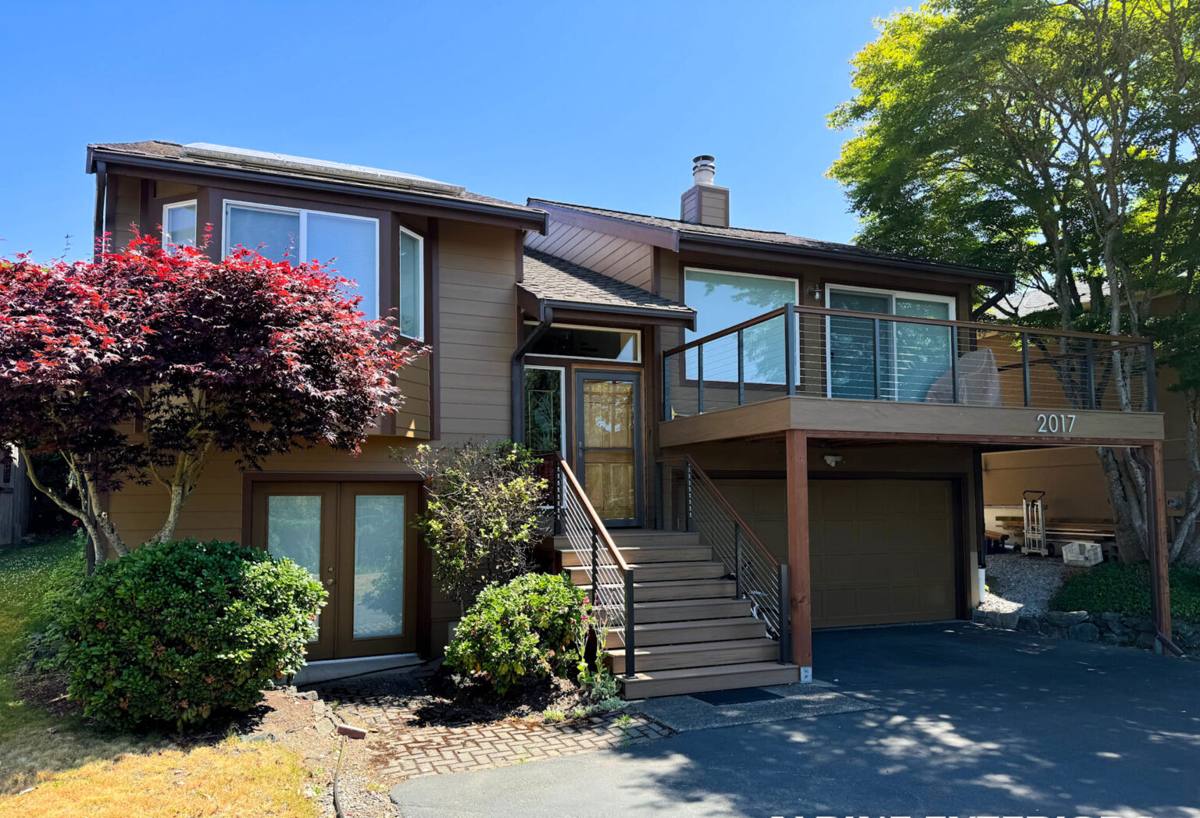
Signs Your Everson Home May Have Storm Damage
Storm damage isn't always an obvious hole or a missing shingle you can spot from the driveway. Some of the most costly damage is the kind that shows up as a stain on a ceiling weeks after the storm has passed, once water has had time to travel along the decking and find a gap in the drywall. After any significant wind or rain event, it's worth walking the property and checking for the following:
- Shingles that are cracked, curled at the edges, or missing outright, especially on the side of the roof that faces prevailing wind
- Granules collecting in gutters or at the base of downspouts — a sign the shingle surface has been abraded by wind-driven debris or hail
- Bent, lifted, or missing flashing around chimneys, vents, and skylights
- Soft spots or sagging when walking the attic, which can indicate decking that's already absorbing water
- New or spreading water stains on interior ceilings, especially near exterior walls or around any roof penetration
- Debris or tree limb strikes that punctured or crushed roofing material
- Gutters pulled loose from the fascia, which is often a sign of wind uplift on the roof edge itself
- Moss buildup concentrated on one section of roof, which tends to be where the next leak develops
If you see two or three of these together, it's worth having someone look at the roof from the inside as well as the outside before deciding whether it's a minor fix or something more involved.
What a Correct Storm Damage Repair Actually Involves
A storm damage repair that holds up through the next season does more than replace what's visibly broken. It follows a sequence, and skipping steps is usually why a "repaired" roof leaks again the following winter.
Stabilize First
If there's an active leak or exposed decking, the first job is stopping water intrusion — tarping, temporary flashing, or sealing an opening — before anything else happens. This isn't the fix; it's what keeps a bad situation from becoming a much more expensive one while the real repair is scheduled and, if needed, an insurance claim is documented.
Check What's Under the Shingles
Wind and water damage often extends past the shingle layer into the decking and underlayment underneath. Decking that's been wet for any length of time can delaminate or soften, and that has to be replaced — patching new shingles over compromised decking just hides the problem for a while. This is the step that separates a real repair from a cosmetic one.
Flashing and Underlayment
A large share of storm-related leaks trace back to flashing — around chimneys, vent pipes, skylights, and roof-to-wall transitions — rather than the field of the roof itself. Flashing that's been bent or worked loose by wind needs to be reset or replaced, not just resealed with caulk, which is a short-term patch at best in a climate this wet. Underlayment underneath the shingles is the roof's real waterproofing layer; if it's torn or compromised in the damaged area, it gets replaced along with the decking and shingles.
Matching Materials
Shingle color and profile shift slightly from one production run to the next, and older roofs may have weathered enough that a brand-new shingle stands out next to the surrounding field. We use materials that match as closely as possible in color and style, and we're upfront when an exact match isn't realistic — usually on older roofs — so there are no surprises once the repair is done.
Our Process, Start to Finish
For a storm damage call in Everson, the process is straightforward and we keep it that way on purpose:
- Assessment — We inspect the roof and, where accessible, the attic to trace the damage back to its actual cause, not just the visible symptom.
- Documentation — If you're filing an insurance claim, we document the damage with enough detail to support that claim, including how it aligns with the storm event.
- Temporary protection — If there's active exposure, we get it covered the same visit so the situation doesn't worsen while repair materials are sourced.
- Written scope — You get a clear explanation of what's damaged, what needs to be replaced versus repaired, and why, before any work begins.
- Repair — Decking, underlayment, flashing, and shingles are addressed in that order, matched to the surrounding roof as closely as the existing material allows.
- Cleanup and walkthrough — Site is cleared of debris and old material, and we walk the repair with you before calling the job done.
Repair vs. Full Replacement: What Drives the Decision
Not every storm-damaged roof needs to come off. The right call depends on how much of the roof is affected, how old it already is, and what's happening underneath the surface. These are the factors that typically decide it:
| Factor | Leans Toward Repair | Leans Toward Replacement |
|---|---|---|
| Age of existing roof | Under 10-12 years | Near or past expected shingle lifespan |
| Extent of damage | Localized to one section or slope | Spread across multiple slopes |
| Decking condition | Sound, dry beyond the damaged area | Soft, delaminated, or widespread moisture |
| Material availability | Close match available | Discontinued or badly weathered original material |
| Storm history | First significant damage event | Repeat damage in the same areas over multiple storms |
Roof age and condition beyond the immediate damage matter more than most homeowners expect. A 20-year-old roof that takes storm damage is often better served by replacement, since a repair on aging material tends to fail again sooner than the same repair on a newer roof.
Temporary Tarp vs. Proper Repair
After a storm, it's tempting to have someone tarp a damaged section and call it handled for the season. That's a reasonable short-term move, but it isn't a substitute for the actual repair, and the difference matters more in a climate like ours where the next system is rarely far off.
| Temporary Tarp | Proper Repair | |
|---|---|---|
| Stops active leaking | Usually, if installed correctly | Yes |
| Addresses decking damage | No | Yes |
| Holds up through winter storms | Weeks, not months | Built to the roof's normal lifespan |
| Prevents moss/moisture buildup underneath | No | Yes |
| Appropriate use | Stopgap until repair is scheduled | Final fix |
We'll tarp a roof to buy time when that's what a situation calls for, but we treat it as exactly that — a stopgap, not a repair, and we're clear with homeowners about which one they're getting and when the real work needs to happen.
Why It Matters That We Already Work in Everson
Storm damage repair is time-sensitive in a way a lot of exterior work isn't. A crew that's already working Whatcom County roofs regularly can usually get to a leaking roof faster than one traveling in from outside the area, and faster response matters when water is actively getting into decking and insulation. We also know what this county's storms typically do to a roof — where wind tends to concentrate damage on a given roof orientation, how the moss season here affects material choices, and what kind of flashing failures show up most often on homes exposed to Fraser Valley outflow winds. That's not something a crew unfamiliar with the area picks up on the first visit.
Being local also means we're around after the repair is done. If something doesn't perform the way it should through the next storm, we're not a phone number in another county — we're a crew that's still working in Everson and the rest of Whatcom County next month and next year.
Insurance and Documentation
Many storm damage repairs go through homeowners insurance, and the strength of that claim often comes down to documentation. We photograph and describe the damage in a way that ties it to the storm event, which helps if an adjuster is reviewing the claim. We're not an insurance company and we don't guarantee what a claim will or won't cover — that's between you and your carrier — but we can provide the kind of documentation and written scope that makes that conversation easier.
If a recent storm has left your Everson home with damage — or you're just not sure whether what you're seeing needs attention — we're happy to take a look and give you a straight answer. Reach out for a free, no-pressure estimate using the form below.