 Ferndale
 Window Installation Built for Everson's Weather, Not Just Any Weather
Everson sits inland from the coast but still gets the full brunt of what a Whatcom County winter and shoulder season can throw at a house: long stretches of driving rain, humid air moving up from the Puget Sound, and enough shade and moisture on north-facing walls to grow a healthy crop of moss on anything that holds still long enough. Windows take more abuse from this pattern than almost any other part of a home's exterior, because every window is a planned hole in the wall with seals, flashing, and trim that all have to keep working together for the house to stay dry.
A window that's a good fit for a dry climate can still fail here within a few years if it's installed without the right flashing and drainage details. That's the difference between a window installation that looks fine on day one and one that's still performing after a decade of Whatcom County winters.
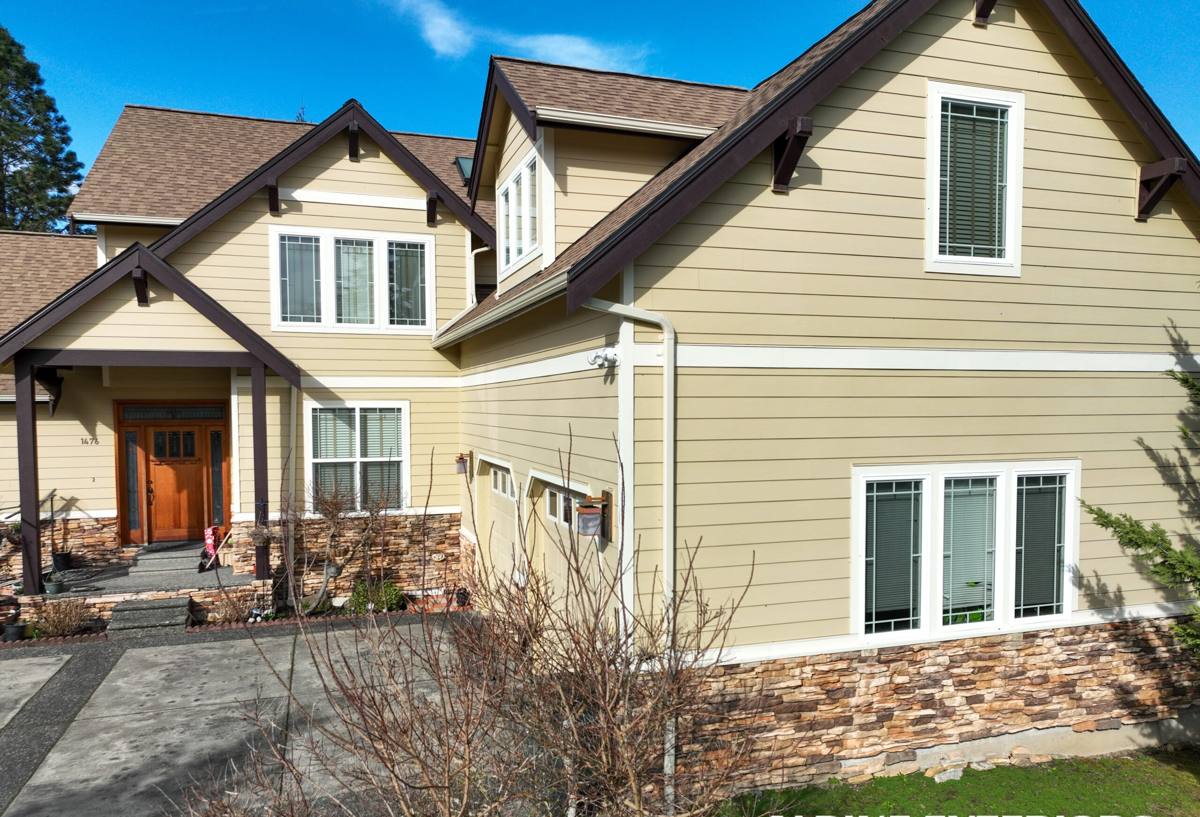
What Local Climate Does to Windows Over Time
Three things drive most of the window problems we see on Everson homes:
Driving Rain
Wind-driven rain doesn't just hit a window head-on — it gets pushed sideways and upward under sills and around trim. Without proper flashing and a drainage path, that water works its way behind the window frame and into the wall cavity, where it causes rot long before anyone notices a problem inside the house.
Sustained Moisture and Moss Season
Whatcom County's long wet season means wood trim, sills, and even some vinyl cladding stay damp for extended periods. Moss and algae take hold wherever water sits or drains slowly, and moss holds moisture against a surface rather than shedding it — which accelerates rot in wood components and can stain or degrade sealants over time.
Salt-Influenced Air
Proximity to Puget Sound means the air carries a mild salt content that can accelerate corrosion on lower-quality window hardware — hinges, locks, and cranks — and slowly degrade some finishes faster than they'd wear in a drier inland climate.
None of this means Everson homes need exotic materials. It means the installation details — flashing, sealant selection, drainage, and hardware quality — matter more here than they would in a milder, drier region.
Signs an Everson Home Needs New Windows or a Re-Install
- Fogging or condensation between the panes of a double-pane window — the seal has failed and the insulating gas is gone
- Soft or discolored wood trim around the window frame, especially on north- or west-facing walls
- Drafts you can feel near the window even when it's fully latched
- Windows that are difficult to open, close, or lock — often a sign the frame has swelled or shifted
- Visible gaps, cracked caulking, or peeling paint concentrated around the window perimeter
- Moss or dark staining building up on the sill or the siding directly below the window
- A noticeably higher heating bill compared to similar homes nearby, with no other obvious cause
Any one of these can be a minor fix. Several together usually mean the original installation — or the window itself — has reached the end of its useful life.
What a Correct Window Installation Actually Involves
Window installation gets treated as a simple swap far too often. Done right, it's a sequence of steps where skipping or rushing any one of them sets up a future leak:
- Remove the old window carefully, inspecting the rough opening and surrounding framing for hidden rot or moisture damage before anything new goes in.
- Repair any damaged framing or sheathing — installing a new window into a compromised opening just locks the problem behind new trim.
- Install house wrap and flashing in the correct shingled order — sill pan first, then side flashing, then head flashing — so water is always directed outward and downward, never trapped behind the window.
- Set the window plumb, level, and square, shimming as needed so the sash operates smoothly and the seals compress evenly all the way around.
- Insulate the gap between the frame and the rough opening without overpacking it, which can bow the frame and cause the window to bind.
- Seal and trim the exterior with materials rated for sustained moisture exposure, not just general-purpose caulk.
- Test operation and check for air infiltration before calling the job finished.
The sill pan and shingled flashing sequence in step three is the single most important part of the whole job for a Whatcom County home. It's also the step that's easiest to shortcut, and the one that causes the most expensive damage when it's skipped.
Our Window Installation Process for Everson Homeowners
We keep the process straightforward and honest from the first visit:
1. On-Site Assessment
We walk the exterior with you, look at each window in question, and check for signs of moisture intrusion around the openings — not just the glass itself.
2. Straight Talk on Options
We'll tell you which windows genuinely need replacement, which could be repaired, and which are fine as-is. We're not interested in selling a full-house replacement when a few units are the real problem.
3. Written Estimate
You get a clear, itemized estimate before any work starts — no surprise add-ons once the job is underway.
4. Installation
Old windows come out, framing gets inspected and repaired as needed, and new windows go in following the flashing and sealing sequence above — not a shortcut version of it.
5. Final Walkthrough
We test every window with you before we consider the job done, and we clean up the site fully.
Choosing Windows That Hold Up in Whatcom County
Material choice matters, but installation quality matters more — a premium window installed poorly will underperform a modest window installed correctly. That said, here's how the common options compare for a wet coastal climate like this one:
| Material | Moisture Performance | Maintenance | Typical Lifespan |
|---|---|---|---|
| Vinyl | Good — won't rot, minimal upkeep on the frame itself | Low — occasional cleaning | 20–30 years |
| Fiberglass | Very good — dimensionally stable in temperature and humidity swings | Low | 30–40 years |
| Wood (unclad) | Requires diligent upkeep in sustained wet climates | High — regular painting/sealing needed | Varies widely with maintenance |
| Wood-clad (vinyl or aluminum exterior) | Good — exterior shell protects the wood core from direct moisture | Moderate | 25–35 years |
For most Everson homes, vinyl or fiberglass frames offer the best balance of moisture resistance and low upkeep. Unclad wood windows can still be the right call for older or historic-style homes, but we're upfront that they require a real maintenance commitment in this climate — that's a trade-off worth going in with eyes open, not a reason to avoid wood altogether if you're willing to keep up with it.
What Affects the Cost of Window Installation
| Factor | Why It Matters |
|---|---|
| Window size and quantity | Larger openings and whole-house jobs scale cost accordingly |
| Frame material | Vinyl is typically the most budget-friendly; fiberglass and wood-clad cost more upfront |
| Condition of the rough opening | Hidden rot or framing damage adds repair time before the new window goes in |
| Glass package | Double vs. triple pane, and low-E coatings, affect both cost and energy performance |
| Access and window height | Second-story or hard-to-reach windows take more labor and equipment |
We give a broad ballpark on the phone if asked, but every real number comes from seeing the actual windows and openings in person — sight-unseen quotes on window work are a good way to get surprised later.
Why a Crew That Already Works in Everson Matters
Every region has its own version of "normal" weather stress on a home, and Whatcom County's version — sustained rain, moss growth, and salt-tinged air off the Sound — isn't the same as what a contractor coming from a drier inland region is used to accounting for. A crew that regularly works Everson and the surrounding Ferndale area already knows which details can't be shortcut here: sill pan flashing, drainage planes, and hardware that won't corrode prematurely. That local pattern recognition is worth more than a generic install checklist.
Before You Hire: A Quick Checklist
- Ask specifically how they handle sill pan flashing and drainage — a vague answer is a red flag
- Get a written, itemized estimate before work begins
- Confirm whether they inspect and repair rough framing as part of the job, not as a separate surprise charge
- Ask about the manufacturer's warranty terms and what voids them
- Check that they carry proper licensing and insurance for exterior work in Washington
- Ask how they handle old window and material disposal
If you're weighing whether your windows need attention, or you just want an honest read on what shape they're in, we're happy to take a look. Reach out for a free, no-pressure estimate using the form below.