 Ferndale
 Asphalt Shingle Roofing on a Bellingham Bay Hillside
Fairhaven sits where Bellingham rises up from Bellingham Bay, and that setting puts real, ongoing stress on a roof. It's an older neighborhood with a mix of housing ages, a fair amount of hillside terrain, and mature tree cover that keeps large sections of many roofs in shade for much of the year. We're based in Ferndale and work this stretch of Whatcom County regularly, and Fairhaven is one of the areas where we see roof problems show up earliest — not because the homes are poorly built, but because the location asks more of a roof than a typical inland property does.
This page is about one job specifically: asphalt shingle roofing on a Fairhaven home. What the local conditions actually do to a roof over time, what a correct install or replacement involves layer by layer, how we price and run the work, and what to look for before you hire anyone to put a new roof on a house this close to the water.
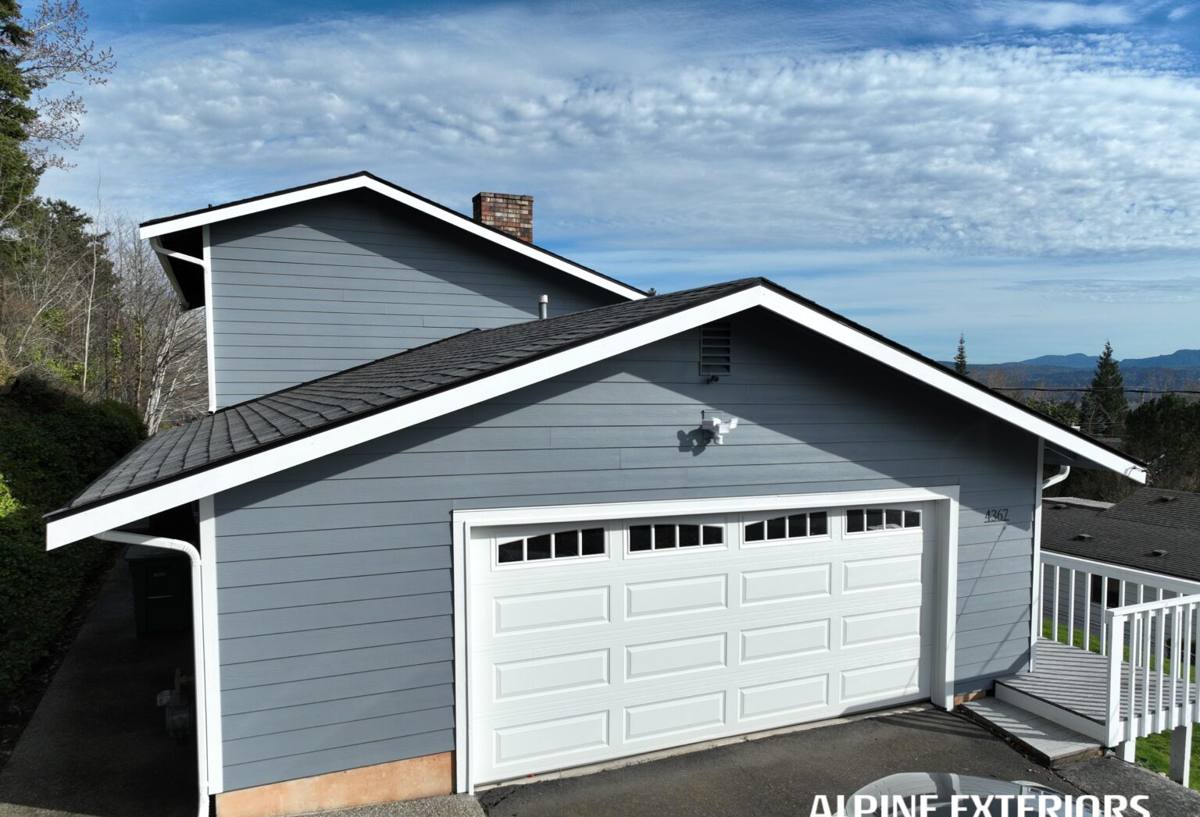
What Fairhaven's Location Actually Does to a Roof
Salt Air and Slow Corrosion
Air moving off Bellingham Bay carries a steady trace of salt, and that exposure works on exposed metal continuously, not just during storms. Drip edge, valley flashing, and fasteners that aren't rated for it corrode from the inside out over several years, well before any of it is visible from the ground. By the time rust staining shows up on a fascia board or a soffit, the metal underneath has usually been degrading for a while already.
Wind-Driven Rain Off the Water
Open water means less to slow wind down before it reaches the roofline, and rain here often arrives at an angle instead of falling straight down. That matters because wind-driven rain gets pushed up under shingle tabs and sideways through joints that a roof built for calmer weather was never really tested against. A roof system needs a real secondary water barrier underneath the shingles specifically because of this, not as extra insurance.
A Moss Season That Doesn't Let Go
Between the marine climate and Fairhaven's mature tree canopy, shaded and north-facing roof planes here can stay damp for most of the year. Moss doesn't need much time to establish itself once a surface holds moisture that long, and once it takes hold, it works its way under shingle tabs and lifts them, which is a mechanical problem, not just a cosmetic one.
What a Correct Install Requires Here
A roof going on a Fairhaven home has to be built as a system that accounts for all three of those pressures at once. That starts below the shingles, not with them.
Full Tear-Off and Deck Inspection
We remove the existing roofing down to bare decking rather than layering new shingles over old ones. That's the only way to catch rot or soft spots that moisture has been working on quietly underneath, especially on older Fairhaven roofs where a layover from years back may already be hiding damage. A layover install just seals whatever's already wrong under a new surface.
Underlayment and Ice-and-Water Protection
Synthetic or self-adhered underlayment gives the deck a real second line of defense, which earns its keep specifically on a roof exposed to wind-driven rain off open water. We add ice-and-water shield membrane at eaves, valleys, and other spots where water is most likely to find a way in, rather than treating that as an upgrade reserved for premium jobs.
Flashing at Valleys, Chimneys, and Roof-to-Wall Transitions
Most leaks we get called out for don't start in the open field of shingles — they start where two surfaces meet. Valleys, chimney penetrations, skylights, and the line where a roof meets a taller wall all need flashing that's integrated with the underlayment and properly lapped, not caulked as a patch after the shingles are already down.
Ventilation That Works With the Climate, Not Against It
Balanced intake and exhaust ventilation keeps the underside of the deck dry, which matters twice over here: it protects the wood itself, and it removes one of the moisture sources that lets moss take hold from below as well as above. A roof can look sound from the street and still be losing years off its life to poor attic airflow nobody's checked.
Choosing a Shingle for This Kind of Roof
| Shingle Type | Wind Rating | How It Holds Up in Fairhaven's Conditions |
|---|---|---|
| 3-Tab Shingles | Lower | Thinner profile lifts more easily under wind off the water; the lowest upfront cost but the shortest realistic lifespan here |
| Architectural (Laminated) Shingles | Moderate to high, depending on line | Heavier, multi-layer construction resists wind uplift and holds granules longer; the standard choice we recommend for most Fairhaven roofs |
| Algae-Resistant / Premium Shingles | High | Copper or zinc-infused granules slow moss and algae growth on shaded slopes, worth the upcharge on heavily treed lots |
For most homes in this neighborhood, an architectural shingle with algae-resistant granules is the practical sweet spot: it holds up to wind off the bay and resists the moss growth that shaded Fairhaven roofs deal with more than most. Whether it's worth going a step further usually depends on how much of the roof sits under tree cover and how long you plan to own the home.
What Actually Drives the Cost
| Cost Factor | Why It Moves the Price |
|---|---|
| Tear-off vs. layover | A tear-off finds and fixes hidden deck damage before it's sealed under new shingles |
| Deck repair | Rot found during tear-off has to be replaced before anything new goes down |
| Underlayment and ice-and-water coverage | More coverage means better protection against wind-driven rain, at a material cost |
| Shingle grade | Algae-resistant and higher wind-rated products cost more but last longer under these conditions |
| Flashing scope | Thorough work at valleys, chimneys, and walls takes more time but is where most leaks are prevented |
| Roof pitch, height, and access | Fairhaven's hillside lots can add staging and safety setup time that flatter sites don't need |
Two estimates for what looks like the same roof can land far apart, and it's almost always one of these line items, not padding. Ask any contractor to break their number down by category before comparing it against another bid.
Our Process, Start to Finish
- In-person inspection: We get on the roof and into the attic ourselves before quoting anything, and tell you plainly what we find.
- Itemized written estimate: Tear-off, underlayment, flashing, ventilation, and shingle selection are each spelled out, not folded into a single number.
- Scheduling with the weather in mind: We plan around wet-season delays honestly instead of promising a timeline this climate can't reliably keep.
- Tear-off and deck repair: Old roofing comes off completely, and any damaged decking gets replaced before new material goes on.
- Underlayment, flashing, and shingle installation: Every layer follows manufacturer specification, with extra care at valleys and penetrations.
- Walkthrough and cleanup: We go over the finished roof with you and do a full site and nail sweep before we call the job done.
Staying Ahead of a Long Moss Season
A correctly built roof still needs some basic upkeep in a climate like this one, and Fairhaven's tree cover makes that more true than average. A little attention between installs goes a long way toward getting the full service life out of a shingle roof.
- Have gutters and valleys cleared of needles and debris at least once a year so water keeps moving instead of sitting against the shingles
- Have any moss removed gently, by hand or with a soft-wash method — never a pressure washer, which drives water under shingles and strips protective granules
- Consider zinc or copper strips near the ridge on heavily shaded slopes, which release trace metals that discourage new moss growth as rain washes over them
- Trim back branches that overhang the roof to cut down on shade, debris, and the moisture that comes with both
- Have the roof looked at after any major windstorm, since lifted or displaced shingles aren't always visible from the ground
Signs Worth Acting On Before They Become Leaks
- Granules building up in the gutters, a sign shingles are wearing thinner than they should be at this point in their life
- Shingle edges curling, cracking, or lifting, particularly on slopes with direct wind exposure off the water
- Moss or dark streaking that keeps coming back on shaded or north-facing sections
- Water staining on ceilings or in the attic, especially near valleys, chimneys, or vents
- Rust bleeding from fasteners or flashing, an early sign of salt air exposure at work
- Visible sagging anywhere along the roofline, which usually points to moisture damage in the deck below
None of these mean the roof is failing tonight, but they're the kind of thing worth having looked at before the next round of heavy weather rather than after a leak forces the issue.
Why a Crew That Already Works Fairhaven Matters
A roofing crew that's actually spent time on Fairhaven roofs already knows which slopes hold moss longest through the year, how far salt air exposure typically travels up from the water, and where wind off the bay tends to find weak flashing first. That's the kind of knowledge that shows up in small decisions during the job — where to add extra ice-and-water membrane, which valleys deserve more flashing attention, which shingle line actually earns its higher price tag here — rather than in anything you'd see written on a spec sheet.
It matters afterward, too. A workmanship warranty only means something if the company behind it is still around and reachable when a question comes up years later. A crew with an established, ongoing presence in Whatcom County is one you can actually call, not a name that did one job in the area and moved on.
If you'd like an honest look at your Fairhaven roof and a written estimate you can compare against anything else you've received, we're glad to come take a look at no cost and no pressure. Use the form below to request a free estimate.