 Ferndale
 Fairhaven's Climate Is Harder on Siding Than It Looks
Fairhaven sits close enough to the water that the air itself works against a house year-round. Salt-laden moisture off the bay settles onto exterior walls, wind-driven rain finds every gap a builder left behind, and the shaded, damp stretch of fall through spring gives moss and algae months to take hold before a homeowner even notices. None of that is dramatic on its own. It's the accumulation — season after season — that separates siding that holds up for decades from siding that starts failing in year eight or ten.
We're a Ferndale-based crew, and Fairhaven is regular territory for us, not a stretch assignment. That matters because siding decisions here aren't generic. A product or installation detail that works fine in a dry inland climate can be the wrong call a few miles from Bellingham Bay.
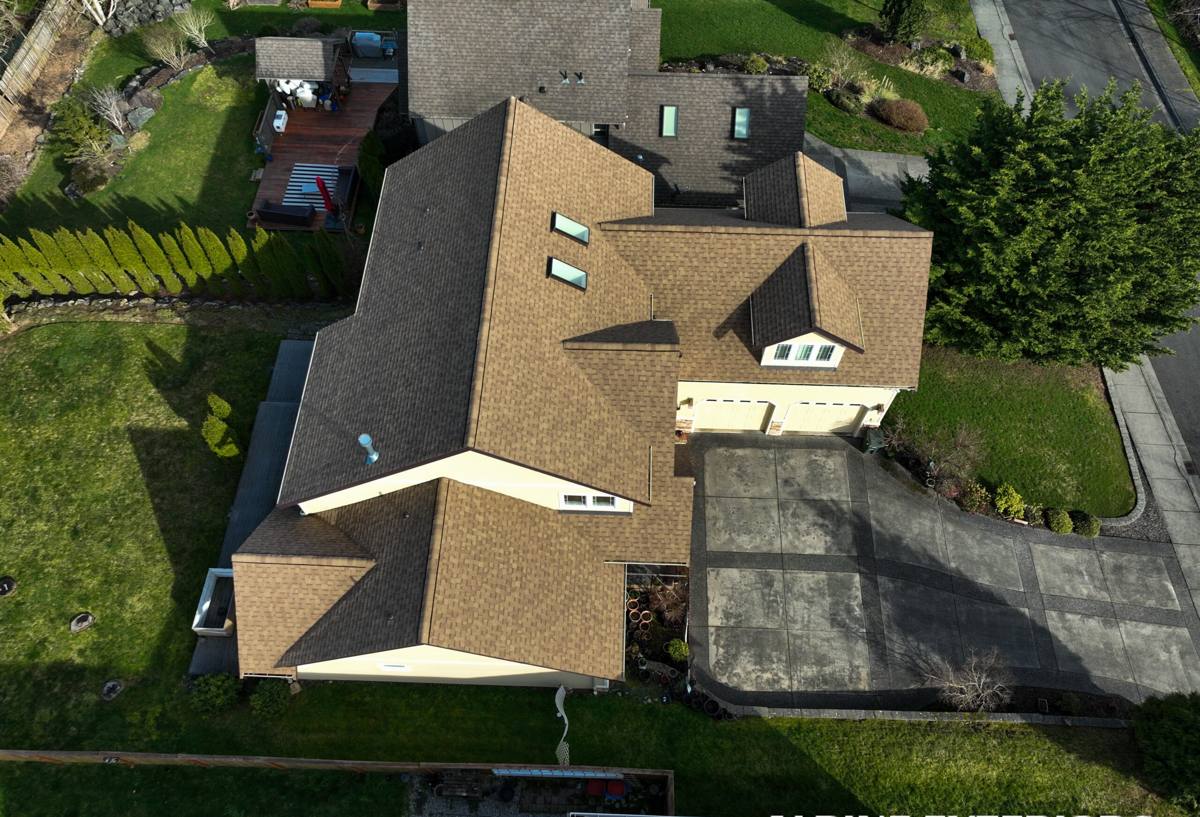
What Salt Air, Rain, and Moss Actually Do to a House
Salt Air
Airborne salt is corrosive to metal fasteners, trim flashing, and any exposed hardware, and it accelerates the breakdown of paint films on porous materials. Over years, it contributes to chalking, fading, and surface degradation on siding products that weren't engineered with coastal exposure in mind.
Driving Rain
Whatcom County's weather doesn't just rain straight down — wind pushes it sideways into wall assemblies, testing every seam, joint, and piece of trim. Siding that relies on caulk alone to stay watertight, rather than proper lapping, flashing, and drainage behind the cladding, is the siding that eventually lets water in behind it.
Moss and Algae Growth
Shade, moisture, and mild temperatures are exactly what moss and algae need to thrive, and Fairhaven has all three for a large part of the year. Siding with a factory-applied finish resists staining and holds its color far longer than field-painted or unfinished material, which absorbs moisture and gives organic growth something to root into.
Why We Install Fiber Cement — and Only James Hardie — Here
We install James Hardie fiber cement exclusively. We don't install vinyl, LP SmartSide, Cemplank, Allura, primed spruce, or cedar, and we're upfront about why: those products each carry real trade-offs — moisture sensitivity, maintenance burden, warranty limitations, or performance that depends heavily on how carefully they're installed and maintained — that we don't think make sense to gamble on in a climate like this one.
Fiber cement is non-combustible, dimensionally stable in wet-dry cycling, and doesn't feed mold or rot the way wood-based products can if moisture gets behind them. James Hardie's ColorPlus factory-applied finish is baked on under controlled conditions, which gives it better fade and moisture resistance than field-applied paint — a meaningful advantage when salt air and rain are working against the finish every day. Hardie also engineers region-specific product lines (their HZ5 formulation is built for wetter, harsher climates), which is directly relevant to a coastal Whatcom County installation.
This isn't a marketing position for us — it's the standard we hold our own crews to, because we're the ones who get the callback if a lesser product underperforms five years down the road.
What a Correct Fiber Cement Installation Involves
Fiber cement siding is only as good as the installation behind it. The material itself resists moisture well, but a house is only protected if the assembly beneath the siding is built to shed water in the first place. On a Fairhaven job, we pay particular attention to:
- Weather-resistive barrier and flashing: Properly lapped house wrap and flashing at every window, door, and penetration, installed to drain water downward and outward, not trap it against the sheathing.
- Rainscreen or drainage gap: A ventilated gap behind the siding lets any moisture that does get past the cladding dry out instead of sitting against the wall assembly — especially important given how much rain this area sees.
- Correct fastener placement and spacing: Hardie's installation specs on nail placement, spacing, and clearance from panel edges directly affect long-term performance and warranty validity — this is not a place to cut corners.
- Proper clearances: Minimum gaps between siding and grade, roofing, decks, and other abutting surfaces so the bottom edge of the siding isn't sitting in standing water or trapped debris.
- Caulking discipline: Sealant used where it belongs — at trim joints and penetrations — not as a substitute for flashing that should be doing the real work.
- Factory-cut edges sealed: Any field-cut panel edges primed or sealed per manufacturer spec so raw cut edges aren't left exposed to moisture.
Skipping any one of these doesn't usually cause an obvious problem in year one. It shows up years later as a soft spot, a stain, or a warranty claim that gets denied because the installation didn't meet spec.
Our Process, Start to Finish
1. On-Site Assessment
We walk the exterior with you, look at the current siding and trim condition, check for any existing moisture or rot issues, and talk through what's driving the project — failing siding, storm damage, a remodel, or simply wanting something that will hold up better long-term.
2. Straightforward Estimate
You get a written scope and price based on what your home actually needs — not a generic per-square-foot quote. We'll flag anything we find that needs attention before new siding goes on, like damaged sheathing or trim.
3. Product and Color Selection
We help you choose the right HardieZone product line and ColorPlus finish for your home, factoring in the coastal exposure specific to this area.
4. Installation
Our crew installs to James Hardie's published specifications — flashing, drainage, fastening, and clearances — not just to "get it covered." We treat the assembly behind the siding as seriously as the siding itself.
5. Final Walkthrough
We walk the finished job with you, address any punch-list items, and make sure you understand the warranty coverage you now have.
How Fiber Cement Compares for a Coastal Whatcom County Home
| Factor | James Hardie Fiber Cement | Vinyl | Wood / Cedar |
|---|---|---|---|
| Moisture resistance | Strong — dimensionally stable, doesn't rot | Doesn't rot, but can warp/crack in temperature swings | Vulnerable to rot without diligent, ongoing maintenance |
| Salt air / fade resistance | Factory ColorPlus finish holds color well | Can chalk and fade over time | Requires repainting or restaining on a regular cycle |
| Fire resistance | Non-combustible | Combustible | Combustible |
| Maintenance | Low — occasional washing | Low, but limited repair options if damaged | High — regular sealing, painting, pest checks |
| Typical lifespan (installed to spec) | Multiple decades | Decades, but hail/impact prone | Highly variable, moisture-dependent |
This is a general comparison, not a claim about any specific product performing poorly — every material has legitimate uses. It's simply why fiber cement is the standard we've chosen for homes in this climate.
Maintaining Fiber Cement Siding in a Wet, Salt-Air Climate
Fiber cement is low-maintenance compared to wood, but "low-maintenance" isn't "no-maintenance" — especially this close to the water. A short seasonal routine keeps it performing the way it's designed to:
- Rinse siding with a garden hose (not a pressure washer aimed directly at seams) once or twice a year to clear salt residue, pollen, and organic buildup.
- Check caulking at trim, windows, and penetrations annually and have any cracked or shrinking sealant replaced.
- Trim back vegetation and tree limbs that keep siding shaded and damp, which encourages moss and algae growth.
- Look at ground-level clearance each year — mulch, soil, or debris that builds up against the bottom edge of the siding should be cleared away.
- Watch gutters and downspouts; overflow that runs down a wall is one of the most common causes of localized siding staining and moisture issues.
Why Hiring a Crew That Already Works Fairhaven Matters
Siding installation is a local trade in a very real sense. A crew that regularly works Fairhaven and the surrounding Ferndale area already understands how this specific stretch of Whatcom County behaves — how close homes sit to salt air exposure, how driving rain off the water interacts with wall assemblies, and how much of the year moss pressure stays elevated. That's the difference between a crew applying a generic install and one making informed calls on flashing details, drainage, and product selection for the conditions your home actually faces.
It also means accountability. A local crew is the one you can call back if a question comes up two years after installation — not a company that moved on to the next region.
Ready to Talk About Your Home?
If you're weighing siding options for a Fairhaven-area home, we're happy to take a look, answer questions honestly, and walk you through what James Hardie fiber cement would involve for your specific house — no pressure, no sales script. Use the form below to request a free estimate.