 Ferndale
 Roofing on the Water's Edge: The Lummi Nation Climate Challenge
Homes in and around the Lummi Nation area sit close to Bellingham Bay and the tidal waters that wrap the Lummi Peninsula, just west of Ferndale in Whatcom County. That waterfront position is part of what makes the area beautiful, and it's also exactly what makes roofing here different from roofing twenty miles inland. Salt-laden air moves off the water and settles on every exposed surface, including your roof. Storms roll in off the Strait of Georgia with driving, sideways rain instead of the gentle straight-down rain you'd get in a sheltered valley. And the tree cover that gives many of these lots their privacy also means long stretches of shade where moss and moisture never fully dry out.
None of that makes asphalt shingle roofing a bad choice — it just means the roof has to be built correctly for these specific conditions, not installed the same way you'd install one in a dry, inland neighborhood. That's the whole point of this page: what a Lummi Nation-area asphalt shingle roof actually needs, and what our crew does differently because we already work this stretch of coastline regularly.
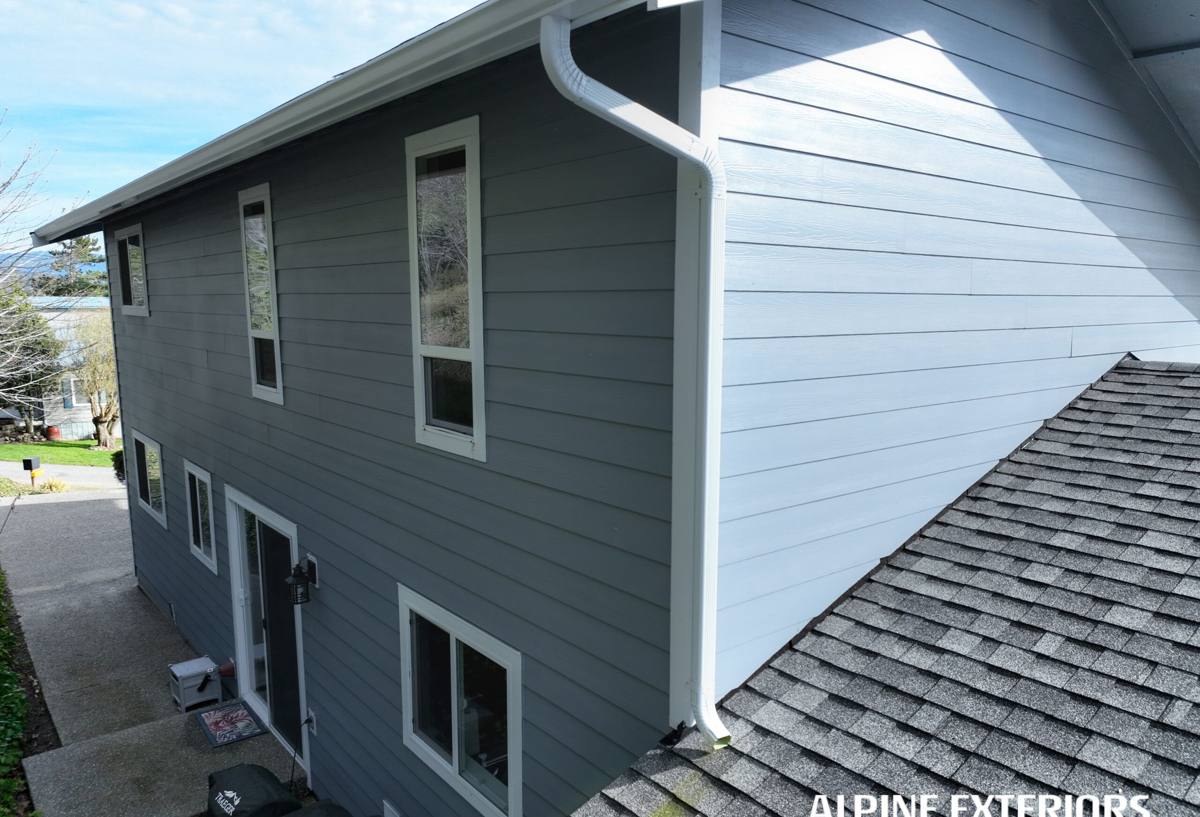
Why Asphalt Shingles Remain the Right Choice for Most Homes Here
We get asked fairly often whether metal roofing or another material is automatically the "better" choice for a coastal, moss-prone property. For most homes in this area, a properly installed asphalt shingle roof is still the most practical option, and here's the honest reasoning:
- Cost predictability — asphalt shingles remain the most budget-friendly quality roofing material, with a wide range of tiers to match different homes and budgets.
- Repairability — a damaged section of shingle roof can be opened up and repaired without re-roofing the whole house. Metal and some specialty systems are less forgiving of localized damage.
- Algae and moss-resistant options — modern shingle lines include copper-infused granules specifically engineered to resist the blue-green algae and moss growth that this climate encourages.
- Wide manufacturer support — strong warranty structures and widely available matching product make future repairs or partial replacements simpler down the road.
Metal, cedar, and synthetic roofing all have legitimate uses on the right project, but they come with their own trade-offs — higher upfront cost, different maintenance demands, or installation sensitivities that don't necessarily pay off for a typical single-family home. We'll walk you through those trade-offs honestly if your home is a candidate for something other than shingles, but we don't push a more expensive system just because it sounds premium.
What Salt Air, Wind-Driven Rain, and Moss Actually Do to a Roof
Salt Air and Metal Components
Salt air doesn't hurt the shingles themselves as much as it accelerates corrosion on everything metal attached to the roof — flashing, drip edge, nail heads, vent stacks, and gutter hardware. A roof built with standard-grade fasteners in a coastal zone can develop rust streaks and weakened flashing years before the shingles themselves are due for replacement. That's why fastener and flashing selection matters as much as the shingle brand you choose.
Wind-Driven Rain and Wall/Roof Transitions
When rain comes in sideways instead of straight down, water gets pushed up under shingle tabs, into step flashing along walls and chimneys, and around skylights and roof penetrations. A roof that would perform fine in a calm inland climate can leak within a couple of storm seasons here if the underlayment and flashing details weren't built for wind-driven exposure. This is one of the most common causes of "mystery leaks" we get called out to inspect on homes near the water — not a failed shingle, but a flashing detail that wasn't sealed for this specific wind and rain pattern.
Moss, Shade, and the North Slope Problem
Whatcom County's tree cover and long wet season give moss everything it needs: shade, moisture, and time. North-facing roof slopes and areas under overhanging branches are the first to show moss growth, usually within a couple of years on an untreated roof. Moss isn't just cosmetic — as it grows, it lifts shingle edges, holds moisture against the roof deck, and accelerates granule loss, shortening the life of the roof significantly if left unmanaged.
What a Correctly Installed Shingle Roof Includes Here
A shingle roof is a system, not a single product. In this climate, every layer underneath the visible shingle has to be selected and installed with salt air, wind, and prolonged moisture in mind. Here's what that looks like in practice:
| Component | Standard-climate approach | What we do in this area |
|---|---|---|
| Underlayment | Basic felt or synthetic, single layer | Synthetic underlayment rated for extended UV and moisture exposure, since re-roofing timelines can stretch in wet weather |
| Ice and water barrier | Eaves only, minimal coverage | Extended coverage at eaves, valleys, and around all penetrations where wind-driven rain concentrates |
| Flashing and fasteners | Standard galvanized | Corrosion-resistant flashing and fastener choices to slow salt-air degradation |
| Attic and roof ventilation | Minimum code ventilation | Balanced intake and exhaust ventilation sized to reduce trapped moisture that feeds moss and rot |
| Shingle granules | Standard granule blend | Algae-resistant (copper-infused) granule shingles considered as standard on shaded or north-facing slopes |
None of this is exotic or upgraded-for-the-sake-of-upselling — it's simply matching the build to the environment. A roof installed with inland-standard details in a coastal, tree-shaded area is more likely to need attention within the first several years instead of performing for its full expected service life.
Shingle Options: Matching the Product to the Site
Not every home needs the same shingle tier. Roof pitch, sun exposure, tree cover, and how long you plan to stay in the home all factor into what makes sense.
| Shingle Type | Best fit for | Coastal/moss considerations |
|---|---|---|
| 3-tab shingles | Budget-conscious projects, simpler rooflines | Lighter profile, generally shorter service life in high-moisture, mossy conditions |
| Architectural (dimensional) shingles | Most homes in this area | Heavier, more wind-resistant, widely available with algae-resistant granule options |
| Impact-rated / premium architectural | Exposed sites, homes seeking longer intervals between re-roofs | Best wind and impact performance, higher upfront cost, longer warranty terms |
For most homes near the water and under tree cover, we recommend architectural shingles with algae-resistant granules as the practical middle ground — meaningfully better wind and moss performance than 3-tab, without the premium price of impact-rated lines. We'll always give you real numbers for your specific roof rather than steering you toward one tier by default.
Our Process, Start to Finish
- On-site inspection and measurement — we walk the roof and attic, not just the ground, to check ventilation, decking condition, and existing flashing before quoting anything.
- Written estimate — a clear breakdown of shingle tier, underlayment, flashing, and ventilation work, so you know what you're paying for and why.
- Tear-off and deck inspection — old roofing is removed and the deck is checked for soft spots or rot, common on older roofs that have carried moss for years.
- Underlayment, ice/water barrier, and flashing installation — built for this area's wind and rain exposure, not a generic minimum.
- Shingle installation — installed to manufacturer nailing specifications, which matters for both wind warranty coverage and long-term performance.
- Ventilation check and adjustment — intake and exhaust balanced so moisture doesn't get trapped under the new roof.
- Cleanup and final walkthrough — magnetic sweep for debris, and a walkthrough so you know what maintenance (if any) the new roof needs going forward.
After Installation: Keeping a Ferndale-Area Roof Healthy
A correctly installed shingle roof in this climate still benefits from basic upkeep. This isn't a demanding maintenance schedule — it's a short list that meaningfully extends roof life here:
- Keep overhanging branches trimmed back so roof slopes get more sun and dry out faster after rain.
- Clear gutters and downspouts at least twice a year — clogged gutters push water back up under shingle edges during heavy rain.
- Have moss growth treated early rather than scraped once it's established; scraping can damage granules and shorten shingle life.
- Check attic ventilation isn't blocked by insulation or debris, since trapped moisture is one of the biggest drivers of premature roof failure here.
- Have flashing around chimneys, skylights, and vent stacks inspected every few years, since these are the first points to show wear from wind-driven rain and salt air.
Repair or Replace? Reading the Signs
Homeowners often aren't sure whether a leak or a patch of moss means "repair" or "full replacement." A few honest guidelines:
Repair usually makes sense when: the damage is localized (one flashing detail, a small wind-lifted section), the roof is under roughly 15 years old, and the rest of the shingle field is in good condition.
Replacement usually makes sense when: granule loss is widespread, multiple leaks have shown up in different areas, moss has been established for years across large sections, or the roof is approaching the end of its expected service life for this climate. We'll always tell you honestly which category your roof falls into rather than defaulting to the more expensive answer.
Why a Crew That Already Works This Area Matters
Roofing crews that mostly work inland, drier neighborhoods don't always account for how differently a roof needs to be detailed near open water and heavy tree cover. Working regularly in the Lummi Nation area and greater Ferndale means we're used to the specific wind patterns, the moss timeline on shaded lots, and the flashing details that hold up against wind-driven rain off the bay. That familiarity shows up in fewer callbacks and a roof that performs the way it's supposed to in year eight and year eighteen, not just on install day.
It also means we're realistic with you. We're not going to recommend the most expensive system on the market if a well-built architectural shingle roof will serve your home just as well. Our goal is a roof that's correctly built for this specific climate and fairly priced for the work involved.
If you're planning a re-roof or want an honest second opinion on a roof that's showing moss, granule loss, or leaks, we're happy to walk the roof with you and give you a straight answer. Use the form below to request a free, no-pressure estimate.