 Ferndale
 Windows Built for the Lummi Nation Waterfront Climate
Homes in and around Lummi Nation sit close to the water, and that proximity shapes everything about how a window performs here. Salt-laden air off Bellingham Bay and the Strait of Georgia works differently on window components than the drier air further inland in Whatcom County. Combine that with driving, wind-blown rain off the water and a moss season that can stretch from October well into April, and you have a set of conditions that punishes the wrong window choice quickly and rewards the right one for decades.
We've installed and repaired windows on homes throughout this area long enough to know which frame materials, glazing packages, and flashing details actually hold up here versus which ones look fine in a showroom and then fail on year three. This page walks through what that means in practical terms for a Lummi Nation homeowner planning a custom window project.
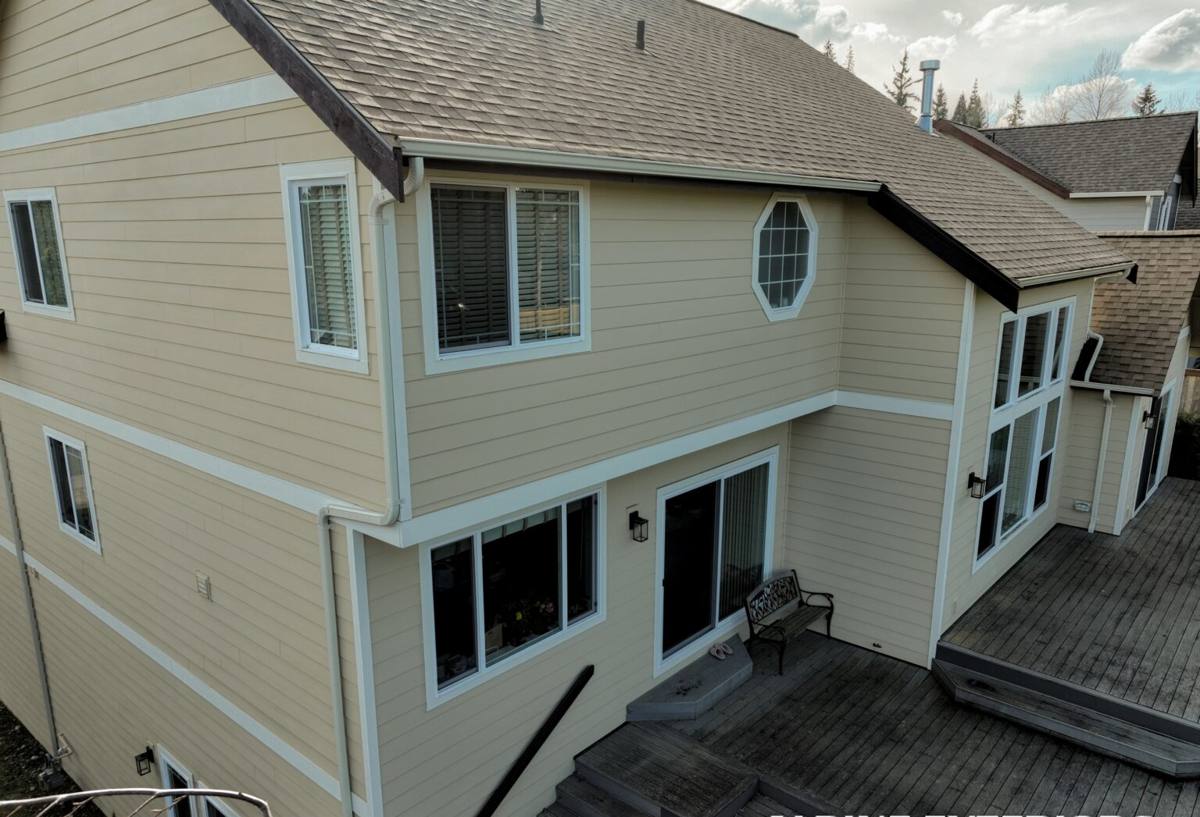
Why "Custom" Matters More Near the Water
Custom windows aren't just about matching an unusual opening size, though that's part of it — a lot of homes in this area have additions, older construction, or view-oriented openings that off-the-shelf stock sizes simply don't fit. Custom also means matching the window to the specific exposure of each wall on your specific house.
A window facing the water on the windward side of a home takes a fundamentally different beating than a window on the sheltered, landward side of the same house. Treating every opening on a home the same way — same frame material, same glazing, same weatherstripping — is how you end up with premature failures on the exposed side while the sheltered windows are still performing fine ten years later. A correct custom job accounts for that difference room by room.
What Salt Air Actually Does to a Window
Salt air carries fine airborne particulate that settles into hardware, tracks, and any exposed metal fasteners. Over time it accelerates corrosion in lower-grade hinges, locks, and cranks, and it can degrade certain finishes faster than manufacturers' standard warranty testing assumes — most of that testing is done for general climate conditions, not specifically for a marine exposure like this one. That's why hardware grade and finish matter as much as the frame material itself when you're this close to the water.
What Driving Rain Requires
Wind-driven rain doesn't just fall on a window — it gets pushed sideways and upward under pressure, which means it finds any weak point in the flashing, the sill pan, or the seal around the rough opening. A window that's watertight in a still, gentle rain can still leak in a sideways storm if the installation details weren't built for that condition. This is almost always an installation issue, not a product issue — even a premium window will leak if the flashing and sill pan underneath it are done wrong.
What a Long Moss Season Means for Sills and Trim
Extended damp, shaded conditions are exactly what moss, algae, and mildew need to establish themselves on horizontal surfaces — window sills, exterior trim, and anywhere water sits rather than shedding away. Once organic growth gets a foothold in a seam or a porous trim material, it holds moisture against the surface and accelerates rot underneath. Sill design and trim material choice both affect how much of a moss and mildew problem you'll be dealing with in years two through five.
What a Correct Custom Window Job Involves
A quality installation is a system, not just a product drop-in. Each of the following pieces matters, and skipping any one of them is usually where a "why is this window leaking" call comes from a few years down the road.
- Accurate measurement and fit — custom openings, especially in older homes, are rarely perfectly square. Measuring for the actual opening rather than a nominal size prevents gaps that get packed with sealant instead of properly shimmed and insulated.
- Sill pan flashing — a sloped, sealed pan under the window directs any water that does get past the frame back outside instead of into the wall cavity. This is one of the most commonly skipped steps on budget installs, and it's the one that causes the most hidden damage.
- Proper weather-resistive barrier integration — the window's flashing needs to be correctly lapped with the house wrap or building paper so water sheds down and out, not behind the barrier and into the framing.
- Marine-appropriate hardware and fasteners — corrosion-resistant hardware and fasteners rated for coastal exposure, not standard-grade components that were never tested for salt air.
- Correct glazing package for the exposure — insulated, properly sealed glass units matched to which direction the wall faces and how much wind and rain it takes.
- Insulation and air sealing at the rough opening — gaps around the frame need low-expansion foam or backer rod and sealant, not just caulk smeared over a visible seam.
- Interior and exterior trim sealed and sloped correctly — trim details that shed water instead of trapping it against the wall, which also reduces the moss and mildew problem described above.
Frame Material: What Holds Up in This Exposure
There's no single "best" frame material for every home — it depends on your home's style, your budget, and how exposed the specific wall is. But some general trade-offs are worth understanding before you decide.
| Frame Material | Coastal Performance Notes | Maintenance |
|---|---|---|
| Vinyl | Good moisture and salt resistance; quality varies significantly by manufacturer and reinforcement | Low — occasional cleaning |
| Fiberglass | Excellent dimensional stability and corrosion resistance in marine air; performs consistently across temperature swings | Low |
| Aluminum | Strong but prone to corrosion near salt air unless properly coated or clad; thermal performance is generally weaker | Moderate — watch for pitting over time |
| Wood (unclad) | Attractive but the most vulnerable to moisture, rot, and moss buildup in this climate without diligent upkeep | High — regular refinishing and sealing needed |
| Wood-clad | Combines wood's interior appearance with a protective exterior cladding; performs well if the cladding and flashing are done correctly | Low to moderate |
We'll walk you through which option fits your home's exposure and your budget honestly, including telling you when a lower-cost option is genuinely fine for a sheltered wall versus when it's a false economy on a water-facing one.
Our Process for a Lummi Nation Custom Window Project
1. On-Site Assessment
We look at each opening individually — its exposure, its current condition, any signs of past water intrusion or rot around the frame, and how the wall assembly behind it is built. This is also when we identify openings that are candidates for resizing or reconfiguring versus ones that should stay the same size.
2. Product Selection Walkthrough
We go over frame material, glazing package, and hardware options for your specific exposures, with straightforward pros, cons, and cost differences — no upselling to the most expensive option if a mid-tier product is the right call for a given wall.
3. Precise Measurement and Ordering
Custom units are measured to the actual opening, not a nominal size, and we account for any squaring or reframing work needed before the window arrives.
4. Removal and Opening Prep
Old windows come out carefully to protect interior finishes, and we inspect the framing underneath for any rot or moisture damage that needs to be addressed before the new window goes in — finding and fixing that now is far cheaper than finding it later.
5. Installation with Full Flashing System
Sill pan, weather-resistive barrier integration, insulation, and hardware installation are all done as a complete system, not as isolated steps.
6. Trim, Sealing, and Final Inspection
Interior and exterior trim is finished and sealed, and we do a final check of operation, seal, and weatherproofing before we consider the job done.
Signs Your Current Windows Are Past Their Service Life
Homeowners often wait too long on window replacement because the symptoms show up gradually. Watch for these:
- Fogging or a permanent haze between panes of double-glazed units — the seal has failed and the gas fill is gone
- Soft or discolored wood at the sill or lower frame corners
- Difficulty opening, closing, or locking that's gotten worse over a year or two
- Visible corrosion or pitting on hardware, hinges, or cranks
- Persistent moss, algae, or black staining on the sill that keeps returning after cleaning
- Drafts or a noticeable temperature difference near the window on a windy day
- Peeling or bubbling paint on interior trim near the frame, which often points to moisture getting in from outside
Cost Factors to Understand Before You Budget
Every project is different, so we won't quote a number without seeing your home, but these are the variables that actually move the price:
| Factor | Why It Affects Cost |
|---|---|
| Number and size of openings | More material, more labor, more flashing and trim work per opening |
| Frame material chosen | Fiberglass and premium vinyl cost more upfront than basic vinyl or aluminum |
| Existing frame condition | Rot or water damage found during removal adds repair work before the new window can go in |
| Reframing or resizing | Changing an opening's size or shape adds structural and siding work beyond a straight swap |
| Glazing package | Impact-resistant or higher-performance glass costs more than standard insulated units |
| Trim and finish work | Custom trim profiles or matching existing historic trim takes more labor than standard casing |
Why Local Experience with This Exposure Matters
A crew that mostly works inland doesn't have the same instinct for where water actually gets driven on a waterfront-adjacent home, or which hardware grades hold up against salt air over a decade rather than a season. That's not a knock on general contractors — it's just a different skill set built from repetition in a specific condition.
Working regularly in and around Ferndale and Whatcom County means we've seen how different frame materials, sealants, and flashing details actually perform here over years, not just at time of installation. That experience shows up in details a homeowner wouldn't necessarily think to ask about — sill pan slope, the right sealant for a marine environment, hardware finish selection — but that make the real difference in whether a window is still performing well in year fifteen.
Maintenance That Extends the Life of Your New Windows
Even the best installation benefits from basic upkeep, especially in this climate:
- Rinse salt residue off frames and glass periodically, especially after storms with onshore wind
- Clean sills and tracks to prevent moss and algae from getting a foothold
- Check and clear weep holes on vinyl and fiberglass frames so water can drain out properly
- Lubricate hardware annually to keep locks and cranks working smoothly despite salt air exposure
- Inspect exterior caulking yearly and touch up any cracked or separated sealant before it lets water in
If you're planning a custom window project for a home in Lummi Nation or elsewhere near Ferndale, we're happy to walk your property, look at each opening's exposure, and give you an honest, no-pressure estimate using the form below.