 Ferndale
 Why Marietta Roofs Wear Differently Than Roofs Inland
Marietta sits close enough to the water that roofs here take on a specific combination of stress most inland Whatcom County homes don't deal with. Salt-laden air off the bay accelerates corrosion on anything metal — nails, flashing, vent boots with metal collars, even some fastener heads on newer materials. Add in driving rain that comes sideways off Pacific storm systems for much of the fall and winter, and you get water finding its way into laps and seams that would stay dry in a calmer climate. Then there's moss. Whatcom County's mild, wet winters give moss and algae a long growing season with almost no hard freeze to slow it down, so a roof that goes untreated for even a year or two can end up with real damage underneath the green.
None of this means Marietta roofs fail faster than roofs anywhere else. It means the failure points are different, and a repair that doesn't account for salt exposure, wind-driven rain, and moss regrowth tends to come back as a callback within a season or two. That's the standard we hold repair work to here.
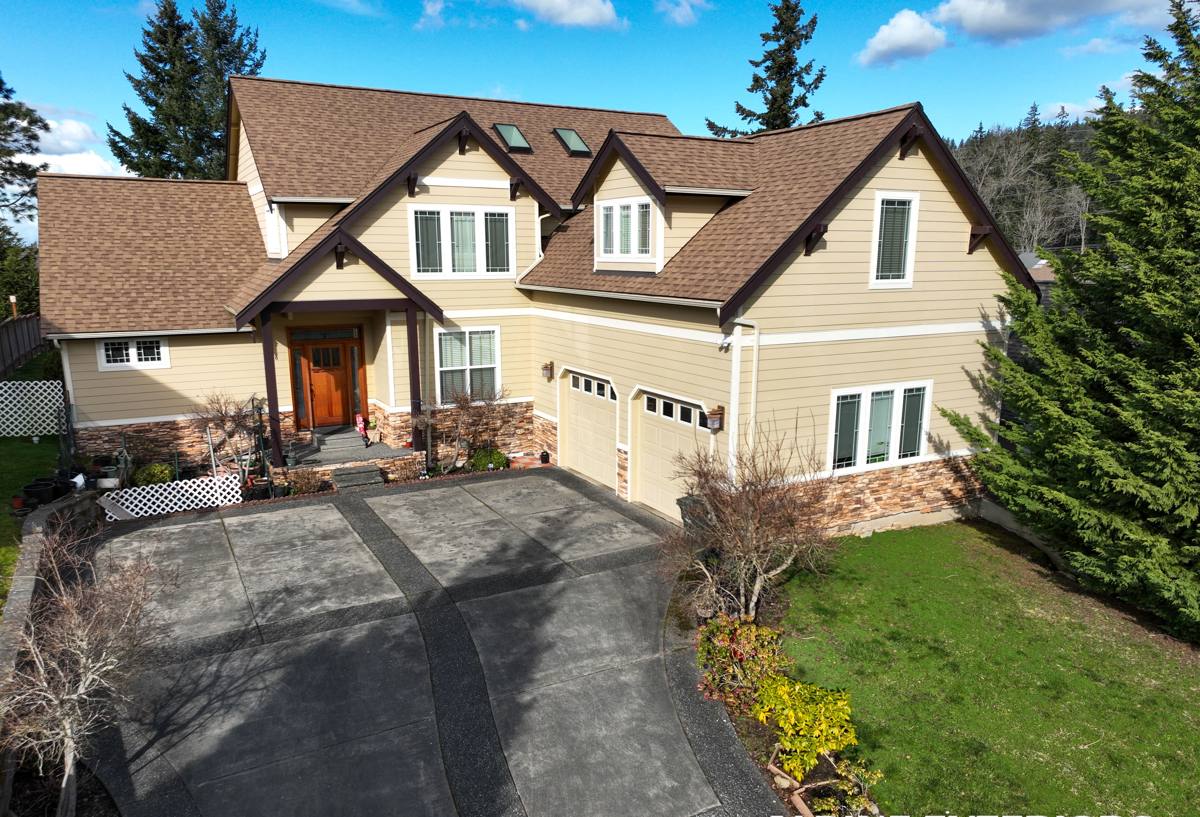
Signs a Marietta Roof Needs Repair — Not a Full Replacement
Most roofs don't fail all at once. They fail in specific spots, usually the same spots every time: valleys, chimney and vent flashing, eaves where ice and debris collect, and any place two roof planes meet. Catching problems while they're still localized is what keeps a repair a repair instead of turning into a replacement.
Warning Signs Worth a Call
- Shingles that are curling, cracked, or missing granules in patches rather than uniformly across the roof
- Dark streaking or thick moss growth concentrated on the north-facing or shaded slopes
- Water stains on interior ceilings, especially near chimneys, skylights, or where two roof sections meet
- Soft or spongy spots underfoot on a flat or low-slope section
- Rust streaks below metal flashing or vent boots — a common early sign of salt-air corrosion
- Gutters filling with granules or moss debris faster than usual after cleaning
- Daylight visible through the attic decking at eaves or ridge lines
If what you're seeing matches one or two items on that list and is limited to a section of roof, repair is very likely the right call. If it's spread across the whole roof, or the decking underneath is compromised in multiple places, that's a different conversation — and an honest contractor will tell you that up front rather than selling a repair that won't hold.
What a Correct Roof Repair Actually Involves
Diagnosing the Real Problem, Not Just the Symptom
A water stain on a ceiling almost never marks the actual entry point — water travels along rafters and decking before it shows up inside. A repair that just patches where the stain appears, without tracing the leak back to its source, is a repair that fails again in the next heavy rain. Proper diagnosis means getting on the roof, checking flashing, fastener patterns, and underlayment condition around the suspect area, and sometimes checking the attic side too.
Flashing and Transition Points
Most leaks in this climate start at flashing — around chimneys, skylights, dormers, and wherever a roof plane changes direction. Salt air and years of driving rain work sealant and fasteners loose faster than people expect. A correct repair replaces failed flashing rather than just re-caulking over it, since caulk is a short-term fix on a long-term problem.
Matching Materials the Right Way
Shingle color and profile change over time, so a patch on an older roof rarely disappears completely — but the goal is a repair that sheds water correctly and blends reasonably, not one that stands out as an obvious mismatch or, worse, creates a new water path because the new material doesn't lap correctly with the old.
Roofing Materials on Marietta Homes: Repair Considerations
Marietta has a mix of roof ages and types, and each one has its own repair logic. Here's how the common ones typically hold up and what repair work needs to account for.
| Material | Common Issue in This Climate | Repair Consideration |
|---|---|---|
| Asphalt composition shingle | Granule loss, moss lifting edges, nail pops from wind | Match shingle profile and re-secure with corrosion-resistant fasteners; check underlayment condition before re-covering |
| Cedar shake/shingle | Moss and moisture retention, splitting from wet/dry cycling | Individual shake replacement is possible, but requires checking for rot in surrounding shakes and battens |
| Metal roofing/panels | Fastener and flashing corrosion from salt air, sealant washer failure | Replace corroded fasteners with proper stainless or coated hardware; re-seal panel laps, not just the visible gap |
| Flat or low-slope (torch-down, TPO, built-up) | Ponding water, seam separation, membrane cracking at edges | Seam and edge repair must match the existing membrane type — mixing incompatible materials can void what warranty remains |
Our Repair Process
- Inspection. We get on the roof (and in the attic when needed) to trace the actual source of the problem, not just where it's showing up.
- Written scope and estimate. You get a clear explanation of what's failing, why, and what it takes to fix it correctly — including if we think replacement makes more sense than repair.
- Repair. Flashing, decking, underlayment, and roofing material are addressed in the order that actually stops water, not just cosmetically patched.
- Cleanup and debris check. Old material, nails, and moss debris are cleared from the roof and gutters before we leave.
- Follow-up. We tell you what to watch for and when it's worth a maintenance check, especially heading into the wet season.
Cost Factors for Roof Repair in Marietta
Every repair is different, but the price is driven by a handful of consistent factors. Simple flashing or shingle repairs on an accessible roof are typically a modest, single-visit cost; repairs involving deck replacement, moss remediation, or difficult access run higher. We give firm numbers after an actual inspection — not over the phone — because guessing leads to surprises for everyone.
| Factor | How It Affects the Cost |
|---|---|
| Extent of damage | Isolated flashing or shingle repair costs far less than repairs involving rotted decking |
| Roof pitch and access | Steep or hard-to-reach roofs take longer and require more safety setup |
| Material availability/match | Older or discontinued shingle and shake profiles can add time to source a reasonable match |
| Moss and debris removal | Heavy moss buildup often needs to be cleared and treated before the repair itself can be assessed properly |
| Underlying decking condition | Soft or rotted decking found during repair adds material and labor beyond the original scope |
Keeping a Repair From Becoming a Recurring Problem
Whatcom County's wet, mild winters mean moss and algae aren't a one-time nuisance — they're an ongoing maintenance item for the life of the roof. A repair that isn't paired with basic upkeep tends to develop the same problem again within a couple of seasons.
Maintenance Checklist for Marietta Homeowners
- Clear gutters and downspouts at least twice a year, more often under overhanging trees
- Have moss physically removed rather than just chemically treated when growth is heavy
- Trim back branches that keep a section of roof shaded and damp
- Check flashing around chimneys, skylights, and vents once a year, ideally before the fall rains
- Watch for rust streaking on or below metal components as an early corrosion signal
- Confirm attic ventilation is adequate — poor airflow speeds up moisture damage from the inside
Why a Crew That Already Works in Marietta Matters
Roof repair isn't just a matter of technique — it's a matter of knowing what tends to fail on homes like the ones actually in this neighborhood, and how fast. A contractor who works Marietta and the surrounding Ferndale area regularly has already seen how salt air treats a given fastener type, how long moss takes to come back on a shaded north slope near the water, and which flashing details tend to fail first on the roof styles common here. That's the difference between a repair that's guessing and one that's informed by what actually happens to roofs in this specific stretch of Whatcom County.
It also means faster response when a leak shows up mid-storm, and a crew that isn't learning the local climate on your roof for the first time.
If you're seeing signs of trouble — or just want an honest read on where your roof stands — we're glad to take a look. Reach out for a free, no-pressure estimate using the form below.