 Ferndale
 Siding Repair Built for Marietta's Coastal Exposure
Marietta sits close enough to the water that homes here take a different kind of beating than siding a few miles inland in Ferndale proper. The combination of salt-laden marine air, wind-driven rain rolling in off the water, and a moss season that barely lets up between fall and spring means siding problems show up earlier and progress faster than most homeowners expect. A crack or a soft spot that would sit quietly for a couple of seasons in a drier climate can turn into rot, trapped moisture, and a much bigger repair bill here if it's ignored through even one more wet winter.
This page is about one thing: repairing siding on homes in the Marietta area, done right, with an eye toward what actually causes failure in this specific stretch of Whatcom County.
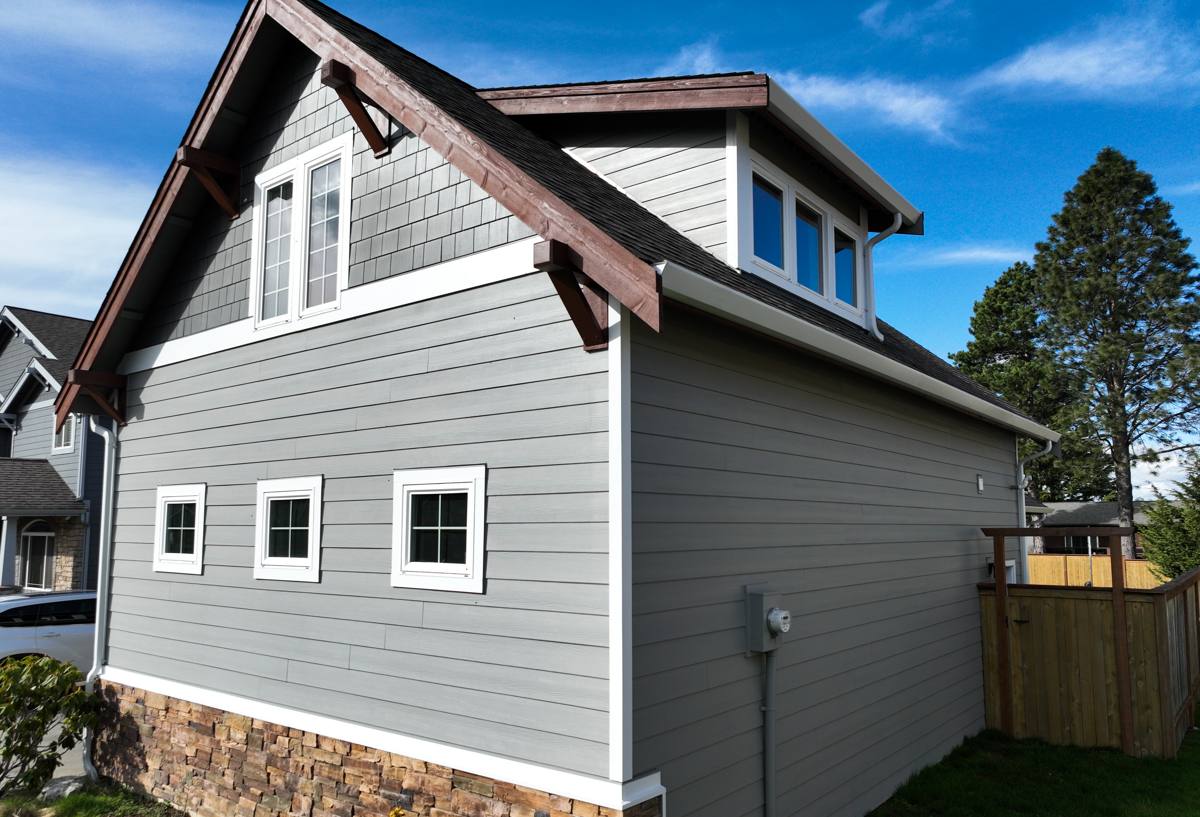
Why Siding Fails Faster Near the Water
Salt Air and Metal Fasteners
Airborne salt doesn't just sit on the surface — it works into fastener heads, seams, and any exposed edge where two materials meet. Over years, that accelerates corrosion on nails, flashing, and trim fasteners in a way that inland homes just don't experience at the same rate. Once a fastener starts to fail, the siding panel it's holding starts moving in the wind, and a moving panel opens gaps that water finds immediately.
Driving Rain and Wind Exposure
Marietta's proximity to open water means storms often arrive with real wind behind the rain, not just straight-down drizzle. Wind-driven rain gets pushed sideways into laps, corner joints, and anywhere caulking has started to shrink or crack. Siding that was installed with tight, correct overlaps handles this fine. Siding installed with shortcuts — undersized laps, missed flashing, caulk used to cover a gap instead of proper detailing — starts leaking exactly where the wind hits hardest, usually on the west and southwest-facing walls.
A Long, Aggressive Moss Season
Whatcom County's wet season stretches long, and Marietta's damp, shaded lots and coastal humidity give moss and algae an extended run at your siding — often eight months a year or more where conditions are right. Moss holds moisture directly against the siding surface far longer than open air would. On products that aren't engineered to resist that kind of sustained damp exposure, this is where paint failure, swelling, and soft spots start.
Signs Your Marietta Home Needs a Siding Repair, Not Just a Cleaning
- Soft, spongy, or crumbling spots when you press on the siding, especially near the bottom courses or under windows
- Visible cracking or splitting along panel edges or at butt joints
- Paint that's bubbling, peeling, or flaking in patches rather than fading evenly
- Persistent moss or algae growth that comes back within weeks of cleaning
- Staining or dark streaks below seams, trim, or fastener heads — a sign water is getting behind the surface
- Gaps opening up at corners, around windows, or where siding meets trim
- A musty smell or visible moisture on the interior wall near an exterior siding problem area
- Fastener heads that are rusting, backing out, or showing rust streaks below them
Any one of these on its own might be minor. Two or more together, especially on a wall that catches the prevailing wind and rain, usually means water has already gotten past the surface and into the assembly behind it.
What a Correct Repair Actually Involves
A siding repair isn't just pulling off a damaged piece and nailing up a new one. Done properly, it's a small diagnostic project:
- Find the real source — the damaged panel is often a symptom, not the cause. We look at flashing, caulking, grade slope, gutter overflow, and adjacent trim before we touch the siding itself.
- Check what's behind the siding — house wrap, sheathing, and framing can all be affected by a leak that's been running for a while. If we find soft sheathing or wet framing, that gets addressed before new siding goes back on. Covering rot with new siding just hides the problem.
- Match the material and reveal — patched-in siding that doesn't match the existing plank width, texture, or reveal spacing looks wrong from the street and can create new water paths at the transition. We match to the existing product wherever it's still available, or explain honestly when a full wall or elevation replacement is the more sensible move.
- Re-detail the flashing and laps — this is the step that actually stops the leak from coming back. New siding over old, wrong flashing just delays the next repair.
- Prime, caulk, and finish correctly — cut edges get sealed, fastener patterns follow manufacturer spec, and finish work matches the surrounding wall.
Why We Only Repair With James Hardie Fiber Cement
We install and repair exclusively with James Hardie fiber cement siding — we don't work in vinyl, LP SmartSide, primed spruce, cedar, or other fiber cement brands. For a coastal community like Marietta, that standard matters more than it might elsewhere in the county.
Fiber cement doesn't rot, and it isn't a food source for the moss and algae that thrive in this area's damp shoulder seasons the way wood-based products can be. It holds up to sustained damp exposure without the swelling or delamination that wood composite products can experience if moisture gets past the coating. And Hardie's ColorPlus factory finish is baked on under controlled conditions, which gives it better resistance to the fading and chalking that salt air and UV exposure cause on field-applied paint over time.
When a repair calls for patching in new material, that's another reason we stick to one product line: we can match reveal, texture, and finish accurately because we know the HZ5 product spec inside and out. Mixing in a different brand or material to patch a Hardie wall — or vice versa — almost always shows, and it can create a weak point where the two materials meet.
Repair vs. Full Wall Replacement — How We Decide
| Factor | Points Toward Spot Repair | Points Toward Wall/Elevation Replacement |
|---|---|---|
| Extent of damage | Isolated to one or two panels | Multiple panels or spread across the wall |
| Underlying sheathing/framing | Dry, sound | Soft, stained, or wet |
| Product availability | Matching profile/color still made | Discontinued profile or faded mismatch |
| Cause of failure | One-off event (impact damage, isolated flashing failure) | Systemic issue (age, original install defects, wide moisture intrusion) |
| Age of existing siding | Relatively recent install | Near or past expected service life |
We'll always tell you honestly which side of that table your home falls on. A lot of repair calls genuinely are simple, contained fixes — we're not looking to sell a full re-side when a targeted repair will hold.
Our Repair Process
1. On-Site Inspection
We walk the exterior, check the elevations that take the worst of the weather, and probe any soft or suspect areas. We'll also check attic and crawlspace access points where a leak might have tracked moisture further than the visible siding damage.
2. Honest Assessment and Plan
You get a clear explanation of what's causing the problem, what a proper fix involves, and what it will cost — including whether a repair is enough or a larger replacement makes more sense long-term.
3. The Repair
We remove only what needs to come off, protect landscaping and windows, correct the underlying cause (flashing, sheathing, trim), and install matched Hardie material with correct fastening and sealing per manufacturer spec.
4. Cleanup and Walkthrough
We clear debris, walk the repair with you, and point out anything else on the exterior worth keeping an eye on — no upsell pressure, just what we saw.
Why Local Marietta Experience Matters
A crew that mostly works drier, inland neighborhoods can misdiagnose a coastal moisture problem — treating a flashing failure as a cosmetic issue, or patching over a leak that's still active. Working regularly in and around Ferndale and the Marietta area means we already know which elevations tend to take the worst of the wind and rain, how fast moss reestablishes on shaded coastal lots, and what correct detailing looks like for homes exposed to this level of marine weather. That local pattern recognition is often the difference between a repair that lasts and one that's back on the schedule in two years.
Get an Honest Look at Your Siding
If you're seeing soft spots, recurring moss, cracked panels, or water stains on a Marietta home, it's worth having someone look before another wet season passes. We offer free, no-pressure estimates — we'll tell you straight whether you need a targeted repair or something more, and why.