 Ferndale
 Why Birch Bay Roofs Wear Differently Than Roofs Inland
Birch Bay sits right on the water, and that changes what a roof has to deal with year-round. Salt-laden air moves in off the bay and settles on every exposed surface, including shingles, flashing, and fasteners. Combine that with driving rain that comes in sideways during winter storms, and you have a roof system that's working harder than a similar roof a few miles inland in Ferndale or elsewhere in Whatcom County. Add in the long, wet moss season that stretches from fall through spring, and it's easy to see why roofs in this stretch of the coast tend to show their age faster than the brochures for any given shingle line would suggest.
None of this means a roof in Birch Bay is doomed to fail early. It means the installation has to account for these conditions from the start — the right underlayment, the right fastener hardware, the right ventilation, and flashing details that don't leave any opening for wind-driven water to find its way in. A roof installed without those considerations might look fine for a season or two, then start showing problems that are expensive to trace back to a rushed original install.
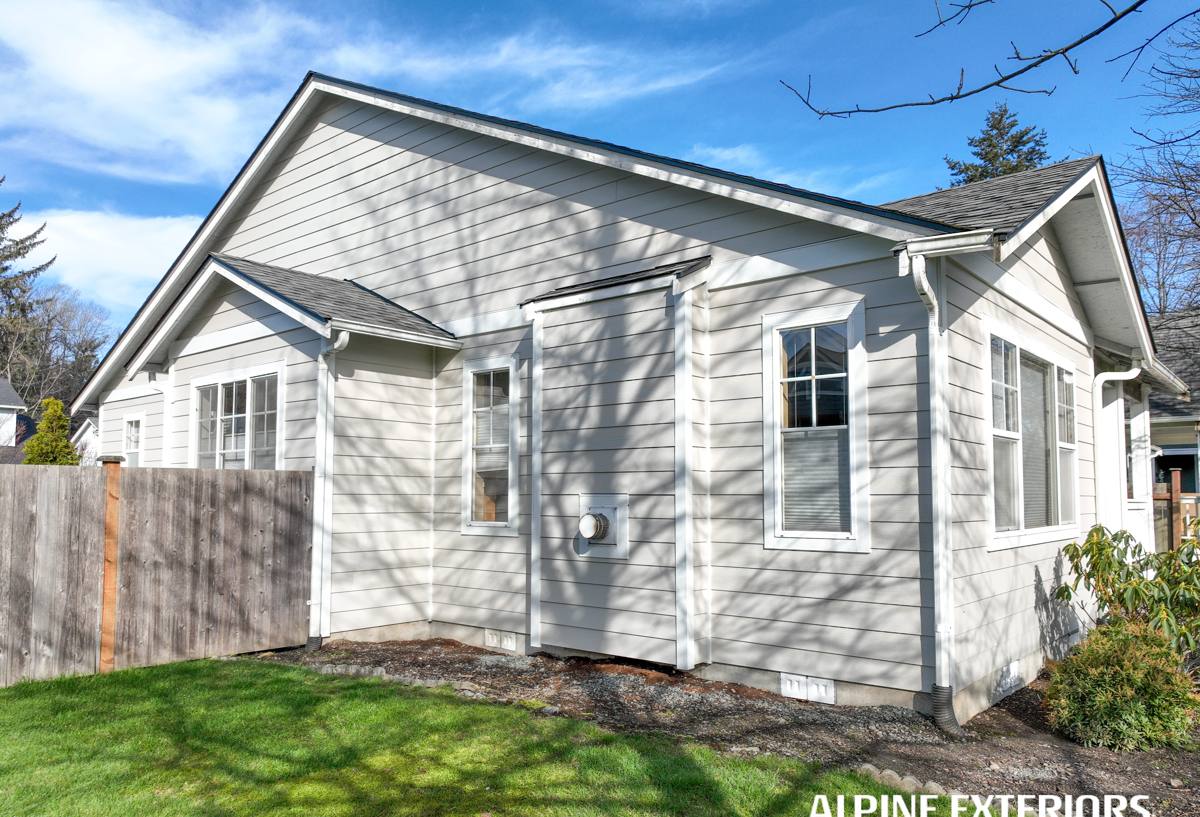
What Actually Goes Into a Correct Roof Installation
"New roof" sounds simple, but the quality of the job is decided by details most homeowners never see once the shingles are down. Here's what we treat as non-negotiable on every Birch Bay installation.
Tear-Off and Deck Inspection
We remove the old roofing down to the deck rather than layering over it. That's the only way to actually inspect the plywood or OSB sheathing underneath for soft spots, delamination, or moisture damage — all of which are more common near the water, where humidity sits in a roof system longer than it does inland. Any damaged sheathing gets replaced before anything new goes down. Roofing over a compromised deck just hides a problem that will resurface later, usually as a leak.
Underlayment and Water Protection
Given how much driving rain Birch Bay sees, we don't treat underlayment as an afterthought. Synthetic underlayment across the full roof, with self-adhered ice-and-water barrier at eaves, valleys, and any low-slope transitions, gives the roof a real second line of defense if wind-driven rain ever gets under the primary roofing material — which it will, eventually, on any roof exposed to coastal storms.
Flashing at Every Penetration
Chimneys, vent pipes, skylights, and wall-to-roof transitions are where the overwhelming majority of roof leaks actually start — not in the open field of shingles. We install new flashing at every one of these points rather than reusing old flashing, and we pay particular attention to step flashing along walls and counterflashing at chimneys, since salt air accelerates corrosion on older or lower-grade metal.
Ventilation That Matches the Home
Proper intake and exhaust ventilation keeps the attic temperature and moisture level in balance, which matters twice over in this climate: it protects the roof deck from condensation damage, and it reduces the damp, shaded conditions that let moss take hold in the first place. We calculate ventilation based on the actual attic square footage and existing soffit and ridge conditions rather than assuming a one-size-fits-all vent kit will do the job.
Choosing a Roofing Material for Salt Air and a Long Moss Season
There's no single "best" material for every home — it depends on budget, roof pitch, and how much upkeep you want to take on. What we won't do is put a material on a Birch Bay roof that we know will struggle against salt exposure or moss growth without being upfront about the trade-off.
| Material | Coastal / Salt-Air Performance | Moss Resistance | Typical Lifespan |
|---|---|---|---|
| Standard asphalt shingles (3-tab) | Fair — lower-grade fasteners and granules can wear faster near salt air | Low without treated granules; moss gains a foothold in shaded, damp sections | 15-20 years |
| Architectural (laminate) asphalt shingles | Good — heavier mat and better wind ratings | Better with algae/moss-resistant granule options | 25-30 years |
| Metal (standing seam or coated panel) | Very good with proper coastal-rated coatings and stainless or coated fasteners | High — smooth surface gives moss little to grip | 40-50+ years |
| Cedar shake | Fair — needs regular maintenance to resist salt-driven decay | Low without ongoing treatment; retains moisture, which favors moss | 20-30 years with upkeep |
For most Birch Bay homes, we lean toward architectural shingles with algae- and moss-resistant granules, or metal roofing where the budget and roof style fit, because both hold up against the combination of salt exposure and shaded, damp roof sections that this area produces. We'll walk through the honest trade-offs for your specific roof rather than pushing one product across the board.
Our Installation Process, Start to Finish
A roof replacement runs smoother when the homeowner knows what to expect. Here's the general sequence we follow:
- Roof assessment and estimate. We walk the roof (or use appropriate access equipment), check the deck condition where visible, note ventilation and flashing issues, and put together a written estimate.
- Material selection. We go over shingle or metal options with the coastal climate in mind, including moss- and algae-resistant grades.
- Scheduling around weather. Given how much of the year sees rain in this region, we schedule tear-off in windows where we can get the deck protected the same day, and we monitor forecasts closely.
- Tear-off and deck repair. Old roofing comes off, the deck gets inspected, and any damaged sheathing is replaced.
- Underlayment, flashing, and ventilation installation. This is the part of the job that determines how the roof performs in a storm five years from now, not just how it looks on day one.
- Roofing material installation. Shingles or panels go down to manufacturer specifications, which matters for warranty coverage.
- Cleanup and final walkthrough. We clear debris and nails from the property and go over the finished roof with you before we call the job done.
Signs Your Birch Bay Home May Need a New Roof
Some warning signs are obvious; others show up first as small, easy-to-miss details. Given how the local climate accelerates wear, it's worth checking for these more often than you might in a drier inland area:
- Granules collecting in gutters or at downspout outlets
- Shingles that are curling, cupping, or visibly cracked
- Moss or dark streaking concentrated on north-facing or shaded slopes
- Soft or spongy spots when walking the roof deck
- Daylight visible through the attic roof boards
- Rust staining or lifted flashing around chimneys and vent pipes
- Water stains on interior ceilings, especially after a windy rainstorm
- A roof that's approaching or past the manufacturer's expected service life
Why Hiring a Crew That Already Works Birch Bay Matters
A roofing crew that mainly works drier, inland jobs isn't necessarily doing anything wrong — they're just solving for a different set of conditions. A crew that regularly works Birch Bay and the surrounding Ferndale area already knows which flashing details tend to fail first in this climate, how much ventilation a typical local attic actually needs, and which material grades hold up against salt exposure instead of just looking good in a showroom. That local pattern recognition is the difference between a roof that's installed to code and a roof that's installed to actually last on this stretch of coast.
What Affects the Cost of a Roof Replacement Here
Every roof is priced individually after an in-person assessment, but a few factors consistently move the number up or down for Birch Bay homes:
| Factor | Why It Matters Locally |
|---|---|
| Roof size and pitch | Steeper or more complex roofs take longer and require more safety setup |
| Deck condition | Coastal moisture exposure sometimes means more sheathing replacement than an inland roof of the same age |
| Material choice | Standard architectural shingles cost less upfront than metal, but metal often costs less over its full lifespan in this climate |
| Ventilation and flashing upgrades | Older homes often need added intake or exhaust venting and new flashing profiles, not just a shingle swap |
| Access and staging | Waterfront lots and tighter properties can affect equipment staging and disposal logistics |
We give a written, itemized estimate before any work starts, so you know exactly what you're paying for and why — no vague lump-sum numbers.
After Installation: Cleanup, Documentation, and Warranty
Once the roof is on, we do a full site cleanup, including a magnetic sweep for stray nails around the property. You'll get documentation of the materials installed, which matters for manufacturer warranty registration, and we go over any workmanship warranty terms directly so there's no confusion about what's covered. A roof installed correctly in a demanding climate like this one should need very little from you beyond periodic moss and debris checks and keeping gutters clear so water actually drains the way the roof was designed to shed it.
If you're weighing a roof replacement for a Birch Bay home, we're happy to take a look and give you a straightforward, no-pressure estimate — just fill out the form below.