 Ferndale
 Roofing in Sumas: A Different Kind of Wear
Sumas sits far enough inland that homes here don't take the same beating as a house two blocks from Bellingham Bay, but that doesn't mean the roof gets an easy ride. Whatcom County's marine-influenced weather still reaches this far east — long stretches of steady, low-intensity rain that can last for days, cool damp air that never fully dries out a north-facing slope, and enough shade from surrounding trees and hills to give moss a real head start. Homes closer to the water deal with salt air working into fasteners and flashing; inland communities like Sumas deal more with sustained moisture and slower drying times. Both problems shorten a roof's life if the install wasn't done right the first time.
We're a Ferndale-based crew, and we've been out to Sumas often enough to know the pattern: roofs that fail early here usually aren't failing because the shingles were bad. They're failing because of what's underneath — thin or missing underlayment, ventilation that was never balanced, flashing that was reused instead of replaced, or a roof deck that had soft spots nobody caught before the new material went down.
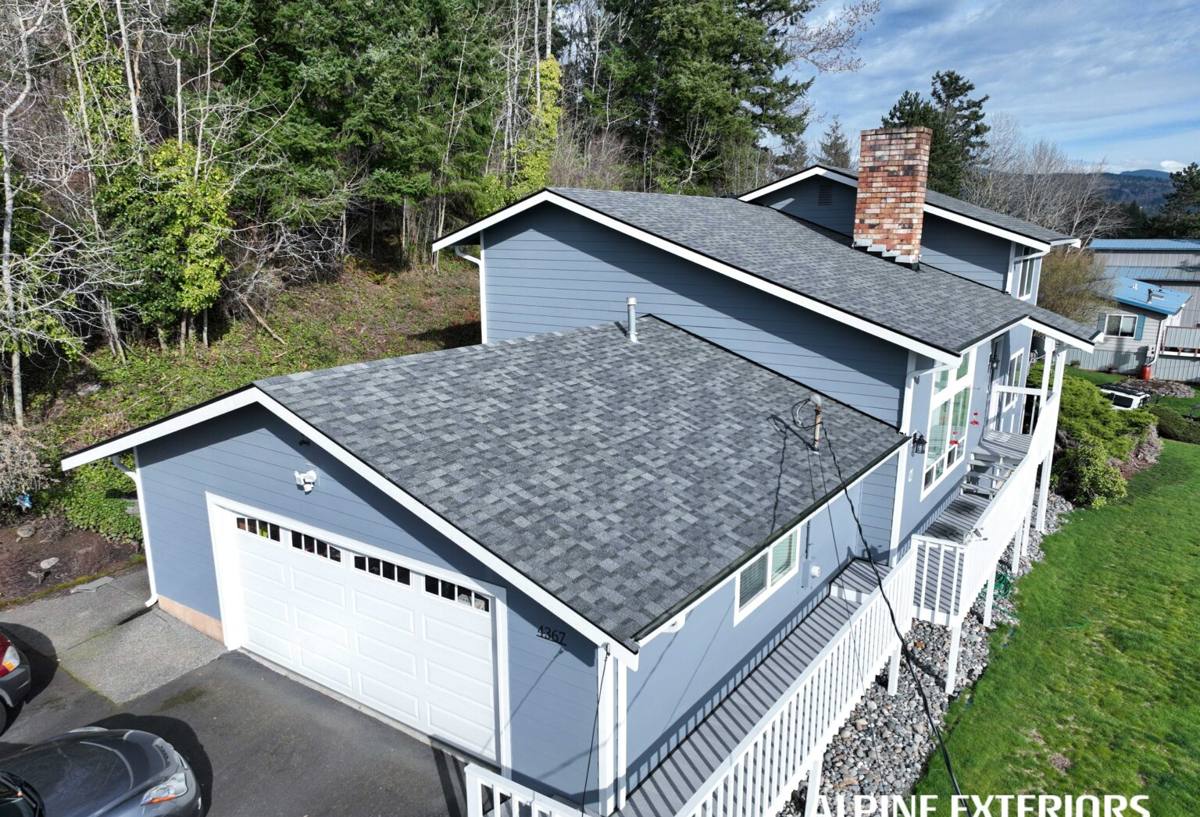
What a Correct Roof Installation Actually Involves
A new roof is a system, not a single product. Every layer has a job, and skipping or shortcutting one shows up as a leak, premature moss growth, or a warranty claim that gets denied because the manufacturer's install spec wasn't followed.
The Layers That Matter Most in This Climate
- Roof deck inspection and repair — any soft, delaminated, or water-stained sheathing gets replaced before anything else happens. Fastening new shingles over a bad deck just hides the problem.
- Ice and water shield — installed at eaves, valleys, and around penetrations where wind-driven rain is most likely to work its way backward under the shingle edge.
- Synthetic underlayment — a full water-resistant barrier across the whole deck, not just a strip along the ridge.
- Flashing — new metal at every chimney, wall intersection, valley, and vent pipe. Reusing old flashing to save time is one of the most common shortcuts we see undone on tear-offs.
- Balanced ventilation — intake at the soffits and exhaust at the ridge, sized to move air through the attic evenly. This is the piece most often missing on older Whatcom County roofs.
- Field material — shingles, metal panels, or another finish product, installed to the manufacturer's nailing pattern and exposure spec, not just "close enough."
Roofing Material Options for Sumas Homes
| Material | Typical Lifespan | How It Handles This Climate |
|---|---|---|
| Architectural asphalt shingle | 25–30 years | Good moisture and wind resistance when installed with full underlayment; the standard choice for most homes here |
| 3-tab asphalt shingle | 15–20 years | Lower upfront cost but thinner profile and lower wind rating; less common on new installs now |
| Standing seam metal | 40–50+ years | Sheds moss and moisture well due to its smooth, sloped panels; higher upfront cost, minimal long-term maintenance |
| Composite/synthetic shake | 30–50 years | Resists rot and moss better than wood shake with a similar look; installation quality matters more than with shingles |
There's no universally "best" option — it depends on the roof's pitch, the home's style, and how long you plan to own it. We'll walk through the honest trade-offs for your specific roof rather than push whatever has the highest margin.
Our New Roof Installation Process
- On-site inspection. We walk the roof and attic, check the deck condition, note ventilation issues, and measure for material.
- Written estimate. Material options, scope, and price laid out clearly — no vague allowances that turn into change orders mid-job.
- Permitting. We handle the permit paperwork required for the job so you're not the one chasing it down.
- Tear-off and deck inspection. Old material comes off completely; we don't install a new roof over an old one. Any deck repairs happen at this stage, with photos so you can see exactly what was found.
- Underlayment, flashing, and ventilation. The system layers go in before a single piece of finish material is laid.
- Installation of new roofing. Done to the manufacturer's spec so your warranty is actually valid, not voided by a shortcut.
- Cleanup and magnetic sweep. Job site and yard cleared of debris and stray nails before we consider the job done.
- Final walkthrough. We go over the finished roof with you and explain what was done and why.
Ventilation and Moisture: The Part Homeowners Don't See
Moss doesn't grow because a roof is old — it grows because moisture sits somewhere long enough for it to take hold. On roofs that don't get much direct sun, or where the attic isn't venting properly, that combination is almost guaranteed in this part of Whatcom County. A ridge vent with no matching soffit intake, or soffit vents that are painted shut or blocked with insulation, will trap warm moist air against the underside of the deck. Over a few winters, that shows up as premature shingle aging from the inside out, and often as moss and algae streaking on the outside.
When we install a new roof, we check and correct ventilation as part of the job, not as an upsell afterward. It's one of the few things that's far cheaper to get right during a full roof replacement than to fix later.
Signs Your Sumas Home Needs Replacement, Not a Repair
- Shingles that are cupping, curling, or losing granules in large patches rather than isolated spots
- Daylight visible through the roof deck from inside the attic
- Soft or spongy spots when walking the roof
- Repeated leaks in different locations after previous repairs
- Heavy moss or algae growth returning within a year or two of cleaning
- A roof original to a home built more than 20–25 years ago, especially with 3-tab shingles
- Visible sagging along the ridge or roof plane
If only one or two of these apply and the rest of the roof is sound, a targeted repair may still make sense. We'll tell you honestly if that's the case — a full replacement isn't always the right call.
Cost Factors for a New Roof in Sumas
| Factor | Why It Moves the Price |
|---|---|
| Roof size and pitch | More square footage and steeper slopes mean more material and more labor time/safety setup |
| Number of layers to remove | Tearing off two or more existing layers costs more than a single-layer tear-off |
| Deck condition | Rotten or delaminated sheathing found during tear-off adds material and labor to replace it |
| Material choice | Standing seam metal and composite shake cost more upfront than architectural asphalt |
| Roof complexity | Valleys, dormers, chimneys, and multiple penetrations all add flashing work |
| Ventilation upgrades | Adding proper intake/exhaust venting where none existed is additional but usually modest |
We don't quote roofs over the phone with a per-square-foot number, because those factors swing the real cost too much to be honest about it sight unseen. A walk of the roof gets you an accurate written number.
Why Hire a Crew That Already Works This Area
A roofing crew that mostly works south of Bellingham may not think twice about the moss and moisture patterns typical of the Sumas area, or the way certain roof orientations here stay shaded most of the day. We're based in Ferndale and cover this part of Whatcom County regularly, so we're not learning the local climate on your job. That familiarity shows up in small decisions — where we push for extra ventilation, which flashing details we won't skip, and which materials we steer people away from because we've seen how they hold up (or don't) on roofs like yours.
It also means we're not disappearing after the invoice clears. If something needs a follow-up look after a hard winter, we're a local call, not a company based an hour or more away.
What to Expect During the Job
Most residential roof replacements in this area take one to three days depending on size, complexity, and weather. Weather is the biggest variable — we don't tear off a roof and leave it exposed if rain is likely, and we'll reschedule around forecasts rather than gamble on your home staying dry. Expect some noise and vibration during tear-off, a dumpster or trailer on-site for debris, and a full cleanup pass including a magnetic sweep for nails before we leave.
If you're ready to talk specifics about your roof, we're glad to take a look and give you a straightforward estimate — no pressure, no sales script, just an honest read on what your roof needs.