 Ferndale
 Point Roberts: A Small Peninsula That Takes a Beating
Point Roberts sits on a spit of land bordered by water on three sides, cut off from the rest of Whatcom County and mainland Washington by Boundary Bay and the international border. That geography is what makes it beautiful, and it's also what makes it hard on exterior siding. Homes here catch wind and salt spray coming straight off the water with almost nothing to break it up before it hits the wall. Add in Western Washington's driving winter rain and the long stretch of gray, damp months that follow, and you've got a climate that will find every weak point in a siding installation faster than it would almost anywhere else in the region.
We work throughout Ferndale and the surrounding Whatcom County coastline, and Point Roberts consistently shows the same pattern: siding that was installed correctly for the material holds up, and siding that was installed as a generic, one-size-fits-all job starts showing problems — swelling, staining, moss colonies, failed seams — years before it should.
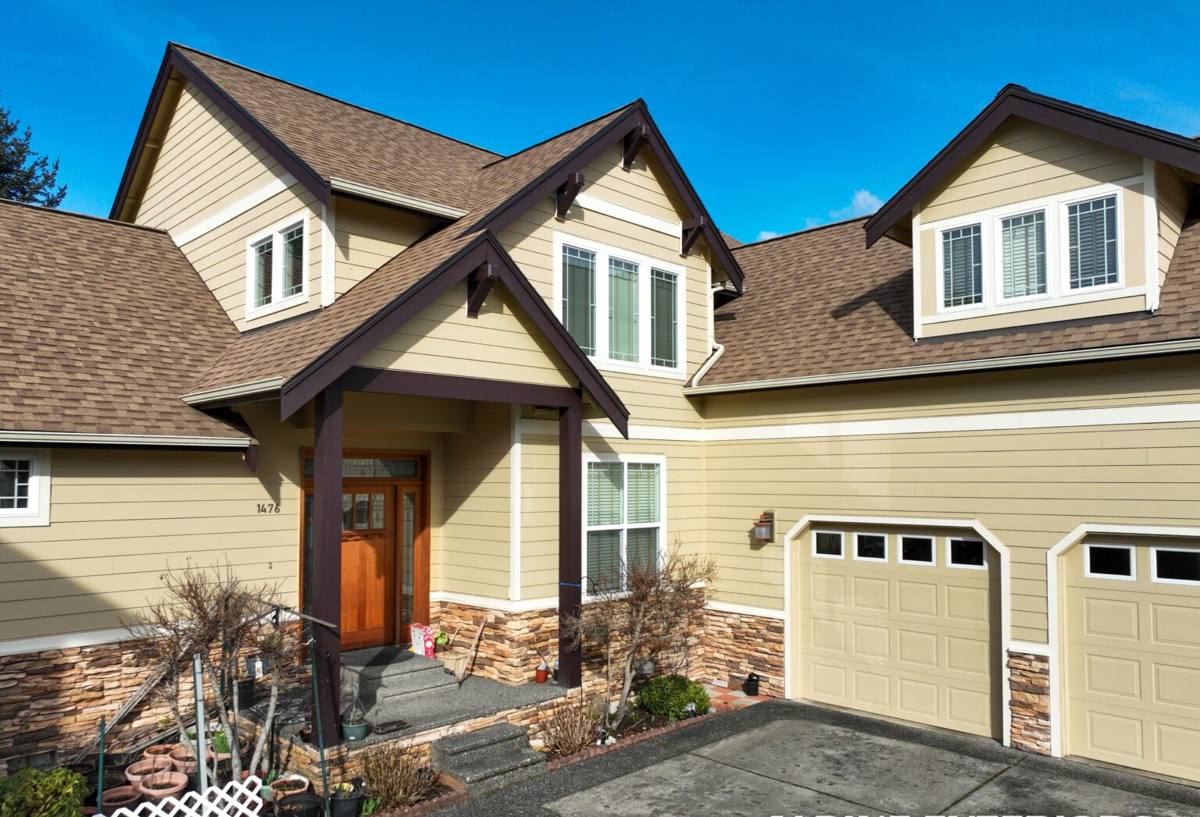
What Board & Batten Siding Actually Is
Board and batten is a vertical siding style: wide flat panels installed with their long edge running up and down the wall, with narrower strips (the battens) covering the seams between panels. It's a look with deep roots in farmhouse and craftsman architecture, and it's become a popular way to add texture to modern Pacific Northwest exteriors, often mixed with horizontal lap siding as an accent on gables, entries, or a full elevation.
It's a different animal from lap siding in more than just appearance. Vertical orientation changes how water moves across the wall, how many linear feet of seams and fastener points exist per square foot of coverage, and how the wall assembly behind the siding needs to be built to stay dry. Board and batten done right looks clean and holds up. Board and batten done as an afterthought is one of the faster ways to get moisture into a wall.
Why the Detailing Matters More With This Style
Vertical seams do shed water downward with gravity, which is a point in board and batten's favor. But every batten strip is also a place where two pieces of siding meet the wall and each other — and every one of those joints is a potential entry point for wind-driven rain if it isn't flashed, gapped, and fastened correctly. In a sheltered inland yard that forgiveness margin is wider. On a wall facing open water in Point Roberts, it isn't.
What a Correct Installation Requires Here
A board and batten job that's built for this exposure isn't just "nail up the panels and cap the seams." The details that actually determine whether it lasts include:
- A drainage plane behind the siding — a weather-resistive barrier installed correctly and lapped so any water that does get behind the panels has somewhere to go besides your sheathing.
- A rainscreen gap — a small air space between the back of the siding and the wall that lets bulk water drain and the assembly dry out between rain events, instead of staying pinned wet against the house.
- Correct flashing at every penetration and transition — windows, doors, hose bibs, light fixtures, roof-to-wall junctions, and the base of the wall all need flashing detailed for a vertical siding pattern, not borrowed from a lap siding job.
- Manufacturer-spec fastening — fastener type, length, spacing, and placement relative to panel edges affect both wind performance and how the panel handles expansion and contraction.
- Expansion gaps — small, consistent gaps at panel ends and butt joints so the material isn't fighting itself as temperature and moisture levels change through the seasons.
- Restrained caulking — sealing every batten seam solid sounds thorough, but it's often the opposite of what a moisture-managed wall needs. Overcaulking can trap water behind the siding instead of letting it drain, which is a common cause of hidden rot in board and batten walls that looked fine from the street.
The James Hardie Board & Batten System We Install
We install James Hardie fiber cement exclusively, and for board and batten that means the HardiePanel vertical siding line paired with HardieTrim batten boards, both engineered as a matched system rather than mismatched parts assembled on site. A few things about that system matter specifically for a place like Point Roberts:
- Fiber cement core — doesn't absorb and swell with moisture the way wood-based products can, and it's not vulnerable to insect damage.
- Factory-applied ColorPlus finish — baked on in a controlled environment rather than field-painted, which means better adhesion and color consistency than a job-site paint or stain finish, and no repainting cycle every few years.
- Non-combustible material — fiber cement doesn't contribute fuel to an exterior fire.
- HZ5 climate engineering — Hardie's HZ product lines are formulated for specific climate exposures, and the Pacific Northwest's wet, marine conditions are exactly what that engineering targets.
- A real manufacturer warranty — transferable and backed by a company that's been the fiber cement standard for decades, not a private-label product with a thin support structure behind it.
Comparing Board & Batten Materials in a Marine Climate
Homeowners researching board and batten usually run into four material options. Here's how they actually compare when the wall in question faces salt air and driving rain most of the year:
| Material | Moisture / Salt-Air Behavior | Maintenance Burden | Fire Resistance | Finish / Warranty |
|---|---|---|---|---|
| Cedar or primed wood board & batten | Absorbs moisture, prone to swelling, cupping, and rot at seams if not maintained closely | High — repainting/restaining on a regular cycle, caulk maintenance | Combustible | Field-applied finish; warranty typically limited to the material, not the finish |
| Vinyl board & batten | Doesn't absorb water, but seams and panels can warp or gap in temperature swings and wind-driven rain can get behind loose panels | Low, but limited repair options if damaged | Combustible, can deform under heat | Color is molded-in but fades over time; warranty often prorated |
| Engineered wood (e.g. LP-style) board & batten | Wood-fiber core is vulnerable at cut edges and seams if moisture gets in over time | Moderate — edge sealing and seam inspection matter | Combustible | Factory finish available; warranty terms vary by manufacturer |
| James Hardie fiber cement board & batten | Engineered for wet climates, doesn't swell or rot; core is moisture-resistant | Low — periodic rinsing and inspection | Non-combustible | Factory ColorPlus finish; strong transferable manufacturer warranty |
Every one of these can look good on the day it's installed. The differences show up five, ten, and twenty years in — especially on a wall that spends its life in salt air and standing damp.
Our Process for a Point Roberts Job
Because Point Roberts is physically separated from the rest of Whatcom County by water and the international border, getting a crew and materials there and back isn't the same as scheduling a job across town in Ferndale. It takes real planning — coordinating material deliveries, sequencing the work so a crew isn't making unnecessary extra trips, and building the border crossing into the schedule rather than treating it as an afterthought. A crew that hasn't done it before tends to either pad the bid heavily to cover the unknowns or underestimate it and run into delays mid-project. We've done the logistics enough times to price and schedule it accurately.
On the job itself, our process starts with a wall-by-wall assessment — a windward wall facing open water gets a different level of scrutiny on flashing and rainscreen detailing than a wall tucked on the sheltered side of the house. From there it's proper removal of the old siding and inspection of the sheathing underneath, correct installation of the weather-resistive barrier and rainscreen, HardiePanel and HardieTrim installed to manufacturer fastening and gapping specs, and a final walkthrough before we call the job done.
Living With Board & Batten Siding in This Climate
Even a correctly installed, low-maintenance material benefits from a little attention in an environment like Point Roberts. A short seasonal checklist:
- Rinse salt residue off exterior walls a couple of times a year, especially on sides facing open water.
- Walk the exterior after major windstorms and check trim, corners, and penetration points for anything that looks loose or displaced.
- Keep an eye on north- and west-facing walls for moss or algae growth, which takes hold fastest in shaded, slow-drying areas.
- Keep gutters and downspouts clear so roof runoff isn't dumping extra water onto siding below.
- Trim back vegetation and keep sprinklers from spraying directly onto walls — both keep siding drying out between rain events instead of staying damp.
- Have caulking and sealant at trim and penetrations checked periodically; failed sealant is usually the first sign something needs attention, not the siding itself.
Why Hire a Crew That Already Works in Point Roberts
A contractor who's worked this specific stretch of coastline knows which walls take the worst of the wind and salt and which ones don't, understands the logistics of getting crews and materials in and out, and has already built relationships and a track record in a community where word travels and callbacks matter. That local familiarity translates into fewer surprises during the bid, a more accurate schedule, and a job built for the exposure your specific house actually faces — not a generic install pulled from a spec sheet written for a drier, more sheltered part of the state.
If you're planning a board and batten project — a full re-side or an accent elevation — on your Point Roberts home, we'd be glad to walk the property with you and put together a straightforward, no-pressure estimate. There's a form below to get started.