 Ferndale
 Why Point Roberts Roofs Take a Different Kind of Beating
Point Roberts sits on its own peninsula, exposed to open water on three sides, which means it catches wind and driving rain that inland Whatcom County homes rarely see in the same combination. When a storm rolls through, roofs here often take a two-part hit: wind-driven rain forces water sideways under shingles and flashing that would otherwise shed a straight-down rain just fine, followed by weeks of salt-laden humidity that keeps everything damp long after the storm has passed. That combination is what separates real storm damage repair from a routine patch job.
We've worked on roofs across the Ferndale area and out to Point Roberts long enough to know that a roof that looks fine from the driveway can still have lifted shingle tabs, compromised flashing, or a soaked layer of underlayment doing damage you won't see until it shows up as a stain on a ceiling. Storm damage repair out here isn't just about fixing what's obviously broken — it's about checking everywhere wind and water could have gotten a foothold.
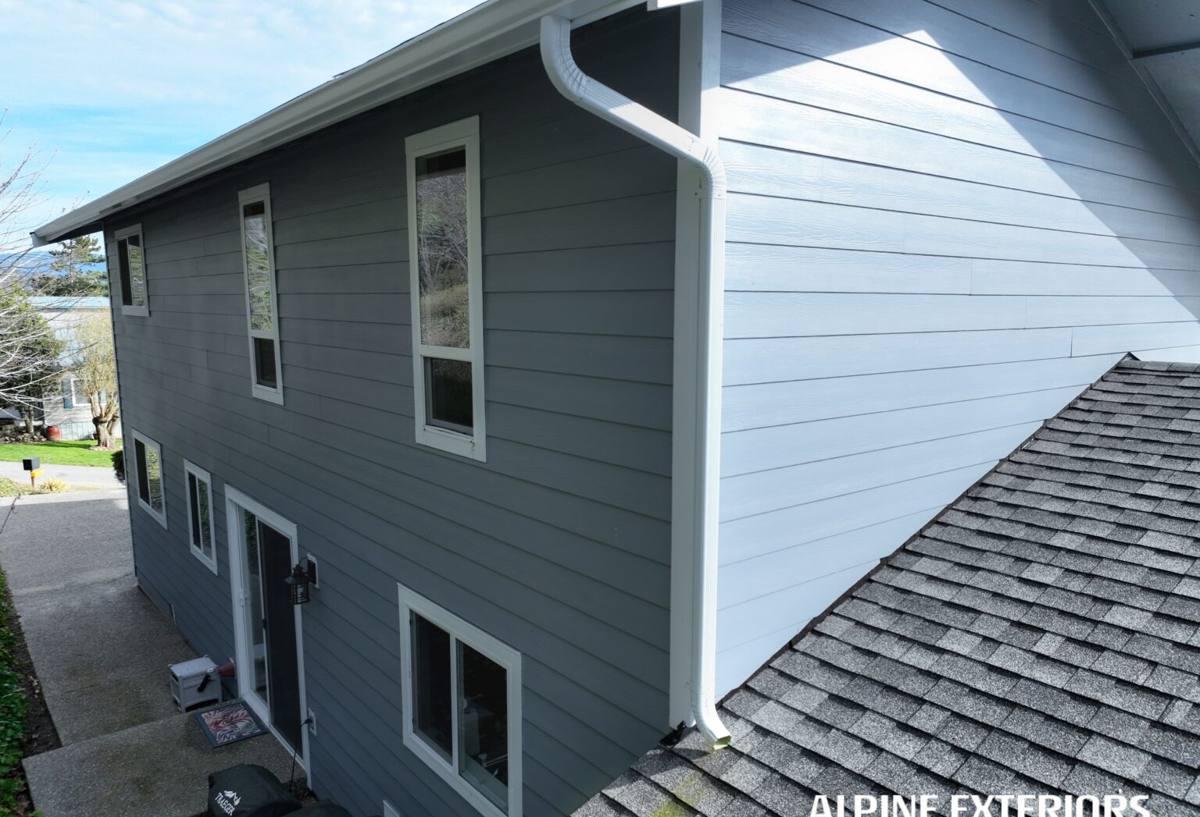
What Actually Damages a Roof in a Point Roberts Storm
Wind-Driven Rain and Uplift
Standard shingle installations are rated for a certain wind speed, but gusts off the water can exceed that rating during a bad system, especially on exposed roof planes facing the open shoreline. Uplift loosens shingle tabs and nails, and once a tab lifts even slightly, wind-driven rain gets underneath it. The shingle can look intact afterward while the seal underneath is broken — which is exactly why storm damage often isn't visible from the ground.
Salt Air and Corrosion
Being this close to salt water accelerates corrosion on exposed fasteners, flashing, and any metal roofing components. Galvanized nails and standard flashing that would last decades inland can start showing rust and pitting years sooner out here. During storm repair, we're specifically checking whether corrosion — not just wind — is what let water in.
Extended Moss Season
Whatcom County's wet, mild climate already supports a long moss season, and Point Roberts' marine exposure keeps roofs damp even longer between dry stretches. Moss holds moisture against the roof surface, works into shingle edges, and can lift tabs on its own over time — which means a storm doesn't have to do all the damage by itself. A roof with existing moss growth is more vulnerable to storm damage because the moss has already been prying at the seal.
What a Correct Storm Damage Repair Actually Involves
A lot of storm repair work gets done as a quick patch: replace the shingles that are obviously torn or missing, caulk anything that looks open, and call it done. That approach tends to fail again in the next storm because it doesn't address what let the water in to begin with. Here's what we check on every storm damage call:
- Every shingle on the affected slope for lifted tabs, cracked mat, or broken seals — not just the ones that are visibly missing
- Flashing at valleys, chimneys, vent pipes, and wall transitions, since these are the most common places wind-driven rain finds a way in
- Underlayment condition where shingles have been pulled back, checking for saturation or breakdown
- Fastener condition, especially on older roofs where corrosion may have already weakened the nailing
- Gutter and edge flashing for damage or separation that could funnel water back under the roof edge
- Attic or interior ceiling signs of moisture intrusion, since water can travel before it shows up as a visible stain
Only after that full check do we know whether the fix is a targeted shingle and flashing repair, a larger section replacement, or — on older roofs where the storm exposed damage that was already building — a conversation about whether repair still makes sense versus a full roof replacement.
Our Process for Point Roberts Storm Repairs
1. Assessment First, Repair Second
We inspect the full roof, not just the spot you're worried about. Storms rarely damage just one area, and a roof with one bad section usually has stress showing elsewhere too.
2. A Clear, Honest Scope
You'll get a straightforward explanation of what's damaged, what's at risk, and what it will take to fix it correctly — including if a small repair is genuinely all that's needed. We're not going to talk you into more work than the roof requires.
3. Repair Matched to the Cause
If wind uplift broke the seal, we reseal and refasten properly, not just cosmetically. If flashing failed, we replace it with fasteners suited for the salt air exposure. If moss contributed to the failure, we address that too, since leaving it means the same spot fails again.
4. Documentation for Insurance
Storm damage is often covered by homeowner's insurance, and we document what we find with enough detail to support a claim, so you have what you need if you decide to file one.
Repair vs. Replacement: How to Think About It
| Factor | Points Toward Repair | Points Toward Replacement |
|---|---|---|
| Roof age | Under 10-12 years | Nearing or past expected lifespan |
| Extent of damage | Isolated to one slope or section | Multiple areas, or damage found on inspection beyond the obvious spot |
| Underlayment condition | Dry, intact where checked | Saturated or breaking down |
| Moss/moisture history | Minimal prior growth or staining | Long-standing moss or recurring moisture issues |
| Prior repairs | First storm-related repair | Repeat repairs to the same area |
Most storm calls we get in Point Roberts are legitimate repairs — the roof is fundamentally sound and just needs the storm damage addressed correctly. But we'll tell you plainly if what we find suggests the roof is past the point where another repair makes sense.
Rough Cost Factors
Storm damage repair costs vary a lot based on scope, but the main drivers are consistent: how many shingles need replacing, whether flashing needs to be rebuilt (more labor than shingle work alone), how accessible the damaged area is, and whether there's any underlayment or decking damage underneath. Small, isolated repairs are typically a modest cost; anything involving flashing rebuilds, decking replacement, or multiple roof planes climbs from there. We'll give you a firm number after the inspection, not a guess beforehand.
Why Local Storm Experience Matters Here
Point Roberts is a bit of a logistical outlier — it's part of Whatcom County but geographically separated by the border, which means not every roofing crew is set up to respond quickly or is familiar with what the exposure out there actually does to a roof. A crew that mostly works inland jobs may not immediately recognize how salt air changes fastener life, or how much more aggressively wind-driven rain behaves on a shoreline-facing slope compared to a typical suburban roof.
We treat Point Roberts storm calls with that context built in from the start — we're not learning the site conditions on your roof for the first time. That matters most right after a storm, when getting a temporary cover or tarp on an exposed area quickly can be the difference between a contained repair and secondary water damage inside the house.
What to Do Right After a Storm
- Check attic spaces and ceilings for new staining, even if you can't see obvious roof damage from outside
- Don't get on the roof yourself to inspect — storm-damaged roofs can have weak spots that aren't visible
- Photograph any visible damage from the ground for your records, before any temporary repairs are made
- Get a professional inspection promptly — delayed repairs give water more time to spread into decking, insulation, and interior finishes
- Hold off on a full re-roof decision until you've had an actual inspection; not every storm-damaged roof needs replacing
Preventing the Next Storm From Doing the Same Damage
Once a storm repair is done, a few maintenance habits go a long way toward keeping the next storm from finding the same weak points. Regular moss removal keeps growth from working into shingle edges again. Periodic flashing checks, especially around chimneys and vents, catch corrosion before it becomes a leak. And keeping gutters clear means storm runoff drains the way it's supposed to instead of backing up under roof edges. None of this is complicated, but it's the difference between a roof that handles the next storm and one that's already compromised going into it.
If you've had storm damage in Point Roberts — or you're not sure whether recent weather affected your roof — we're happy to come take a look. The estimate is free, there's no pressure to move forward, and you'll get a straight answer about what your roof actually needs.