 Ferndale
 Point Roberts Roofs Work Harder Than Most
Point Roberts sits on its own peninsula, exposed to open water on nearly every side, which means roofs here take a version of Pacific Northwest weather that's more concentrated than what you'd see a few miles inland in Ferndale or elsewhere in Whatcom County. Salt-laden air off the Strait of Georgia accelerates corrosion on fasteners and flashing. Driving rain, pushed sideways by wind off the water, finds gaps that a calmer rain would never reach. And the long, wet moss season here does what it does everywhere in this climate, only with fewer dry stretches to slow it down.
None of that means a roof is doomed — it means repairs have to account for exposure, not just patch what's visibly broken. A shingle that's lifted, a flashing seam that's separated, or a valley that's backing up water usually has a cause behind it, and treating the cause is what keeps a repair from becoming next year's repair.
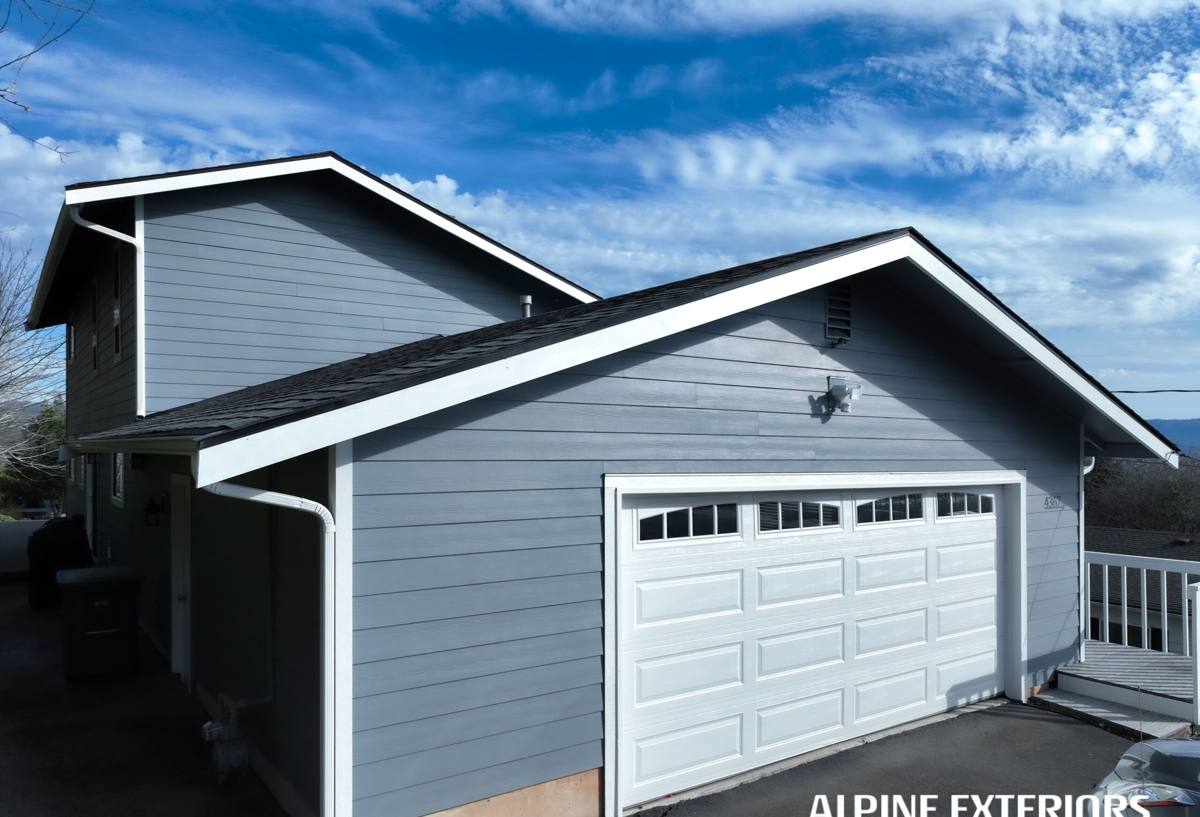
What "Roof Repair" Actually Covers
Roof repair is everything short of a full tear-off and reroof — but it's a wide category, and being clear about what's actually needed protects you from paying for more (or less) than the situation calls for.
Typical repair scopes
- Replacing damaged, cracked, or missing shingles in a localized area
- Resealing or replacing flashing around chimneys, vents, skylights, and roof-wall intersections
- Repairing or rebuilding a leaking valley
- Fixing fastener pops or nail backouts that have worked loose over time
- Addressing soft or spongy decking discovered under a leak
- Moss and debris removal combined with a treatment to slow regrowth
- Ventilation fixes when trapped moisture is accelerating wear from underneath
Where the roof is beyond spot repair — widespread granule loss, multiple layers of old shingles, decking that's soft in more than one area — an honest contractor tells you that plainly instead of stacking patches on a roof that needs to be replaced. That's a judgment call we make based on what we actually find on your roof, not a sales script.
Why Salt Air and Moss Change the Repair Approach
Salt air and fastener corrosion
Standard electro-galvanized nails and fasteners hold up fine in drier, inland conditions. In a salt-air environment like Point Roberts, that coating wears through faster, and corroded fasteners lose their grip well before the shingles around them are worn out. A repair that just re-drives the same grade of fastener into the same spot is treating the symptom, not the cause — within a season or two you're looking at the same lifted shingle again.
Moss, algae, and moisture retention
Moss doesn't just sit on top of shingles looking bad — its root structure lifts shingle edges and holds moisture against the roof surface long after the rest of the roof has dried. That trapped moisture is what eventually leads to soft decking underneath, which is a far more expensive repair than the moss itself. Algae staining is mostly cosmetic, but heavy moss growth left unaddressed is a mechanical problem, not just an appearance one.
Wind-driven rain
On an exposed peninsula, rain doesn't always fall straight down — sustained wind off the water can drive it sideways and up under laps and flashing edges that would shed water fine in a calmer setting. Repairs on Point Roberts roofs need slightly more conservative laps, sealant, and flashing overlap than a textbook inland install, simply because the wind exposure is real and constant.
Our Repair Process
1. Inspection and honest diagnosis
We start on the roof, not just at the leak stain on your ceiling. Water travels before it shows up indoors, so tracing a leak back to its actual entry point — rather than patching where the stain appears — is the difference between a repair that lasts and one that doesn't.
2. A clear explanation before any work starts
You'll know what we found, what's causing it, what we recommend, and roughly what it costs before a single shingle gets pulled. If there's a cheaper, valid fix alongside a more thorough one, we'll tell you both and let you decide.
3. The repair itself
We match materials and technique to the exposure — corrosion-resistant fasteners, properly lapped flashing, and sealant rated for the temperature swings and UV exposure this climate delivers. Matching shingle color and profile as closely as possible matters too, since a repair that fixes the leak but looks like a patch job isn't really finished.
4. Cleanup and a final check
Debris, old materials, and stray fasteners get cleared from the roof and gutters before we consider the job done. We also do a quick check of adjacent areas — flashing, vents, valleys nearby — since if one component failed from age or exposure, a neighboring one is often not far behind.
Repair Materials: What We Use and Why
| Component | Standard-grade option | What we use for coastal exposure |
|---|---|---|
| Fasteners | Electro-galvanized nails | Hot-dip galvanized or stainless, better corrosion resistance in salt air |
| Flashing | Minimal overlap, standard sealant | Extended overlap and wind-rated sealant for driving rain |
| Valley material | Open valley, standard underlayment | Reinforced underlayment with wider metal or ice-and-water coverage |
| Moss treatment | Surface rinse only | Careful removal plus a treatment approach that limits regrowth without damaging shingles |
None of this is exotic material — it's standard product used correctly for the conditions, rather than the cheapest compliant option installed the same way it would be forty miles inland.
Repair vs. Replacement: How We Help You Decide
Homeowners often call about a specific leak and end up wondering whether it's worth fixing or whether the whole roof is due. There's no single rule, but a few factors consistently point one way or the other.
| Factor | Leans toward repair | Leans toward replacement |
|---|---|---|
| Age of roof | Under 15–18 years | Approaching or past manufacturer lifespan |
| Extent of damage | Isolated area (one valley, one flashing point) | Multiple unrelated leak points |
| Decking condition | Solid, dry sheathing | Soft or delaminated decking in more than one spot |
| Granule loss | Localized to the damaged area | Widespread, roof-wide thinning |
| Moss/algae history | First significant occurrence | Repeated heavy growth despite past treatment |
If a roof lands clearly in the repair column, we repair it — full stop. We don't have an incentive to push a replacement on a roof that has years of good service left in it.
Why Hiring a Crew That Already Works Point Roberts Matters
Point Roberts is a bit of an outlier logistically — it's a peninsula connected to the rest of Whatcom County only by water or by driving through Canada, which means a crew that isn't used to servicing the area can end up adding travel time, scheduling friction, or simple unfamiliarity with how a border-crossing job site works into your project. A contractor who already routes work out to Point Roberts on a regular basis has that figured out, so your repair gets scheduled and completed without extra delay tacked onto the estimate.
There's also a practical materials angle: knowing in advance exactly what fasteners, flashing, and shingle match you'll need means one mobilization instead of a crew showing up, discovering they're short a part, and having to reschedule. For homeowners on Point Roberts, that kind of preparation isn't a nicety — it's what keeps a repair a one-visit job.
Signs your roof needs a repair call soon
- A water stain on a ceiling or in the attic that appears after wind-driven rain specifically
- Visible moss buildup along shaded slopes or the north-facing side of the roof
- Shingle edges that look lifted, curled, or granule-bare in a specific area
- Rust streaking near flashing, vents, or exposed fasteners
- Daylight visible through the roof deck from inside the attic
- Gutters filling with granules faster than in previous years
Maintenance That Extends the Life of a Repair
A repair is only as durable as the maintenance around it. A few habits go a long way toward protecting the work and the roof as a whole in this climate:
- Clear moss and debris from the roof surface at least once a year, ideally before the wet season builds up
- Keep gutters and downspouts clear so water isn't backing up under the roof edge
- Trim back overhanging branches that keep sections of the roof shaded and slow to dry
- Have flashing points checked periodically, since they fail well before the shingle field does
- Address small leaks promptly — a slow drip left for a season can turn into soft decking
What a Repair Estimate Should Include
A trustworthy repair estimate should be specific, not vague. Before agreeing to any work, it's reasonable to expect the contractor to tell you what they found, where exactly it is, what materials they'll use, and whether the scope could change once they open up the area. If an estimate is just a lump number with no explanation of cause, that's worth questioning.
We put all of that in writing before starting, so there's no ambiguity about what you're paying for or why.
Get a Straight Answer About Your Roof
If you're dealing with a leak, moss buildup, or storm damage on a Point Roberts home, we're happy to take a look and give you a clear, no-pressure assessment of what it actually needs. Fill out the form below for a free estimate — we'll tell you honestly whether it's a repair or something bigger, and what it would take to fix it right.