 Ferndale
 Roofing in Marietta Faces a Different Set of Conditions
Marietta sits close enough to the water that homes here take on a combination most inland Whatcom County properties never deal with: salt-laden air off the bay, wind-driven rain that gets pushed sideways under poorly flashed edges, and a moss season that can run from October through May in a wet year. None of these things individually is unusual for western Washington. Together, on the same roof, year after year, they shorten the life of materials and workmanship that would hold up fine somewhere drier or further from the shoreline.
A roof replacement in this pocket of Ferndale isn't just about swapping old shingles for new ones. It's about building an assembly — decking, underlayment, ventilation, flashing, and surface material — that's matched to salt exposure, sustained moisture, and moss pressure specifically. That's the lens we use on every Marietta roof we quote.
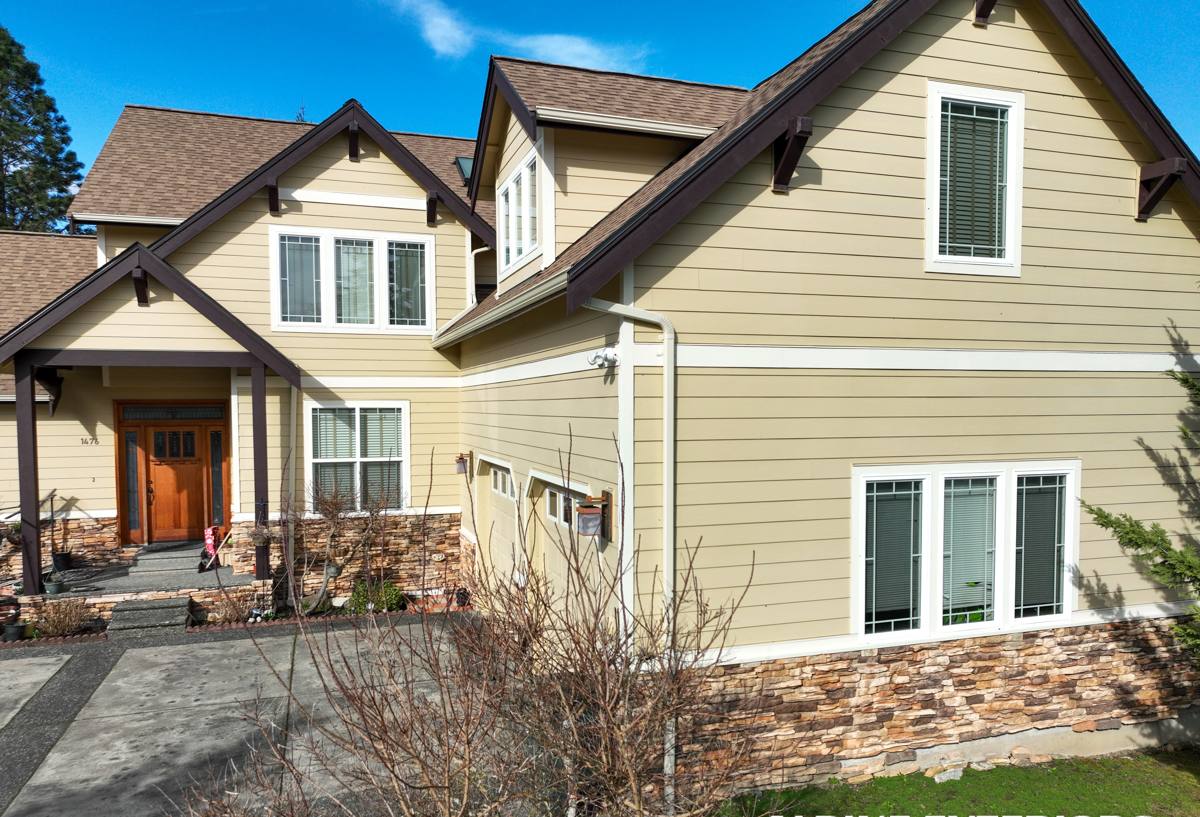
Signs a Marietta Roof Is Due for Replacement, Not Another Repair
Roofs in this area often show wear in patterns that are easy to miss from the ground, especially where moss has taken hold on north-facing slopes or where salt air has quietly corroded fasteners and flashing. Before recommending a full replacement, we look for a combination of these signs rather than any single one:
- Granule loss heavy enough that you can see bare asphalt in valleys or on south and west-facing slopes
- Moss mats thick enough to hold water against the shingle surface, not just surface staining
- Curling, cupping, or cracked shingles, particularly on older architectural or 3-tab roofs past 18-20 years
- Rusted or pitted flashing around chimneys, vents, and valleys — common where salt air accelerates corrosion
- Soft spots or sag in the roof deck when walked, which usually means water has already reached the sheathing
- Daylight visible through the attic roof boards, or damp insulation below them
- Repeated interior leaks after storms, especially ones that seem to move around rather than stay in one spot
If you're only dealing with one or two of these and the roof is under 15 years old, a repair or a partial reroof may be the honest answer. We'll tell you that directly rather than push a full replacement you don't need yet.
What a Correct Roof Replacement Actually Involves Here
Tear-Off and Deck Inspection
Every layer of old roofing comes off down to the deck. This is the point where salt-air corrosion and long-term moisture damage actually get found — not guessed at. Any soft, delaminated, or water-stained sheathing gets replaced before anything new goes down. Skipping this step, or "roofing over" an existing layer, just traps the problem underneath a new surface.
Underlayment and Ice-and-Water Protection
Given how often Marietta roofs deal with wind-driven rain, we treat underlayment as more than a formality. Self-adhered ice-and-water membrane goes in valleys, around penetrations, and along eaves — the places where sideways rain and ice-dam backup are most likely to force water under the surface layer. A synthetic underlayment covers the rest of the field for a second line of defense under the shingles or panels.
Ventilation Before Anything Else Gets Sealed Up
A roof that can't breathe traps moisture in the attic, which speeds up rot, mold, and — indirectly — moss growth on the roof surface itself, since a warm, damp attic keeps the underside of the deck from drying out between rain events. We check intake at the eaves and exhaust at the ridge and size them to the attic, not just to whatever vents were there before.
Flashing and Valleys
Flashing is where most roof leaks in this climate actually start, not in the field of the shingles. Chimney flashing, step flashing along walls, valley metal, and pipe boots all get replaced as part of a proper reroof, using materials chosen to hold up against salt-air corrosion rather than the cheapest stock option.
Choosing a Roofing Material for Salt Air and Moss
There isn't one "best" roofing material for every Marietta home — it depends on your budget, roofline, and how much long-term maintenance you're willing to do. Here's how the common options compare for this specific climate:
| Material | Moss resistance | Salt-air durability | Typical lifespan | Maintenance |
|---|---|---|---|---|
| Standard 3-tab asphalt | Low — moss takes hold quickly in shaded, damp areas | Moderate; fasteners and flashing need attention | 15-20 years | Regular moss treatment and cleaning needed |
| Algae-resistant architectural shingle | Better — copper or zinc granules slow moss/algae growth | Moderate to good | 25-30 years | Occasional cleaning, less frequent treatment |
| Standing-seam metal | High — smooth surface sheds moisture, little for moss to grip | Good with proper coated/corrosion-resistant panels | 40-50+ years | Low; periodic fastener and sealant checks |
| Cedar shake | Low unless well-ventilated and maintained | Requires careful detailing near salt exposure | 20-30 years with upkeep | High — regular treatment, moss removal, replacement of individual shakes |
For most Marietta homes we recommend either an algae-resistant architectural shingle or standing-seam metal, depending on budget and the look you want. We don't push cedar shake in this specific coastal-influenced pocket of Whatcom County — not because it's a bad product everywhere, but because the combination of moisture and salt air here means it demands more upkeep than most homeowners want to commit to, and we'd rather be upfront about that trade-off than sell a product that needs babysitting.
Our Roof Replacement Process
The steps are the same on every job — what changes is how much attention certain stages get based on your roof's exposure and condition:
- On-site inspection and measurement, including attic ventilation and any visible deck issues
- Written estimate covering material, tear-off, deck repair allowance, flashing, and ventilation — no vague line items
- Permitting handled on our end where required
- Material delivery and site protection — landscaping, siding, and gutters covered before work starts
- Tear-off and deck inspection, with any rot or soft sheathing addressed before moving forward
- Underlayment, flashing, and ventilation installed
- New roofing material installed to manufacturer specification
- Full site cleanup, including a magnetic sweep for nails, and a final walkthrough with you
The Long Moss Season and What It Means for Maintenance
Moss doesn't just look bad — it holds moisture against the roof surface long after rain has stopped, which is exactly the wrong thing on a roof already dealing with driving rain and salt air. A new roof buys you time, but moss will eventually return on shaded, north-facing slopes no matter what material you choose. The difference a correct installation makes is in how the roof handles that moss pressure: proper ventilation keeps the deck drier from underneath, algae-resistant granules or metal panels slow surface growth, and clean flashing details mean moss buildup in a valley doesn't automatically become a leak.
Gutters matter here too. Moss and debris that wash off the roof need somewhere to go — clogged gutters back water up under the drip edge, which is a common cause of fascia and soffit rot on older Marietta homes that otherwise have sound roofs.
What Roof Replacement Costs in Marietta
Costs vary based on roof size, pitch, current layer count, deck condition, and material choice, so any number without an actual look at your roof is a guess. In broad terms, most single-layer tear-offs and replacements with a mid-grade architectural asphalt shingle land in a moderate range per square, with metal roofing running noticeably higher up front but lower over the life of the roof given its longevity and reduced maintenance. Steep or complex rooflines, extensive deck repair, and additional flashing or ventilation work all add to the cost — which is exactly why we inspect before we quote rather than pricing off a phone description.
| Cost factor | Why it matters |
|---|---|
| Roof size and pitch | More surface area and steeper pitches increase labor and material needs |
| Number of existing layers | Tear-off of multiple layers takes more time and disposal cost than a single layer |
| Deck condition | Rot or soft sheathing found during tear-off requires repair before new roofing goes on |
| Material choice | Standard shingle, algae-resistant shingle, and metal carry different material and labor costs |
| Ventilation and flashing needs | Undersized or damaged ventilation and flashing add scope beyond the base reroof |
Why It Matters That We Already Work in Marietta
A crew that already works this part of Ferndale knows which slopes hold moss longest, how far wind-driven rain travels up a wall in a storm off the water, and which flashing details tend to fail first on homes exposed to salt air. That's not something you get from a general contractor who occasionally takes a job out this way — it comes from doing this work repeatedly in this specific set of conditions. It also means we're familiar with local permitting expectations and can move a project through that step without it becoming a delay.
We're a Ferndale-based crew serving Whatcom County, and Marietta is part of our regular service area, not a stretch job. That matters when a warranty question or a post-storm check comes up years down the road — we're still local, still reachable, and still familiar with your specific roof.
Get a Straightforward Estimate
If your roof is showing wear, holding moss, or you're just not sure whether it needs repair or full replacement, we're happy to take a look. The estimate is free, there's no pressure attached to it, and you'll get a straight answer about what your roof actually needs — use the form below to get started.