 Ferndale
 New Roof Installation in Sandy Point: Built for What Sits Closer to the Water
Sandy Point sits closer to open water than most of the Ferndale area, and that changes what a roof has to deal with over its lifespan. Homes here get a steadier dose of salt-laden marine air, more wind-driven rain coming in sideways rather than straight down, and a longer moss and algae season on shaded roof slopes than you'd typically see further inland in Whatcom County. None of that is unusual for a Pacific Northwest waterfront community, but it does mean a roof installed without those conditions in mind tends to show its age faster here than the same product would on a drier, more sheltered lot.
This page is specifically about installing a new roof for a Sandy Point home — not a general roofing overview. The materials, fastening details, and ventilation choices that make sense for a roof exposed to this much sustained moisture and salt air are worth understanding before you sign a contract, whether you work with us or someone else.
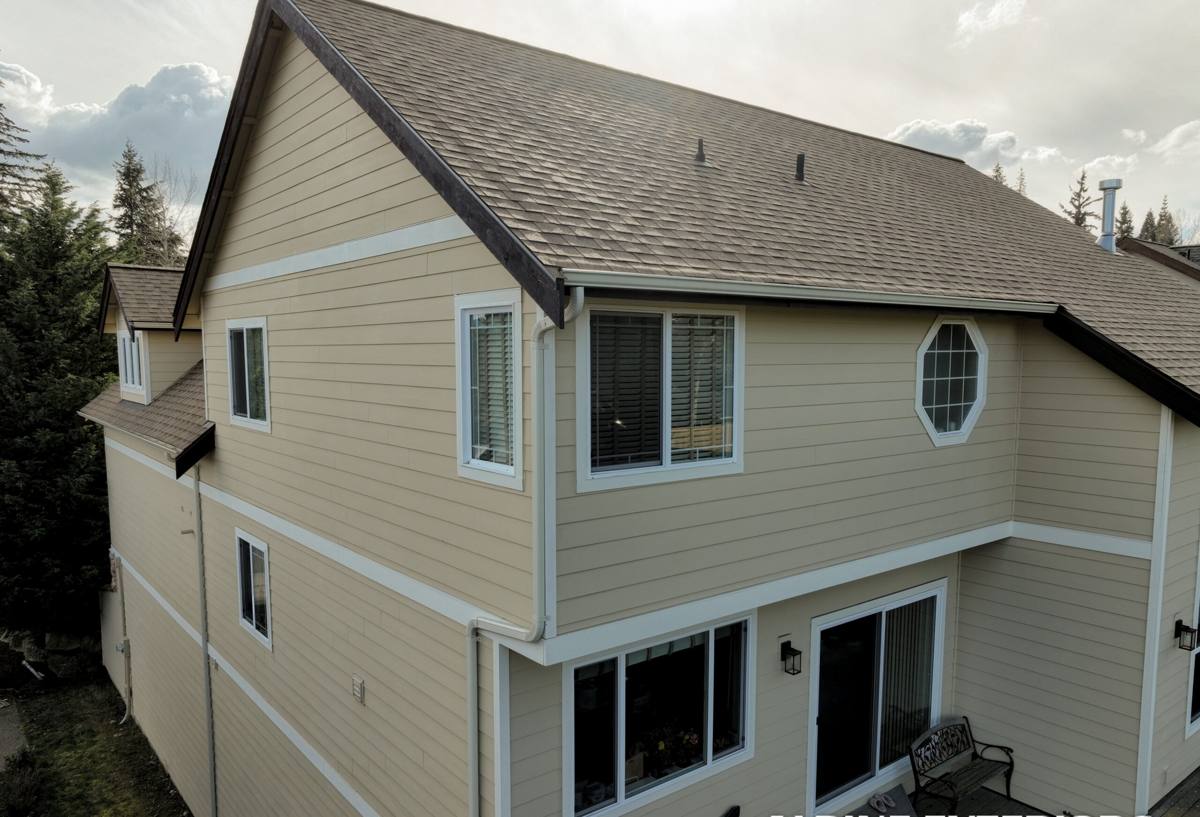
What Makes Sandy Point Roofs Different From Roofs Further Inland
Salt Air and Corrosion
Even homes set back a few streets from the shoreline in Sandy Point get regular exposure to salt-carrying air moving off the water. Salt accelerates corrosion in exposed metal — nails, flashing, vent stacks, and drip edge all age faster under that kind of exposure than they would in a typical inland yard. Roofing hardware that isn't specified for coastal exposure can start rusting and staining a roof within a handful of years, well before the shingles themselves are due for replacement.
Wind-Driven Rain
Being close to open water usually means more direct wind exposure, and Whatcom County's rain rarely falls straight down to begin with. On a Sandy Point roof, wind-driven rain gets pushed up under shingle tabs, into valleys, and around flashing details in a way that a calmer, more sheltered site doesn't experience nearly as often. A roofing system that would perform fine on a wind-sheltered inland lot can still develop leaks here specifically because the water is arriving from an angle the installation didn't account for.
Moss, Algae, and Long-Term Shade
Mild temperatures and consistent moisture add up to a long moss and algae season across this part of Whatcom County, and shaded or north-facing slopes in Sandy Point are no exception. Moss holds moisture against the roof deck, works its way under shingle edges over time, and can shorten the useful life of an otherwise sound roof if it isn't addressed at installation and managed afterward.
Signs a Sandy Point Roof Has Reached Replacement Age
Roof repair makes sense for isolated problems — a damaged flashing detail, a handful of storm-lifted shingles, a leak traced to one clear cause. Full replacement becomes the more honest recommendation when the roofing system itself, not just a piece of it, has reached the end of its useful life. In a marine-exposed location like Sandy Point, that point tends to arrive a bit sooner than the manufacturer's rated lifespan would suggest, because salt air and driving rain add wear that a drier climate simply doesn't produce.
- Granule loss heavy enough that you can see bare, shiny patches on multiple shingles, not just one or two
- Shingles that are curling, cupping, or losing their seal, especially on wind-exposed slopes
- Moss or algae growth that keeps returning within a season or two of cleaning
- Rusted, pitted, or visibly corroded flashing, vent boots, or exposed fasteners
- Soft spots, sagging, or visible deflection anywhere in the roof plane
- Daylight visible through the roof deck from inside the attic
- Repeated leaks in different locations rather than one recurring, fixable spot
- A roof already past, or close to, its material's rated service life
If you're only seeing one or two of these, a repair may still be the right call. A cluster of them, especially on a roof that's already carried a few decades of coastal exposure, is usually the point where continuing to patch stops being the economical choice.
What a Correct New Roof Installation Involves
Tear-Off and Deck Inspection
We remove the existing roofing down to the deck rather than layering over old shingles. That's the only way to actually see the condition of the sheathing underneath — soft, delaminated, or water-damaged deck sections need to be replaced before anything new goes down, and there's no way to know how much of that exists on a given roof until the old layer is off. Skipping this step to save time is one of the more common ways a new roof ends up failing early.
Underlayment and Ice-and-Water Protection
A synthetic underlayment goes down across the full deck as the roof's second line of defense, with self-adhering ice-and-water shield membrane at the eaves, valleys, and any roof-to-wall transitions — the spots where wind-driven rain is most likely to find a way in. In a location like Sandy Point, where wind-driven rain is a regular occurrence rather than an occasional storm event, we treat this coverage as non-negotiable rather than an upgrade.
Flashing Details
Step flashing at walls, proper valley flashing, corrosion-resistant drip edge, and correctly sealed penetrations around vents and chimneys are what actually keep water out of a roof system over time — more so than the shingle itself in most leak scenarios we see. Given the corrosion risk from salt air, we spec flashing and fastener materials rated for coastal exposure rather than the minimum the building code technically allows.
Fasteners and Wind-Rated Installation
Nailing pattern, fastener count, and fastener material all affect how a roof holds up under sustained wind load. We follow the manufacturer's high-wind nailing specification rather than the standard pattern, and we use corrosion-resistant fasteners throughout — a detail that matters more in a wind- and salt-exposed location like Sandy Point than it does on a sheltered inland roof.
Ventilation
Balanced intake and exhaust ventilation keeps the attic space at a consistent temperature and moisture level, which protects the roof deck from the underside and helps prevent condensation buildup in a consistently damp climate. A roof can be installed correctly on top and still fail prematurely from the inside if the attic underneath it isn't ventilated properly — we check and correct this on every full replacement rather than treating it as a separate add-on.
Choosing a Roofing Material for a Sandy Point Home
There's no single correct answer for every roof — budget, roof pitch, architectural style, and how long you plan to stay in the home all factor in. What we can tell you honestly is how the common options perform under this specific climate's demands: salt air corrosion, wind-driven rain, and a long moss season.
| Material | Wind & Storm Performance | Salt Air / Corrosion Resistance | Moss & Algae Resistance | Typical Service Life |
|---|---|---|---|---|
| Algae-resistant architectural asphalt shingle | Good, when installed with high-wind nailing spec | Good, provided flashing and fasteners are coastal-rated | Good — copper- or zinc-infused granules resist regrowth | Roughly 25–30 years, manufacturer-rated |
| Standard (non-algae-resistant) asphalt shingle | Good, same nailing requirements apply | Good, same fastener considerations apply | Fair — moss and algae return faster without treated granules | Roughly 20–25 years, manufacturer-rated |
| Standing seam metal roofing | Very good — few exposed fastener points, sheds wind-driven rain well | Depends heavily on finish and fastener spec; needs correct coastal-rated hardware | Very good — smooth surface sheds moss more easily | Often 40+ years with proper installation |
Metal roofing generally outperforms asphalt on wind and moss resistance, but it comes at a higher upfront cost and requires a contractor experienced with its specific fastening and flashing details — a poorly installed metal roof can leak just as easily as a poorly installed shingle roof, sometimes worse. Algae-resistant architectural shingles remain the most common choice for Sandy Point homes because they balance cost, appearance, and climate performance reasonably well, provided the installation details around fastening and flashing are done correctly.
What Drives the Cost of a New Roof in Sandy Point
We won't quote a number without seeing the roof, but these are the factors that actually move the price up or down on a coastal Whatcom County reroof, and why.
| Factor | Why It Matters Here |
|---|---|
| Roof size and pitch | More square footage and steeper pitches both increase material and labor time |
| Number of existing layers | Tear-off of multiple old layers takes longer and generates more disposal cost |
| Deck condition | Water-damaged sheathing found during tear-off adds repair cost that can't be fully known until the old roof is off |
| Material choice | Standing seam metal costs meaningfully more upfront than asphalt shingle, though it can last longer |
| Flashing and valley complexity | More roof planes, dormers, and valleys mean more flashing work, which matters more in a wind-driven-rain climate |
| Ventilation upgrades | Adding or correcting intake/exhaust venting is often needed on older homes and adds modest cost with real payoff |
| Site access | Waterfront and shoreline-adjacent lots can have tighter access or staging constraints that affect labor time |
How Our Process Works
The steps below are the same ones we walk every Sandy Point homeowner through before, during, and after a full roof replacement.
- On-site inspection and estimate: We walk the roof, check the attic for ventilation and moisture issues, and give you a written estimate based on what we actually find — not a phone-in guess.
- Material selection: We go over the honest trade-offs between shingle and metal options for your specific roof, budget, and how long you plan to be in the home.
- Permitting: We handle the local permit paperwork required for the reroof before work begins.
- Tear-off: Full removal down to the deck, with the work site protected and debris hauled off promptly rather than left to sit.
- Deck repair: Any damaged sheathing found underneath gets replaced before underlayment goes down — we'll show you what we found and why it needs replacing.
- Underlayment, ice-and-water shield, and flashing: Installed to the standard described above, not the bare code minimum.
- Roofing installation: Shingles or metal panels installed with the correct high-wind fastening pattern for coastal exposure.
- Ventilation check and correction: Intake and exhaust venting verified and corrected as part of the job, not billed as a surprise add-on later.
- Final cleanup and walkthrough: Magnetic sweep for stray fasteners, full site cleanup, and a walkthrough where we show you the completed work before we consider the job done.
Permits, Timeline, and What to Expect During the Job
A straightforward full tear-off and reroof on a typical single-family home usually runs a few days once work begins, weather permitting — Whatcom County's wet stretches can push that timeline, and we'll be upfront with you about that rather than promising a date we can't guarantee. Permitting requirements apply to most full roof replacements; we handle that process rather than leaving it to the homeowner. Expect some noise, a dumpster or debris trailer staged on-site, and crew vehicles in the driveway or street for the duration — we'll talk through site logistics with you ahead of time, which matters more on some Sandy Point lots than others depending on access and parking.
Why a Crew That Already Works Sandy Point Matters
A roofing crew that mostly works inland jobs isn't wrong about roofing in general, but they may not default to coastal-rated fasteners, high-wind nailing patterns, or the flashing attention this specific exposure calls for unless they're specifically asked. A crew that already works in Sandy Point and along the rest of the Whatcom County waterfront treats those choices as standard practice rather than an upsell, because we've seen what happens on tear-offs and service calls when they weren't done that way the first time. That familiarity also tends to mean a more accurate estimate up front — fewer surprises once the old roof comes off, because we already have a reasonable idea of what a coastal-exposed roof in this area tends to be dealing with underneath.
If you're weighing a repair against a full replacement, or you just want a straight answer on what your roof actually needs, we're happy to take a look. There's a free, no-pressure estimate form below — reach out and we'll walk the roof with you and tell you honestly where it stands.