 Ferndale
 Why Semiahmoo's Coastal Air Is Harder on Siding Than Most of Whatcom County
Homes along the Semiahmoo shoreline sit in a different exposure category than a house a few miles inland in Ferndale proper. Saltwater air off the bay carries fine salt particles that settle on exterior surfaces, and combined with near-constant coastal humidity, that salt accelerates corrosion on fasteners, trim caps, and any metal flashing that isn't rated for it. Add in wind-driven rain that comes at siding sideways rather than straight down, and you get water intrusion at laps, seams, and penetrations that a calmer inland wall assembly would never see.
Then there's moss. Whatcom County's long, wet shoulder seasons — often eight or more months a year with regular rain and short daylight — give moss and algae plenty of time to colonize any siding surface that stays damp and shaded, especially on north- and west-facing walls near mature trees or close to the water. Moss holds moisture against the wall, which is exactly the condition that rots wood-based siding and voids the warranty on cheaper composite products. A siding material and installation detail set that ignores these three factors — salt, wind-driven rain, and moss — will underperform in Semiahmoo even if it holds up fine twenty miles inland.
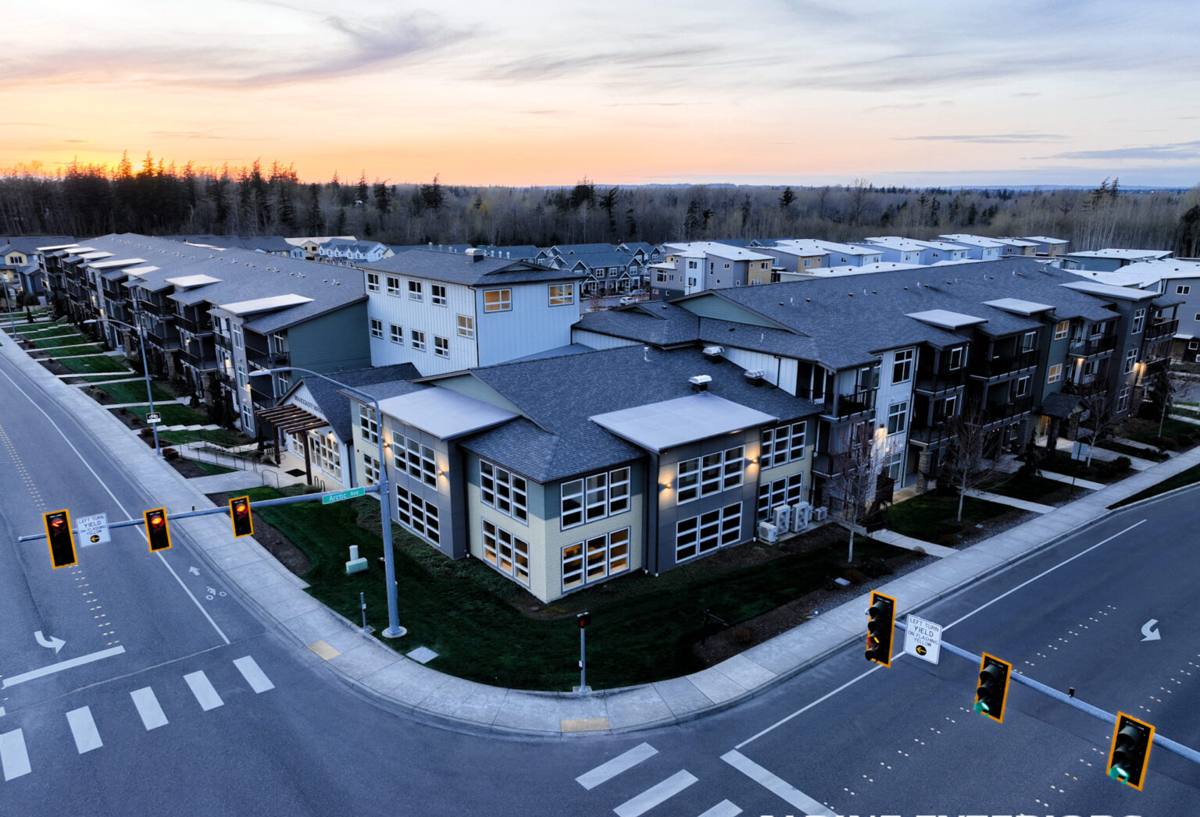
Why We Install Only James Hardie in This Service Area
We made a standing decision as a company to install James Hardie fiber cement exclusively — no vinyl, no LP SmartSide, no Cemplank, no Allura, no primed spruce or cedar. That decision matters more, not less, on a coastal job like Semiahmoo. Vinyl siding can warp and gap at the laps in sustained wind-driven rain, and those gaps are exactly where salt-laden moisture works its way behind the panel. Wood-based composite products like LP SmartSide rely on an engineered wood core and edge sealant staying intact; any breach from moss growth, impact, or aging caulk lets moisture into a wood substrate that will swell and eventually rot, particularly in shaded, damp coastal microclimates. Cedar and primed spruce are honest, attractive materials, but raw or lightly primed wood in a salt-air, high-moss environment demands a maintenance schedule most homeowners can't realistically keep up with.
James Hardie fiber cement is cement, sand, and cellulose fiber — it doesn't have an organic wood core to rot, and it isn't a petroleum-based material that softens or deforms with heat and cold cycling. It's also non-combustible, which matters everywhere but is a genuine bonus on any home near dry brush or with wildfire smoke exposure during our summer months. None of this means Hardie is maintenance-free or immune to poor installation — it isn't, and we'll cover that honestly below — but the base material gives a coastal home a much better starting point.
Picking the Right Hardie Product Line for a Marine Environment
James Hardie makes climate-engineered product lines, and for Semiahmoo's exposure we default to HZ5, their highest moisture- and freeze-resistance rating, rather than a standard-climate HZ10 product used more commonly inland. The HZ5 formulation is engineered for regions with sustained damp conditions and salt exposure, which describes this stretch of Whatcom County's coastline well.
ColorPlus Factory Finish
We specify ColorPlus finish on coastal jobs whenever the budget allows, because it's a baked-on, factory-applied finish that resists fading and chalking far better than field-applied paint, and it doesn't require the homeowner to repaint on a five-to-seven-year cycle the way a site-painted wall does. In a salt-air environment, fewer field seams and less exposed cut-edge paint means fewer failure points.
Panel and Trim Selection
Lap siding profile, trim width, and soffit/fascia coordination all get chosen based on the specific elevation exposure of the house — a wall facing the water and prevailing wind gets tighter attention to lap exposure and fastener spacing than a sheltered wall on the same home.
| Product Line | Best Suited For | Why It Matters in Semiahmoo |
|---|---|---|
| HZ5 lap and panel siding | Direct coastal exposure, wind-driven rain | Engineered moisture resistance for sustained damp, salt-air conditions |
| ColorPlus factory finish | Any elevation, especially sun- and salt-exposed walls | Baked-on finish resists fading/chalking without repaint cycles |
| Primed field-paint option | Budget-driven projects, sheltered elevations | Lower upfront cost, but requires future repainting and touch-up vigilance |
| Trim and fascia boards | All elevations | Coordinated flashing details prevent water tracking behind trim returns |
What a Correct Installation Actually Involves Here
Fiber cement siding is only as good as the assembly behind it. Most Hardie failures we're called to look at on older homes weren't material failures — they were installation shortcuts. On a coastal job like Semiahmoo, we treat the following as non-negotiable:
- A continuous weather-resistant barrier installed behind the siding, lapped correctly shingle-style so water sheds outward at every seam
- Proper drainage plane with a rain screen gap where the wall assembly calls for it, so any moisture that does get past the siding can drain and dry rather than sit against the sheathing
- Corrosion-resistant, coastal-rated fasteners — stainless or hot-dip galvanized, not standard electro-galvanized nails that will rust and streak within a few seasons of salt exposure
- Correct minimum clearance between the bottom of the siding and grade, decks, roofing, and other horizontal surfaces so splash-back and standing water don't wick into the panel edge
- Factory-mitered or properly caulked and sealed butt joints at every horizontal seam, since these are the highest-risk points for water intrusion
- Z-flashing and correctly integrated head flashing above every window, door, and horizontal trim transition
- Fastener spacing and penetration depth that matches James Hardie's published installation instructions for the specific product and exposure category — this is also what keeps the manufacturer's warranty valid
Skipping any one of these doesn't usually cause an immediate problem — it shows up two, five, or ten years later as staining, soft trim, or a warranty claim that gets denied because the installation didn't follow spec. That's the real cost of a rushed or unfamiliar crew, and it's the reason installation quality matters as much as the product choice.
Our Process, Start to Finish
A siding job on a coastal Semiahmoo property runs the same core steps as any James Hardie installation, but with the exposure-specific decisions built in at each stage:
- On-site assessment — we look at wall orientation relative to prevailing wind and water, existing moisture or moss damage, current flashing condition, and any rot in the existing sheathing that needs to be addressed before new siding goes on
- Product and finish selection — HZ5 vs. standard climate rating, ColorPlus vs. field paint, lap exposure, and color, matched to the home's specific exposure
- Written estimate — clear scope, product specification, and price, no vague allowances
- Tear-off and substrate check — removing existing siding reveals the sheathing condition; any water damage found gets repaired before we move forward, not covered up
- Weather barrier and flashing installation — the part of the job that's invisible once finished but determines whether the wall stays dry for the next thirty years
- Siding installation to manufacturer spec — correct fasteners, spacing, clearances, and joint treatment throughout
- Final walkthrough — we go over the finished work with the homeowner before calling the job done
What This Costs and What Drives the Price
Every siding estimate is specific to the house, but a few factors consistently move the price on a coastal Semiahmoo job more than they would on a sheltered inland home:
| Cost Factor | Why It Matters in Semiahmoo |
|---|---|
| Substrate repair | Homes with prior moisture intrusion often need sheathing or framing repair before siding goes on — this varies widely by house and can't be estimated sight unseen |
| Product line (HZ5 vs. standard) | The climate-engineered line costs more than standard-climate product but is the right call for direct coastal exposure |
| Finish (ColorPlus vs. field paint) | Factory finish costs more upfront but avoids repaint cycles over the life of the siding |
| Trim and flashing detail | Homes with more windows, roof transitions, and dormers require more flashing labor and material |
| Access and site conditions | Waterfront lots, retaining walls, and limited equipment access can add labor time |
Living With Hardie Siding in a Salt-Air, Moss-Heavy Climate
Correctly installed James Hardie siding is genuinely low-maintenance, but "low" isn't "none," and that's worth being honest about for a Semiahmoo property specifically:
- Rinse salt film and moss growth off the siding periodically with a garden hose and soft brush — pressure washing directly into laps and seams can force water behind the panels, so keep it gentle and low-pressure
- Trim back vegetation and tree cover that keeps any wall shaded and damp, since that's exactly where moss takes hold fastest
- Check caulking at trim joints, window returns, and butt joints annually and re-caulk if it's cracked or pulling away
- Watch for streaking below fasteners, which usually means a non-coastal-rated fastener was used and is starting to corrode
- If you have field-painted (non-ColorPlus) siding, plan on repainting roughly every five to ten years depending on sun and salt exposure
- Keep gutters and downspouts clear so roof runoff isn't dumping extra water down a wall section every storm
Why Local Experience in This Specific Area Matters
A crew that mostly works drier, more sheltered neighborhoods can do a technically fine installation and still miss the details that matter on a bay-exposed home — the fastener grade, the extra attention to a windward wall, the decision to spec HZ5 over standard product. Working this coastline regularly means we already know which elevations of a Semiahmoo-area home take the worst of the wind and rain before we even walk the site, and we plan the flashing and product spec around that from the first estimate rather than discovering the problem after a few winters. That local pattern recognition is worth more than any single product spec sheet.
Get a Straight Answer for Your Home
If you're weighing a siding replacement on a Semiahmoo-area home, we're glad to walk the property, look at your specific exposure and any existing moisture or moss issues, and give you a clear, no-pressure estimate for a James Hardie installation built for this coastline. Fill out the form below and we'll get back to you to schedule a look.