 Ferndale
 Siding Repair for Cordata-Area Homes
Homes in and around Cordata sit in a stretch of Whatcom County that gets the full package of Pacific Northwest weather: marine air off the Sound, long wet winters, and a growing season for moss that most parts of the country don't have to think about. Siding here doesn't fail because it's old. It fails because water found a way in and nobody caught it early. Our crew works this area regularly, and the repair calls we get tend to follow a pattern — a few soft boards near grade, a stained band under a window, or a corner that's started to bow after years of standing moisture. None of that is unusual for this climate. It's just what needs attention before it turns into a bigger job.
This page covers siding repair specifically — what causes it here, what a correct repair looks like, and how we approach it when we're called out to a home in this part of Whatcom County.
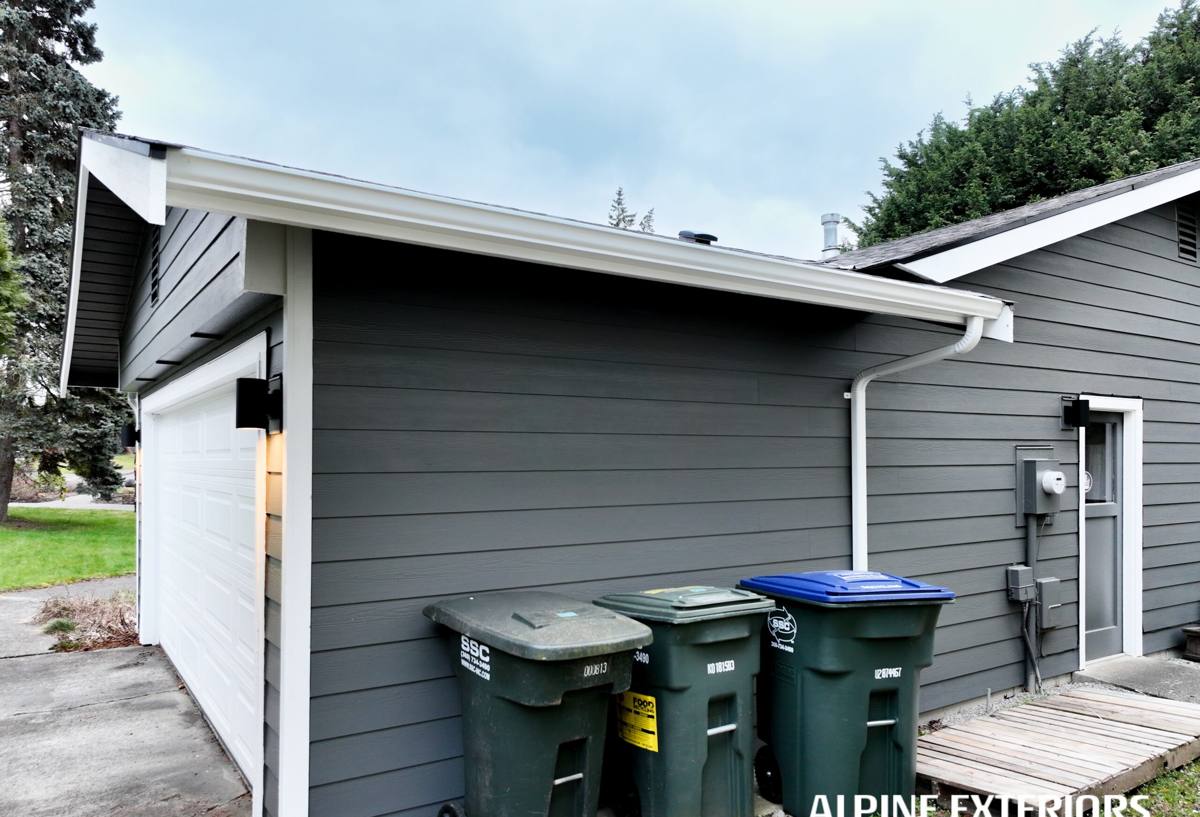
What This Climate Does to Siding
Three things drive most of the repair work we see in this area:
Driving rain
Wind-driven rain doesn't just fall straight down — it gets pushed sideways into wall assemblies, especially on exposed elevations. Over years, that pressure finds every gap in flashing, caulking, and butt joints. Wood-based sidings absorb that moisture and swell; poorly sealed seams let it track behind the cladding entirely, where it can sit against sheathing for months without anyone noticing.
Salt-tinged marine air
Proximity to Bellingham Bay and the Sound means the air carries salt and moisture even on dry days. That combination accelerates corrosion on fasteners, trim flashing, and any metal components in the siding system. It also keeps humidity levels elevated around the building envelope longer than an inland location would see.
A long moss and algae season
Shaded north walls, tree cover, and consistently damp conditions give moss and algae most of the year to establish themselves. Beyond the cosmetic issue, moss holds water against the siding surface and can work into seams and lap joints, keeping wood-based products wet far longer than they're designed to tolerate.
None of this means siding here is doomed to fail early. It means the material and the installation details matter more in Whatcom County than they would in a drier climate, and it means repairs need to actually solve the moisture problem, not just patch the visible damage.
Signs Your Siding Needs Repair, Not Just a Wash
A lot of the calls we get start with a homeowner noticing something small and wanting a second opinion before it becomes expensive. These are the signs worth taking seriously:
- Soft or spongy spots when you press on the siding, especially near the bottom courses or under windows
- Visible warping, buckling, or boards that no longer sit flat against the wall
- Paint that's bubbling, peeling, or failing in one specific area rather than evenly across the wall
- Dark staining or streaking that doesn't wash off, particularly below window sills or at panel seams
- Gaps opening up at butt joints, corners, or trim where caulking has failed
- Persistent moss or algae growth that keeps coming back within weeks of cleaning
- A musty smell or visible moisture on interior walls that share an exterior wall with a suspect area
- Cracked or chipped panels from impact damage, tree debris, or age
Any one of these on its own might just need monitoring. Two or more in the same area, or anything paired with interior moisture signs, is worth a closer look before the next wet season.
What a Correct Siding Repair Actually Involves
A repair that just replaces the visible damaged board and stops there often fails again within a year or two, because it doesn't address why that board failed in the first place. A repair done right includes a few steps that are easy to skip if a crew is moving fast:
Find the water source, not just the symptom
Damaged siding is usually a downstream sign of an upstream problem — failed flashing, a missing kick-out at a roof-wall intersection, a gap in house wrap, or caulking that's past its useful life. Replacing the board without fixing the entry point means the new material starts failing on the same timeline as the old one.
Check what's behind the cladding
Once damaged siding is removed, we look at the house wrap or building paper and the sheathing underneath. If there's rot in the sheathing or the water-resistive barrier has failed, that gets addressed before anything new goes back on. Covering a wet wall with new siding just hides the problem for a while.
Match the repair to the existing system
Fiber cement, in particular, has specific fastening patterns, clearances, and joint treatments that need to be followed for the repair to perform like the surrounding original installation. A patch that doesn't match the existing gapping and flashing details becomes the next weak point.
Re-seal and re-finish properly
Caulking at trim and joints needs to be a product rated for exterior use and applied to manufacturer spec, and any touch-up paint or factory-matched finish needs to actually match — both for appearance and because mismatched coatings can behave differently in weather over time.
Repair or Replace: How We Make That Call
Not every damaged section needs a full re-side, but sometimes a repair is a short-term fix on an aging system that's better addressed all at once. Here's generally how we think through it:
| Situation | Usually Repair | Usually Replace |
|---|---|---|
| Damage is isolated to one or two areas | Yes | No |
| Siding is under 15 years old and otherwise sound | Yes | No |
| Damage is spread across multiple elevations | No | Yes |
| Underlying sheathing shows rot in several spots | No | Yes |
| Existing material is a type we don't install (vinyl, LP SmartSide, primed wood) | Depends on condition | Often, once other issues appear |
| Home is due for a color change or full exterior update anyway | No | Yes |
We'll tell you honestly which side of that table your home falls on. A lot of the time, a targeted repair is the right call and we'll say so — there's no reason to push a full re-side on a home that doesn't need one.
Why We Only Repair and Install James Hardie Fiber Cement
When a repair involves replacing sections of siding, we use James Hardie fiber cement — it's the only product line we install, including for repair work. That's a deliberate standard, not a default.
Fiber cement doesn't absorb water the way wood-based or wood-composite sidings do, which matters directly in a climate with this much sustained moisture exposure. It's non-combustible, holds paint and factory-applied ColorPlus finishes far longer than field-applied coatings on other substrates, and Hardie's HZ product lines are engineered for specific climate zones rather than sold as one generic product everywhere. It also carries a strong transferable warranty when installed to spec, which matters if you sell the home before the siding does.
We don't install vinyl, LP SmartSide, Cemplank, Allura, primed spruce, or cedar. Some of those are reasonable products with their own strengths — cedar has real appeal, LP SmartSide has improved over the years, vinyl is inexpensive. But each comes with trade-offs we've decided not to put our name behind: higher maintenance burdens, moisture sensitivity at seams and cut edges, installation tolerances that are easy to get wrong, or warranty structures that don't hold up the way Hardie's does. When we repair or replace, we're not going to patch a Hardie wall with something that behaves differently in the weather this area gets.
Our Process for a Cordata Repair Call
- Inspection. We look at the damaged area and check surrounding sections, flashing, and trim for related issues — not just the spot you called about.
- Diagnosis. We identify what let water in, whether it's a caulking failure, flashing issue, or a install detail that needs correcting.
- Honest scope. We tell you whether this is a contained repair, a larger repair, or a sign the siding is nearing the end of its useful life.
- The fix. Damaged material comes out, the wall assembly underneath gets checked and corrected if needed, and new Hardie material goes in matched to the existing reveal, fastening pattern, and finish.
- Final seal and cleanup. Joints and trim get properly caulked, touch-up finish is matched, and the site is cleaned before we leave.
Why a Crew That Already Works This Area Matters
Siding repair in Whatcom County isn't identical to siding repair somewhere dry. A crew that regularly works Cordata and the surrounding Ferndale area already knows what driving rain does to west and south-facing walls here, how long moss takes to re-establish after a cleaning, and which detailing choices hold up against marine air versus which ones start corroding fasteners within a few seasons. That's not something you learn from a manual — it's pattern recognition from doing the work in this specific climate, repeatedly. It means fewer surprises during the job and a repair that's built for the weather it's actually going to face, not generic weather.
What Affects Repair Cost
Every repair is different, but the same handful of factors drive most of the cost variation we see:
| Factor | Why It Matters |
|---|---|
| Extent of hidden damage behind the siding | Rot repair to sheathing or framing adds labor beyond the visible siding work |
| Height and accessibility | Second-story or hard-to-reach walls take more time and equipment |
| Color and finish matching | Older ColorPlus finishes may need a closer match search or a broader repaint area for consistency |
| Number of affected areas | Multiple smaller repairs across a home cost more in mobilization than one contained area |
| Flashing or trim corrections needed | Fixing the water source, not just the siding, is added scope but prevents a repeat call |
We'll walk through which of these apply to your home before any work starts, so there aren't surprises once the wall is opened up.
After the Repair: Keeping It From Happening Again
A good repair should outlast the conditions that caused the original damage, but a little upkeep helps in this climate specifically. Keep gutters clear so water isn't overflowing onto walls below. Trim back vegetation that's shading a wall and keeping it damp longer than it needs to be. Rinse off moss and algae buildup before it gets established rather than after, and check caulking at trim and joints every couple of years since it's usually the first thing to give out in sustained wet weather.
If you're seeing any of the signs above on a home in Cordata or elsewhere around Ferndale, we're happy to take a look and give you a straight answer on what it needs — repair, monitoring, or something bigger. Reach out for a free, no-pressure estimate using the form below.