 Ferndale
 Siding Repair Built for Sumas Conditions
Sumas sits out at the far edge of Whatcom County, in the flat, low-lying farmland near the Canadian border. It's a different setting than the coastal stretch of Ferndale's service area, but the same underlying weather pattern drives what goes wrong with siding here: driving rain that comes in sideways more often than it falls straight down, a damp valley climate that keeps moisture sitting against a wall long after a storm passes, and a moss season that runs longer than in drier parts of the state. Even away from the immediate shoreline, moisture-laden air moving inland off the Salish Sea reaches communities like Sumas, and it shows up in the same places on a house — shaded walls, north-facing corners, and anywhere a seam or piece of trim has started to open up.
Siding repair is a different job than a full re-side. Done right, it's a focused diagnosis of why a specific section failed, a repair that addresses the actual cause rather than just the visible symptom, and a patch that matches the surrounding wall closely enough that it doesn't stand out. We repair siding on Sumas homes regularly, and this page covers what that work actually involves.
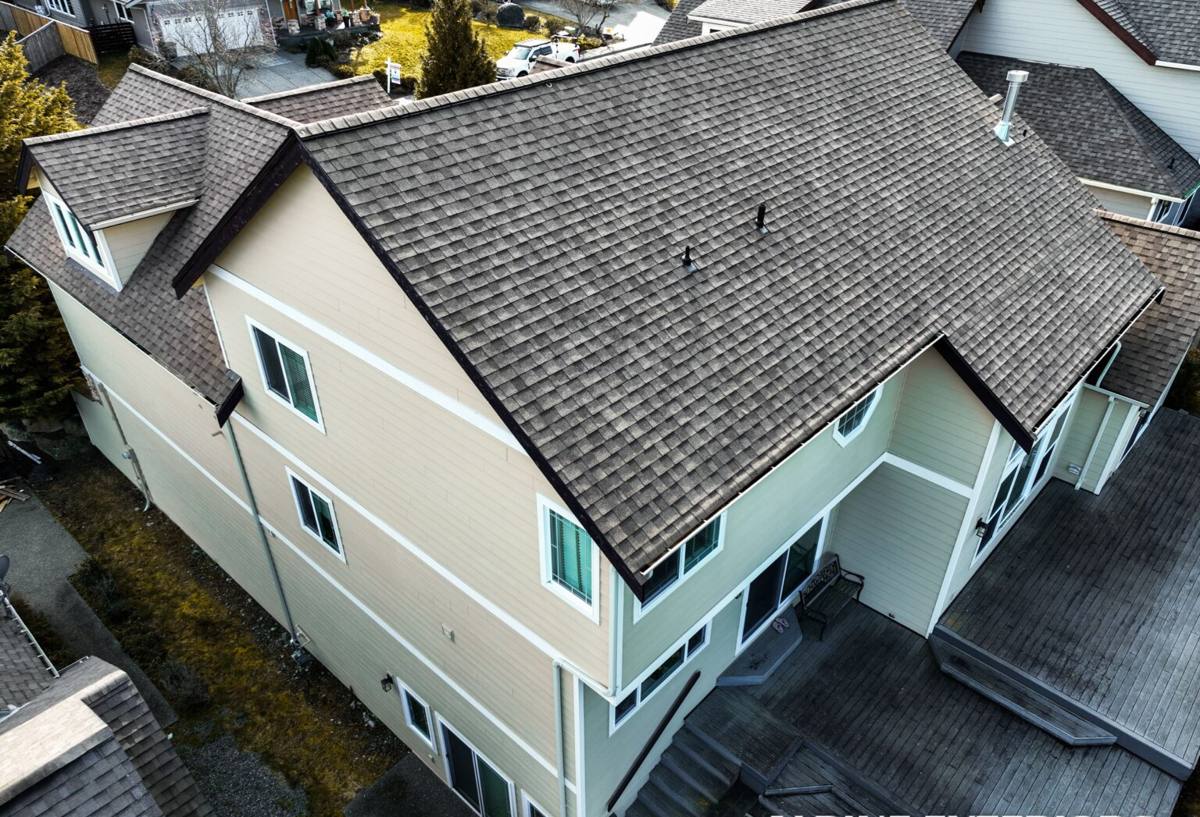
Why Siding Fails Faster in a Place Like Sumas
Wind-Driven Rain
Storms moving through this part of the county push rain sideways into walls rather than letting it run straight down and off. On a lap-sided home, that means water gets tested at every seam, corner, and piece of trim, not just at the top of a wall the way it would in a calmer, drier climate. Siding and flashing that weren't detailed to shed wind-driven rain tend to show damage first exactly where two pieces meet.
A Wet, Low-Lying Valley Floor
Sumas sits low, in flat agricultural terrain near the Nooksack River system. Ground-level moisture doesn't drain away as quickly on flat land as it does on a hillside lot, and siding installed too close to grade, or with a compromised bottom edge, sits in damp conditions longer after every rain event. That's a common source of the soft, discolored siding we find low on a wall during a repair inspection.
A Long Moss and Mildew Season
Persistent regional dampness and plenty of shaded wall area add up to a moss and mildew season that stretches across much of the year here. Moss holds moisture directly against the siding surface, and left alone long enough, that trapped moisture works its way past the surface and into seams and fastener holes that were never meant to stay wet for months at a time.
Freeze-Thaw Cycling
Sumas sees more frequent hard frosts than the milder coastal parts of the county. Water that has already worked its way into a crack or a poorly sealed joint expands when it freezes, which turns a small crack into a bigger one over a single winter. This is one of the more common reasons a repair that could have been minor if caught early turns into a larger patch by the time a homeowner calls.
What We Actually Find on a Sumas Repair Call
Most repair calls come in described as one thing — a cracked board, a stain, a soft spot — and the real cause turns out to be something upstream of the siding itself. Part of doing a repair correctly is tracing the damage back to its actual source before touching anything.
| What You See | What's Usually Going On | What the Repair Needs to Address |
|---|---|---|
| Soft or spongy siding near the ground | Grade too close to the wall, or a compromised bottom edge holding ground moisture | Replace the damaged section and correct clearance so it doesn't recur |
| Cracking at a butt joint or corner | Freeze-thaw expansion in a joint that wasn't sealed or lapped correctly | Re-cut and properly lap the joint, not just caulk over the crack |
| Staining below a window | Failed flashing directing water behind the siding instead of off it | Correct the flashing detail before any new siding goes back on |
| Persistent moss or dark streaking | Shaded wall holding moisture longer than it drains off | Clean the surface and inspect underneath for early rot before it's a bigger problem |
| Popped or backed-out fasteners | Wrong fastener pattern or spacing for this wind exposure | Re-fasten correctly, not just drive the same nail back in |
| A single impact-damaged panel | Storm debris, a ladder, or general accidental damage | Straightforward panel replacement, matched to the existing wall |
What a Correct Siding Repair Involves
Finding the Real Cause First
Cutting out a damaged section and screwing in a new piece without figuring out why the old one failed just buys time. If the underlying cause was a flashing gap, a grading problem, or a fastening pattern that wasn't right for this level of wind exposure, the replacement piece fails the same way eventually. A repair worth doing starts with pulling back enough of the surrounding material to see what's actually happening behind it.
Checking What's Underneath
Once a section of siding is off, we look at the house wrap and sheathing behind it. Sound sheathing means the repair stays a repair. Soft or delaminating sheathing means water has been getting past the siding for a while, and the scope needs to expand to address that before new material goes back on — patching over compromised sheathing just hides a problem that keeps growing.
Matching Material and Finish
We repair with James Hardie fiber cement, matched to the existing plank width, reveal, and texture as closely as the original installation allows. Hardie's factory-applied ColorPlus finish is formulated in specific colors, and matching an existing wall means sourcing the closest available match rather than guessing with field-mixed paint that will fade differently than the surrounding siding over the next few seasons.
Correcting the Detail, Not Just the Damage
If the original installation had a fastening pattern, a flashing detail, or a grade clearance that wasn't right for a Sumas property's exposure, we fix that detail as part of the repair. Putting the same mistake back on the wall guarantees a repeat call in a year or two.
Our Sumas Siding Repair Process
- Inspection and diagnosis: We walk the affected area and the surrounding wall, looking for related damage that hasn't shown up as an obvious symptom yet.
- Root-cause check: Where damage suggests water has been getting behind the siding, we open up the section to check flashing, house wrap, and sheathing condition before quoting the work.
- Honest scope: We tell you plainly whether this is a contained repair, a larger patch, or a sign the siding is nearing the end of its service life.
- Material match: We source Hardie product and ColorPlus color as close to the existing wall as the manufacturer's current lineup allows.
- Correct reinstallation: New material goes in with proper lapping, fastening, and flashing detail for this area's wind and moisture exposure — not just a patch that looks fine until the next storm.
- Cleanup and walkthrough: We review the completed repair with you and explain what we found, what we fixed, and anything worth keeping an eye on going forward.
Repair vs. Replacement: Making the Right Call
Not every siding problem on a Sumas home needs a full re-side, and not every problem should be patched. The honest answer depends on how contained the damage is and what's happening behind the wall.
| Situation | Repair Usually Makes Sense | Replacement Is Usually the Better Call |
|---|---|---|
| Impact damage to one or two panels | Yes — isolated, straightforward to match | Not typically, unless the material is discontinued |
| Localized water damage traced to one flashing failure | Yes, once the flashing is corrected | Only if rot has spread well beyond the immediate area |
| Widespread soft spots across multiple walls | Rarely — usually a sign of a systemic problem | Yes — patching piece by piece just delays the real job |
| Siding is an older, non-Hardie product nearing end of service life | Only as a short-term stopgap | Yes — new material will keep failing around old, tired siding |
| Cosmetic moss staining with sound material underneath | Yes — cleaning and minor sealant work is often all that's needed | No — this is a maintenance issue, not a structural one |
We'll walk you through which category your home actually falls into rather than defaulting to whichever job is bigger. A lot of repair calls genuinely are just repairs.
Why James Hardie Is What We Repair With
We install and repair with James Hardie fiber cement exclusively — we don't work with LP SmartSide, vinyl siding, Cemplank, Allura, primed spruce, or cedar. That's a professional standard, not a judgment on every homeowner who has one of those products already on their house; we'll still repair a home's existing siding when that's the right call. But when new material goes on a wall, whether it's a full job or a repair patch, we want it to be a system we trust completely.
- Non-combustible core: Fiber cement doesn't feed a fire the way wood-based siding products can.
- Factory-applied ColorPlus finish: Baked on under controlled conditions rather than brushed on in the field, so a matched repair section resists fading at a similar rate to the surrounding wall.
- Climate-engineered HZ formulations: Hardie builds different product formulations for different climate zones, including versions suited to sustained moisture exposure and freeze-thaw cycling.
- Dimensional stability: Fiber cement doesn't swell, cup, or warp the way some engineered wood siding can after repeated wet-season cycles, which matters for how well a repair patch continues to fit against the original wall.
When a Repair Turns Into a Bigger Conversation
Sometimes a homeowner calls about one bad section and the honest answer is that the rest of the siding — often an older vinyl or engineered wood product — is close behind it. We won't manufacture a bigger job out of a small one, but we also won't quietly patch around a wall that's clearly failing everywhere else just to make one visit easy.
Signs Your Sumas Home May Need a Siding Repair
- Soft, spongy, or discolored siding, especially low on the wall or near grade
- Cracking or gapping at butt joints, corners, or trim intersections
- Staining or dark streaking below windows, doors, or roof-to-wall transitions
- Persistent moss, mildew, or green growth on shaded or north-facing walls
- Nail heads or fasteners that have backed out or are visibly popping through the surface
- A noticeable draft, higher energy bills, or a musty smell near an exterior wall
- Warping, bowing, or a section of siding that no longer sits flat against the wall
Why Hiring a Crew That Already Works Sumas Matters
A crew that works this part of Whatcom County regularly knows how valley damp, wind-driven rain, and freeze-thaw cycling actually behave on homes here across a full year — which wall orientations stay wet the longest, which flashing details get skipped by crews unfamiliar with this specific exposure, and which fastening patterns hold up versus which ones back out within a couple of seasons. That experience is exactly what separates a repair that lasts from one that reopens the same problem after the next hard winter. Sumas' position out near the border, in flat low-lying terrain, gives it a slightly different exposure than the coastal side of Ferndale's service area, and a crew with real time in this area treats that difference seriously rather than applying a generic patch job built for a milder site.
If you're seeing damage on your Sumas home's siding — or you're just not sure whether what you're looking at is cosmetic or something more — we're glad to take a look and give you a straight answer. Reach out using the form below to schedule a free, no-pressure estimate.