 Ferndale
 Siding Replacement in Cordata: A Job That Has to Match the Climate
Cordata sits in one of the wetter, greener corners of Whatcom County, and that shows up in how siding ages here. Homes in this part of the Ferndale and Bellingham area deal with a long wet season, moisture-laden air off the Sound, and enough shade from mature trees and close-set lots to keep moss and algae active for most of the year. Siding replacement in Cordata isn't just a cosmetic upgrade — it's a chance to correct whatever let moisture in the first time and put a system on the wall that's actually built for this specific climate.
This page focuses on one job in one area: what a proper siding replacement looks like for a Cordata home, why the standard approach matters more here than in a drier climate, and what our process looks like from first look to final walkthrough.
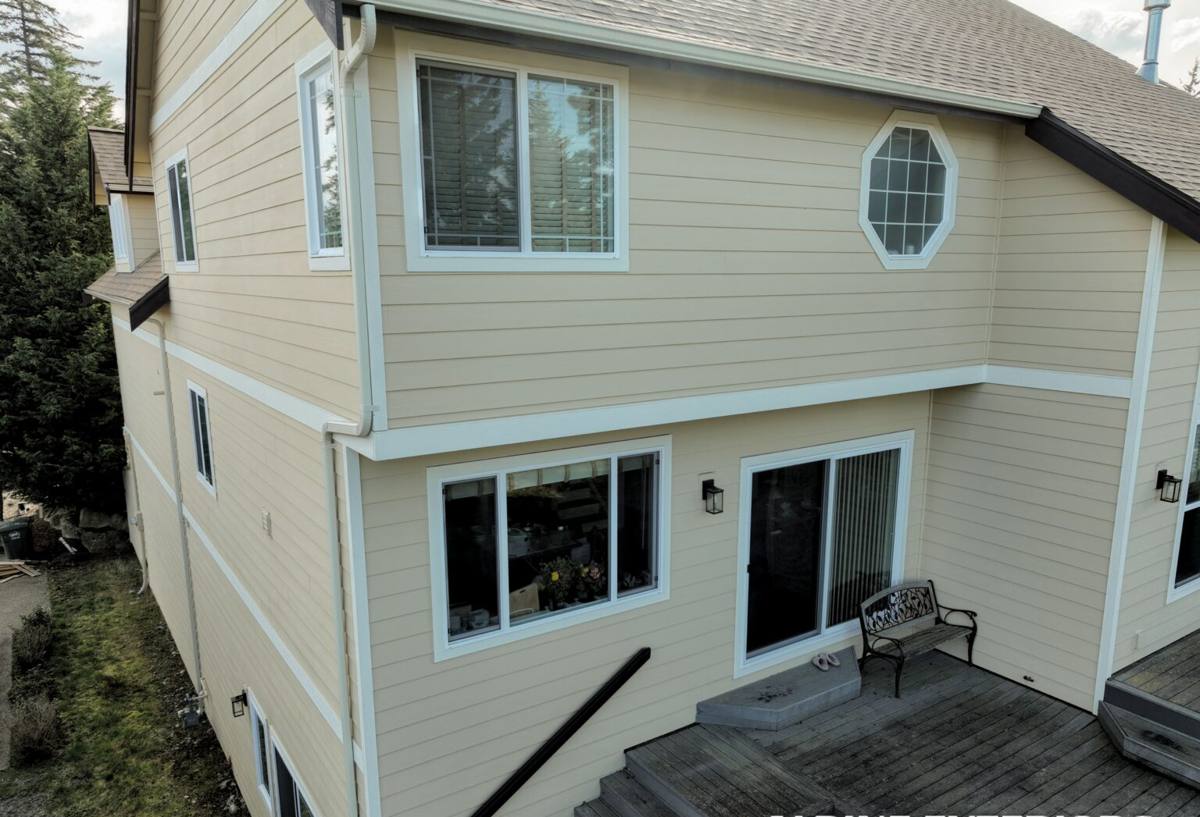
What Cordata's Climate Does to Siding Over Time
Three things drive most of the siding failures we see in this part of Whatcom County, and they compound each other:
Salt Air
Proximity to Bellingham Bay and the Puget Sound means a steady trickle of salt-laden moisture in the air, even well inland. Salt air accelerates corrosion on fasteners, flashing, and any metal trim, and it speeds up the breakdown of finishes that aren't formulated to handle it.
Driving Rain
Pacific storms here don't just fall straight down — wind-driven rain gets pushed sideways into wall assemblies, working its way behind poorly lapped siding, undersized trim gaps, and old or missing flashing. Once water gets behind the cladding, it doesn't dry out quickly in a climate this humid.
Long Moss Season
Shaded lots, tree cover, and persistent damp conditions mean moss and algae have a long runway to establish themselves on north-facing walls and anywhere airflow is restricted. Moss holds moisture against the siding surface far longer than open air would, which is exactly the condition that rots wood-based products and delaminates lower-grade composites.
Individually, none of these is unusual for Western Washington. Together, over 15-20 years, they're what turns a small original flaw — a missed flashing detail, a butt joint that wasn't sealed right — into a full re-side.
Signs a Cordata Home Needs Replacement, Not Just Repair
Not every siding problem means a full tear-off. But there's a point where patching stops making sense and replacement becomes the cheaper, safer option. Here's what we look for during an inspection:
- Soft, spongy, or crumbling siding when pressed, especially near the bottom courses or below windows
- Persistent moss or algae growth that returns within a season of cleaning
- Paint that's bubbling, peeling, or failing in large sheets rather than fading evenly
- Visible gaps, warping, or cupping at butt joints and panel seams
- Staining or discoloration on interior walls near exterior corners — a sign moisture has already gotten past the siding
- Rust streaks below nail heads or trim, often a sign of fastener corrosion from salt exposure
- Siding that was installed with the wrong gap or clearance at grade, decks, or roof lines
If you're seeing two or more of these, it's worth getting a straight answer on whether repair will actually hold or whether you're better off replacing before the sheathing underneath is compromised.
What a Correct Siding Replacement Actually Involves
The siding itself is only part of the system. A replacement done right in a climate like this addresses everything behind the visible surface:
Tear-Off and Sheathing Inspection
Old siding comes off in full, not patched around, so we can actually see the sheathing underneath. This is where hidden rot from years of trapped moisture shows up — and it needs to be repaired before anything new goes on, not covered over.
Water-Resistive Barrier
A correctly lapped, sealed weather-resistive barrier is what stops wind-driven rain from reaching the sheathing even when it gets past the siding surface. This is one of the most commonly rushed steps in lower-bid jobs, and it's the one that matters most in a driving-rain climate.
Flashing at Every Penetration
Windows, doors, hose bibs, vents, and roof-to-wall transitions all need proper flashing and correct shingle-lap sequencing (each layer overlapping the one below it) so water is directed out and down, never trapped behind the cladding.
Fastening and Fastener Selection
Corrosion-resistant fasteners, set to the manufacturer's specified depth and pattern, matter more here than in a drier inland climate. Overdriven or underdriven nails are a common cause of premature siding failure, and salt air will find any weak point in a fastener over time.
Clearance and Gaps
Correct clearance from grade, roof lines, decks, and other transitions keeps splash-back and standing moisture away from the bottom edge of the siding — one of the first places we see failure on homes that were sided without it.
Siding Material Comparison for Cordata's Climate
We get asked why we only install one product. This is the short version of why, specific to conditions here:
| Factor | Vinyl | Untreated Wood / LP-Style Composite | James Hardie Fiber Cement |
|---|---|---|---|
| Moisture resistance | Sheds water but can warp and gap at seams | Absorbs moisture at cut edges and joints if not maintained | Engineered to resist moisture damage when installed to spec |
| Moss/algae resistance | Moderate; texture can hold spores | Prone to sustained growth in shaded, damp areas | Dense surface resists sustained growth better than wood-based products |
| Salt air durability | Can become brittle and fade over time | Finish breaks down faster near coastal air | ColorPlus factory finish holds up well to coastal exposure |
| Maintenance | Low, but repairs are visible and can't be spot-painted easily | Regular painting and sealing required | Minimal; factory finish reduces repaint cycles |
| Fire resistance | Combustible | Combustible | Non-combustible fiber cement |
This isn't a knock on every use case for those other products — it's why, as a company, we made a decision to install one system and install it well rather than offer several products at different standards. James Hardie's HZ10 line, in particular, is engineered for the moisture and humidity profile common to the Pacific Northwest, which is the reason it's what goes on homes we side in Whatcom County, Cordata included.
Our Siding Replacement Process
- On-site inspection. We look at the current siding, sheathing condition where accessible, trim, flashing, and any moisture staining, and give you a straight assessment of repair versus replacement.
- Written estimate. A clear scope covering tear-off, sheathing repair contingencies, water-resistive barrier, flashing details, product line and color, and cleanup.
- Tear-off and sheathing check. Full removal, with any compromised sheathing identified and repaired before moving forward.
- Weather barrier and flashing installation. Every penetration and transition detailed correctly, not just the flat wall sections.
- Hardie installation. Panels or lap siding installed to manufacturer fastening and clearance specifications.
- Trim, caulking, and touch-up. Factory-finished ColorPlus product means minimal field painting, which also means fewer places for future failure to start.
- Final walkthrough. We go over the finished job with you before calling it done.
Why Hiring a Crew That Already Works Cordata Matters
A siding job in this neighborhood benefits from a crew that's already dealt with the local conditions — knowing to check for hidden rot behind moss-covered walls before quoting a price, understanding how much clearance a shaded, damp lot actually needs versus a sunnier one a few miles away, and not treating flashing and water-resistive barrier work as an afterthought because "it doesn't rain that much here." It also means a contractor who's already familiar with Whatcom County permitting and inspection expectations, which keeps a project moving instead of stalling on paperwork. Local experience shows up less in what a homeowner sees on day one and more in whether the job is still performing correctly a decade later.
What to Prepare Before You Get an Estimate
- Note any rooms with musty smells, soft drywall, or staining near exterior walls
- Point out areas with heavy moss or algae buildup, especially shaded or tree-covered walls
- Mention any past patch jobs or repairs so we know what's already been touched
- Have access ready to crawlspaces or attic areas near exterior walls if accessible
- Think through any color or finish preferences ahead of time — it speeds up the estimate conversation
If your Cordata home is showing signs of siding failure, or you just want a clear read on whether repair or replacement makes more sense, we're glad to take a look. Fill out the form below for a free, no-pressure estimate.