 Ferndale
 Roofs Around Lummi Nation Take a Different Kind of Beating
Homes in and around Lummi Nation sit close enough to the water that the roof over your head is dealing with a different combination of stresses than a house further inland in Whatcom County. You've got salt-laden air moving off Bellingham Bay and the Strait, driving rain that comes in sideways during winter storms, and a moss season that runs long and heavy thanks to the shade, humidity, and mild temperatures typical of this stretch of the Pacific Northwest. None of these forces are dramatic on their own, but stacked together year after year, they shorten the life of a roof faster than most homeowners expect.
Storm damage repair out here isn't just about patching what a windstorm tore loose last week. It's about understanding what a roof in this specific location has already been through before the storm hit, and what it's still exposed to after the repair is done. A roof that's been quietly losing granules to years of moss and salt exposure is going to react differently to wind uplift than a newer roof in a drier part of the county — and a repair that doesn't account for that is a repair that fails again at the next storm.
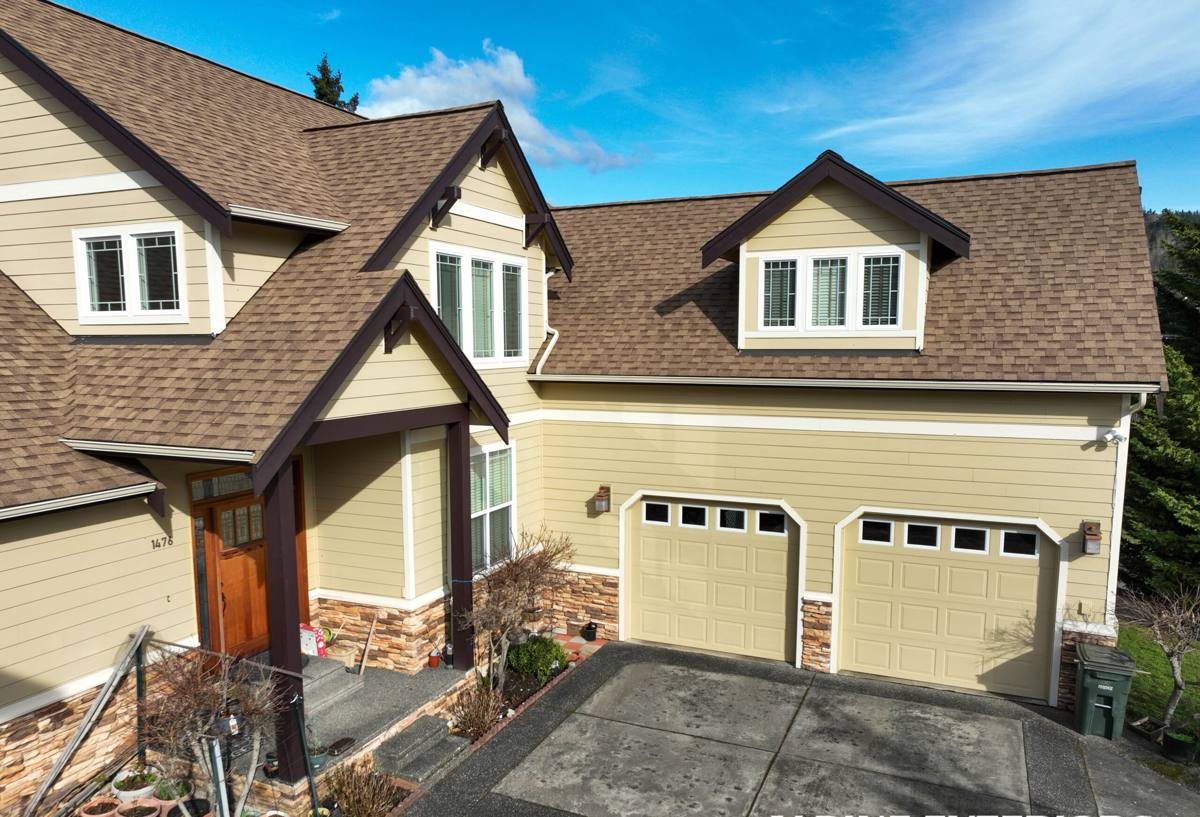
What Salt Air, Rain, and Moss Actually Do to a Roof Here
Salt Air and Metal Fatigue
Airborne salt accelerates corrosion on exposed metal — flashing, fasteners, gutter hardware, vent boots with metal collars. Corroded flashing is one of the most common hidden causes of a leak that shows up "out of nowhere" during a storm. The metal looks fine from the ground, but pinhole corrosion or a weakened seam gives wind-driven rain a path straight into the roof deck.
Driving Rain and Wind-Driven Water
Storms coming off the water don't just drop rain straight down — they push it sideways, up under shingle edges, and into any gap that a calmer rain would never find. This is why storm damage here often shows up as water intrusion at ridge caps, valleys, and eave edges rather than a single obvious hole. The wind finds the weak point; the rain does the rest.
Moss and Prolonged Moisture
A long moss season means more roofs holding moisture against the shingle or shake surface for extended stretches, particularly on north-facing slopes and anywhere shaded by trees. Moss doesn't just look bad — it lifts shingle edges, traps water against the roof deck, and creates the kind of soft, saturated wood that a storm's wind gusts can tear loose far more easily than a dry, healthy roof surface.
What a Correct Storm Damage Repair Actually Involves
A lot of storm repair work in this region gets done as a quick patch — a tarp, some sealant, new shingles nailed over the damaged spot — without ever addressing why that spot failed in the first place. Here's what we consider a complete job:
- A full roof inspection, not just a look at the obvious damage — storms often cause secondary damage (lifted shingles, loosened flashing) that isn't visible from the ground
- Checking the roof deck itself for soft spots or moisture intrusion beneath the damaged area, not just replacing what's on top
- Inspecting and, where needed, replacing corroded or failing flashing around chimneys, vents, and valleys — not just resealing it
- Clearing moss and organic debris from the repair area and surrounding roof so the new work isn't sitting against a moisture source
- Matching materials appropriately to the existing roof so the repair holds up structurally and doesn't create a mismatched wear pattern
- Checking gutters and drainage near the repair — a roof repair means little if water is being dumped back against the fascia or foundation
Our Process for Lummi Nation Storm Repairs
1. Assessment First
We start with a straightforward inspection — what the storm actually did, what was already weakened before the storm, and what's realistic to fix versus what's telling you the roof is nearing the end of its service life. We'll walk you through what we find in plain terms.
2. A Clear Scope and Honest Recommendation
Not every storm-damaged roof needs a full replacement, and not every "minor" leak is actually minor once you're up on the deck. We tell you which situation you're in and why, including where a repair is a sound, durable fix and where it would just be delaying a bigger job.
3. Repair Done to Hold, Not Just to Pass a Glance
We address the cause — corroded flashing, saturated decking, moss-compromised shingles — not just the visible symptom. That's the difference between a repair that lasts through the next storm season and one that reopens at the first hard wind.
4. Cleanup and a Straight Answer on What's Next
We clean up debris, remove old damaged material properly, and tell you honestly whether the roof is good to go or whether you should be planning for larger work down the line.
Why It Matters to Hire a Crew That Already Works This Area
A roofer who mostly works inland doesn't see salt-driven flashing corrosion often enough to spot it quickly. A crew that regularly works properties around Lummi Nation and the rest of the Ferndale area knows what wind-driven rain damage tends to look like on a roof that's also been dealing with years of moss and marine air — and that changes what we check first, not just what we fix last.
It also matters for timing. After a significant storm moves through Whatcom County, demand for roof repair spikes fast, and tarping or securing a damaged roof quickly matters more than almost anything else in preventing a small leak from becoming a soaked, moldy roof deck. A crew already familiar with the area can generally respond and assess faster than one working from further away.
Storm Damage vs. Long-Term Wear: Telling Them Apart
One of the most common questions after a storm is whether the damage is really "storm damage" or whether the storm just exposed wear that was already there. Both are legitimate, but they matter for how you plan the fix and, if relevant, how you document it for insurance purposes.
| Sign | More Likely Storm Damage | More Likely Pre-Existing Wear |
|---|---|---|
| Timing | Leak or visible damage appears right after a specific windstorm or heavy rain event | Slow leak or staining that's been there a while, storm just made it worse |
| Shingle condition | Shingles torn, creased, or missing in a wind-pattern (often one slope or edge) | Shingles curling, granule loss, brittle edges spread across the roof |
| Flashing | Flashing bent, dislodged, or blown loose | Flashing corroded, thin, or separating from age |
| Moss involvement | Minimal — damage is mechanical (tearing, lifting) | Heavy moss present, lifting shingles or holding moisture |
What to Do Right After a Storm
If you notice signs of damage after a storm moves through, a few steps make a real difference in how much the repair ends up costing and how much interior damage you avoid:
- Check attic or ceiling areas for new staining, drips, or damp insulation — this often shows up before you can see the exterior damage clearly
- Avoid getting on the roof yourself, especially in wet or windy conditions — storm-damaged roofs can have weak spots that aren't obvious
- Photograph visible exterior damage from the ground if it's safe to do so
- Get a professional inspection promptly — even small openings let in a surprising amount of water during driving rain
- Don't rely on a tarp or patch as a permanent fix — it's a stopgap, not a repair
Cost Factors for Storm Damage Roof Repair
Every repair is different, but the factors that drive cost up or down are fairly consistent. We won't quote a number without seeing the roof, but here's what tends to move the price:
| Factor | Why It Matters |
|---|---|
| Extent of decking damage | Soft or rotted decking beneath the shingles adds labor and material beyond a surface-level repair |
| Flashing condition | Full flashing replacement around chimneys or valleys costs more than resealing sound flashing |
| Roof pitch and access | Steeper roofs and limited access points take more time and safety setup |
| Material match | Matching an older roof's material and color can take longer to source than standard stock |
| Moss and debris removal | Heavy moss buildup needs to be cleared before a repair can be properly sealed |
If your roof took damage in a recent storm, or you're not sure whether what you're seeing is storm damage or something that's been building for a while, we're happy to come take a look. Estimates are free, there's no pressure to move forward, and you'll get a straight answer about what your roof actually needs — just fill out the form below to get started.