 Ferndale
 Windows on Lummi Island Face a Different Job Than Windows on the Mainland
Lummi Island sits out in the salt air of the Salish Sea, and that changes what a window has to put up with every single day. Homes on the mainland in Ferndale and around Whatcom County deal with plenty of rain and moss, but island homes get that same weather plus a steady dose of salt-laden air off the water. Salt spray finds its way into window tracks, hardware, and any gap in the sealant, and it doesn't take a direct storm to do it — a breezy afternoon is enough. Add in a long, wet moss season that keeps humidity high for months at a time, and you've got a climate that's genuinely tougher on windows than most inland neighborhoods.
We're a Ferndale-based crew, and Lummi Island is part of our regular service area. That matters more than it might sound like. Getting a crew, a trailer full of materials, and the right window units onto the island means planning around the ferry, not just showing up whenever. A contractor who treats an island job like any other job often ends up costing the homeowner extra time, extra trips, or a rushed install because nobody budgeted for the crossing.
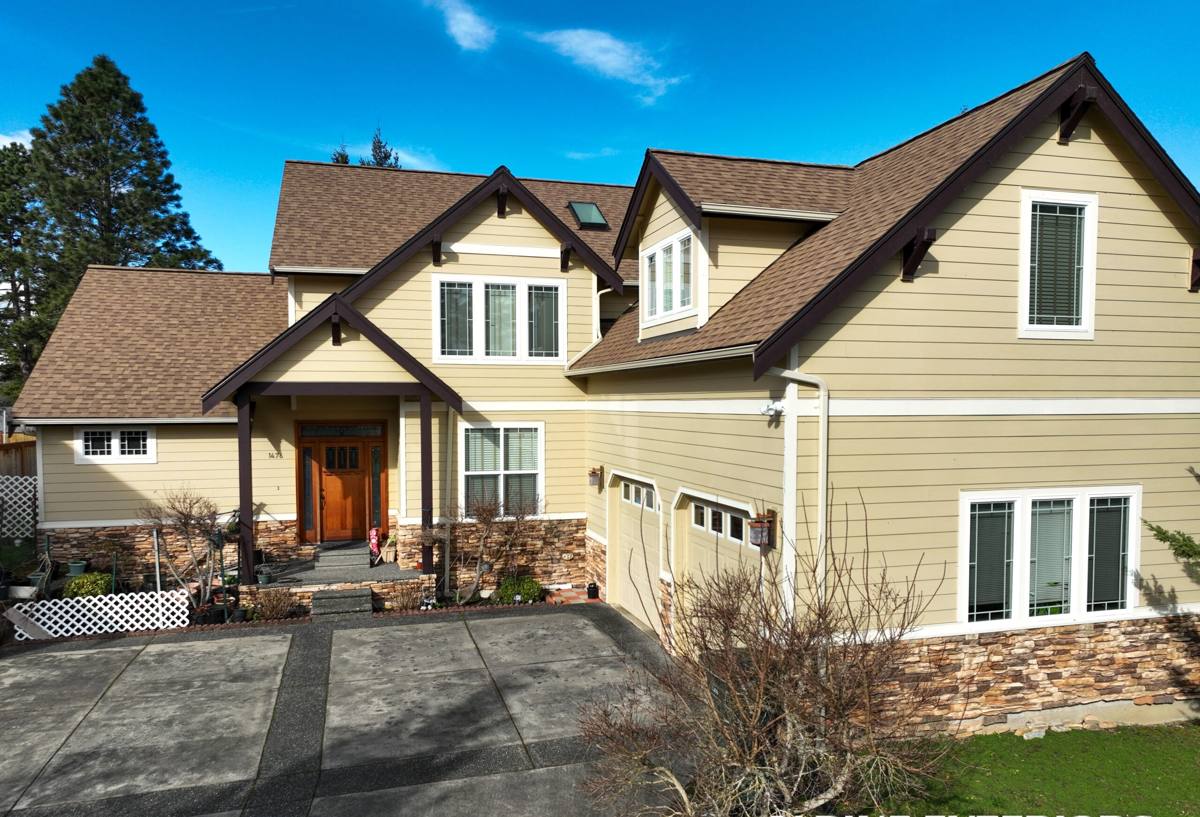
What Salt Air and Moss Season Actually Do to a Window
It helps to understand the specific failure points before you decide what to replace and with what. This isn't scare-talk — it's just what we see when we pull old windows out of island homes.
Salt Air
Salt is corrosive to exposed metal — hinges, balance systems, screen frames, and especially older aluminum sashes. It also accelerates the breakdown of some sealants and finishes faster than manufacturers' inland warranty testing accounts for. Vinyl and fiberglass frames hold up better against salt than bare aluminum, which is one reason we steer island clients away from uncoated aluminum replacements.
Driving Rain
Wind off the water doesn't just drop rain straight down — it drives it sideways into any horizontal or poorly flashed joint. A window that's watertight in calm rain can still leak in a wind-driven storm if the flashing and sill pan weren't detailed for that condition. This is an installation issue as much as a product issue.
Moss and Sustained Moisture
Long stretches of damp weather keep wood trim and sills wet longer than they'd stay wet inland. That moisture, combined with organic growth, is what eventually rots sills and trim around older windows — especially on north- and west-facing walls that don't get much sun to dry out between rains.
Signs a Lummi Island Home Needs Window Replacement, Not Just Repair
- Soft or spongy wood at the sill or bottom corners of the frame — usually a sign moisture has been getting behind the trim for a while
- Fogging or a permanent haze between the panes of a double-pane window, which means the seal has failed and can't be repaired
- Windows that are hard to open, stick, or won't stay up on their own — often corroded balance hardware from salt exposure
- Visible daylight or a draft you can feel around the frame when it's windy
- Condensation forming on the inside of the glass regularly, especially in winter — a sign of poor seal performance or single-pane glass
- Paint or finish that's peeling or chalking faster than it should for its age, especially on the weather-facing side of the house
If you're only seeing one or two of these and the frame itself is solid, repair or reglazing may still be an option. Once the frame or sill is soft, replacement is almost always the more honest recommendation — patching rotted wood around a window rarely holds up for long in this climate.
What We Look at Before Recommending a Window
Every window recommendation we make for an island home starts with where that window sits on the house, not a one-size-fits-all product pitch.
Exposure
Windows facing the water or facing the prevailing wind and rain direction take more punishment than windows tucked under an eave or facing away from the weather. We'll often recommend a more weather-resistant frame material or extra attention to flashing detail on the exposed sides, while a sheltered window on the same house might not need the same spec.
Existing Frame Condition
Sound framing around an old window opening can sometimes be reused. Soft or water-damaged framing has to be cut out and replaced before a new window goes in — skipping that step just seals rot behind a brand-new window, which is one of the most common corner-cutting mistakes we find when we're called out to fix somebody else's install.
Frame Material
Material choice matters more here than in a dry inland climate. The table below is how we walk homeowners through the trade-offs.
| Frame Material | Salt Air Performance | Maintenance | Notes for Island Homes |
|---|---|---|---|
| Vinyl | Good — won't corrode | Low; occasional cleaning | Solid value option; check seal quality and reinforced corners for wind exposure |
| Fiberglass | Very good — dimensionally stable, resists corrosion | Low | Handles temperature swings and moisture well; higher upfront cost |
| Wood (clad exterior) | Fair to good, depends on cladding quality | Higher — exposed wood needs upkeep | Interior wood look with an exterior shell; watch cladding seams for water entry |
| Bare Aluminum | Poor in salt air — prone to corrosion over time | Moderate to high | We generally don't recommend uncoated aluminum for exposed island walls |
Glass and Hardware Choices That Matter Here
Frame material gets most of the attention, but two other choices affect how well a window performs on Lummi Island long-term.
Glass Package
Double-pane, low-E glass is the practical standard for this climate — it cuts down on condensation on the inside of the glass in winter and helps with the temperature swings that come with maritime weather. Argon-filled units add a bit more insulating performance and are worth it on north- and west-facing exposures where the extra margin actually gets used.
Hardware and Fasteners
This is an easy detail to overlook and a common source of early failure. Standard hardware and fasteners can corrode faster in salt air than the window itself. We spec corrosion-resistant hardware and fasteners on island installs as a matter of course, not an upsell — it's cheap insurance against having to service a window's locks or balance mechanism a few years in.
Our Installation Process for Island Jobs
Getting the product right is half the job. Installation detail is the other half, and it's where most window failures we're called to fix actually start.
- On-site assessment — we look at each window opening individually, checking framing condition, exposure, and existing flashing before recommending anything
- Accurate measuring and material planning — because a return trip for a missed measurement means another ferry crossing, we double-check dimensions and order everything needed in one pass
- Removal and opening prep — old windows come out carefully, and any soft or rotted framing gets cut back to sound wood before anything new goes in
- Flashing and sill pan detail — this is the step that actually keeps driving rain out; we flash for wind-driven rain, not just a straight-down downpour
- Window installation and shimming — set plumb, level, and square, with proper shimming so the window operates smoothly for years, not just on day one
- Sealing — exterior sealant rated for marine and coastal exposure, applied at every joint that salt air or wind-driven rain could reach
- Interior and exterior trim finish — trim reinstalled or replaced, caulked, and finished to match the house
- Final walkthrough — every window opened, closed, and checked with you before we call the job done
Why an Island-Familiar Crew Is Worth It
Any licensed contractor can technically install a window. Fewer have actually planned a materials list and a crew schedule around a ferry sailing, or know from repeat experience which sides of an island house tend to take the worst of the weather. We've done enough window jobs across Whatcom County — on the mainland and out on Lummi Island — to know the difference between a spec that works in a sheltered Ferndale neighborhood and a spec that holds up on an exposed island wall.
That familiarity also means fewer surprises on cost and timeline. We build the ferry crossing and any tide or schedule constraints into the plan up front, instead of discovering mid-job that a second trip is needed for a forgotten tool or material. For homeowners, that translates into a project that runs on the schedule we quote, not one padded with island-logistics guesswork.
What Affects the Cost of Island Window Replacement
We don't post fixed prices because every home and every opening is different, but these are the real factors that move a quote up or down:
| Factor | Why It Matters |
|---|---|
| Number and size of windows | Larger openings and more windows mean more material and labor time |
| Frame material selected | Vinyl, fiberglass, and clad-wood options carry different material costs |
| Condition of existing framing | Rotted or damaged framing adds repair work before a new window can go in |
| Exposure level of each opening | Heavily exposed walls may call for upgraded sealing and hardware detail |
| Access and logistics | Ferry scheduling and site access can affect crew time on island jobs |
| Trim and finish work | Matching existing trim or upgrading finish adds to the scope |
We'll walk your specific windows with you and give you a clear, itemized quote before any work starts — no guessing after the fact.
Timing an Island Project Around the Weather
Window replacement can be done most of the year on Lummi Island, but there are practical windows of time that make the job cleaner. Drier stretches in late spring through early fall reduce the chance of exposed openings taking on rain mid-install, and they give sealants and finishes more favorable conditions to cure properly. Winter and moss-season replacements aren't off the table — we just plan the sequencing tighter, doing one opening at a time so a home is never left with more exposed framing than necessary.
If you're dealing with drafty, foggy, or hard-to-operate windows on Lummi Island, we're happy to come take a look and give you a straightforward, no-pressure estimate. Fill out the form below and we'll get a time on the calendar.