 Ferndale
 Bellingham's Roof, Bellingham's Weather
A roof in Bellingham works harder than a roof almost anywhere else in the state. You've got Bellingham Bay pushing salt-laden air onto every north- and west-facing slope, long stretches of driving rain rolling in off the water, and a moss season that, thanks to shade and persistent moisture, can run most of the year instead of just a few winter months. None of these things alone is unusual for Western Washington. Together, on the same roof, year after year, they're what separates a roof that needs a patch here and there from one that develops a real, structural problem.
Salt air accelerates corrosion on exposed metal fasteners, flashing, and vents faster than it would inland. Driving rain finds any gap in a flashing detail and pushes water sideways and upward, not just down, which is why leaks in this area often show up in places a homeowner wouldn't expect — around chimneys, at wall-to-roof transitions, behind gutters. And moss doesn't just look bad. It holds moisture against the roofing material, lifts shingle edges as it grows, and works its way under flashing over time. A repair that doesn't account for all three of these forces tends to fail again within a season or two.
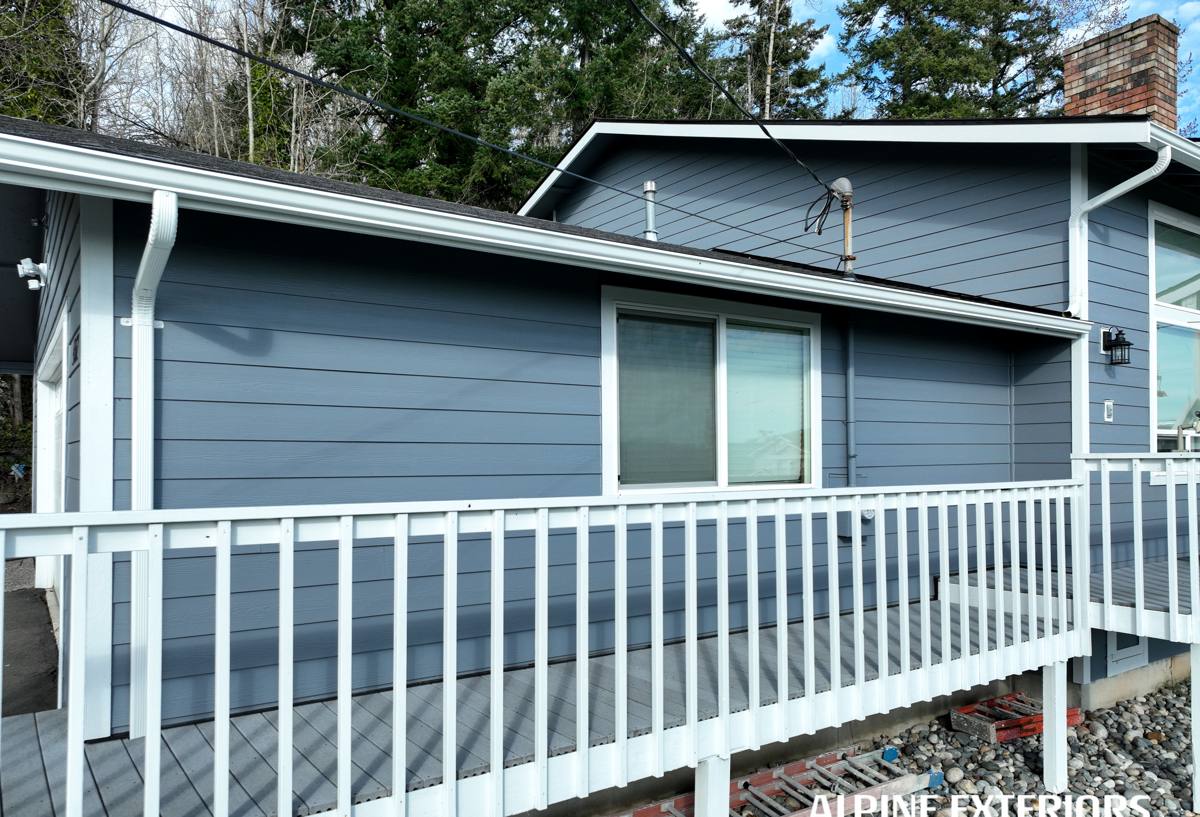
Signs Your Bellingham Roof Needs Repair, Not Just a Look
Most roof problems in this area don't announce themselves with a dramatic leak. They show up as small, easy-to-dismiss signs first. Worth checking for:
- Dark streaking or thick moss growth concentrated on shaded slopes or the north side of the roof
- Granules collecting in gutters or at downspout outlets — a sign shingles are wearing thin
- Soft or discolored ceiling patches, especially near chimneys, skylights, or where two roof planes meet
- Rusty streaking below metal flashing or exposed fasteners
- Shingles that look lifted, curled, or slightly out of alignment after a windy, wet stretch
- Daylight visible through the attic roof deck, or damp insulation in the attic
- Gutters that overflow during heavy rain even though they aren't visibly clogged with leaves
Any one of these on its own might be minor. Two or three together, especially on an older roof, usually means it's time for a real inspection rather than a wait-and-see approach.
What a Correct Repair Actually Involves
Finding the Real Source
The biggest mistake in roof repair isn't sloppy workmanship — it's fixing the wrong spot. Water travels. A stain on a bedroom ceiling might trace back to a flashing failure ten feet away, carried along a rafter or sheathing seam before it ever shows itself indoors. A correct repair starts with tracing the water's actual path, not just patching where the stain appears, which usually means getting on the roof and into the attic, not just looking from the ground.
Matching Materials, Not Just Color
Shingles fade and weather over time, so a patch using brand-new material will often stand out — but the bigger issue is compatibility, not cosmetics. Mixing incompatible underlayment, fastener types, or shingle profiles can create a repair that looks fine for a year and then fails at the seam where old meets new. We match not just the look but the actual product generation and installation method wherever that's practical.
Flashing and Ventilation Get Fixed Too
A huge share of "roof leaks" in this climate are really flashing failures — around chimneys, skylights, vent pipes, and wall step-flashing. Replacing shingles without addressing failed flashing underneath just delays the next leak. We also check attic ventilation during any repair, since poor airflow traps moisture that accelerates rot and encourages moss and mildew from the underside of the deck, not just the surface.
Repair or Replace? How We Help You Decide
Not every roof problem calls for a full replacement, and not every roof is worth continuing to patch. The honest answer usually comes down to a handful of factors:
| Factor | Leans Toward Repair | Leans Toward Replacement |
|---|---|---|
| Roof age | Under 15 years, or newer material with life left | Approaching or past the material's expected service life |
| Extent of damage | Isolated to one area or detail (flashing, a single slope) | Spread across multiple slopes or recurring in different spots |
| Repair history | First or second repair on this roof | Third or more repair in a few years — a pattern, not an incident |
| Decking condition | Solid, dry sheathing under the damaged area | Soft, delaminating, or visibly rotted decking |
| Typical cost range | Generally a few hundred to a few thousand dollars, depending on scope | A larger project-level investment, priced after a full inspection |
We'll always give you our honest read on which side of that table your roof falls on, including the option to repair now and plan for replacement later if that's the more sensible financial path.
Our Process for Bellingham Roof Repair Calls
- Inspection. We get on the roof and into the attic when accessible — not just a look from the driveway — to trace leaks to their actual source.
- Written estimate. You get a clear explanation of what's failing, why, and what fixing it correctly involves, in plain language, before any work starts.
- Repair. We address the source first — flashing, underlayment, or decking — then the visible shingle or roofing surface, matching materials where practical.
- Cleanup and check. Debris and old material are cleared from the roof and gutters, and we do a final check for any secondary issues the original leak may have caused.
- Follow-up. Because we're a Ferndale-based crew working this area regularly, coming back to check a repair after the next heavy rain isn't a hassle — it's just part of doing the job right.
Moss, Algae, and Salt Air: What Ongoing Care Looks Like
A good repair buys you time, but the climate keeps working on your roof every day after we leave. A little routine attention goes a long way toward not needing another repair call next season:
- Keep overhanging branches trimmed back to reduce shade and let roof surfaces dry out between rain events
- Have moss physically removed rather than just treated, since chemical treatments alone don't stop the moisture damage already underway
- Check and clean gutters at least twice a year — clogged gutters back water up under the roof edge, especially during our heavier winter storms
- Have flashing and fastener points checked periodically for early corrosion, particularly on roofs closer to the water
- Address small leaks quickly — a stain the size of a dinner plate today is often a much smaller repair than the same leak left through another wet season
Why a Crew That Already Works Bellingham Matters
Roof repair is one of those jobs where local experience actually changes the outcome. A crew that regularly works Bellingham and the surrounding Whatcom County area already has a feel for how this specific climate behaves on a roof — which details tend to fail first here, how long moss takes to become a real problem on a shaded north slope, and what a driving rain off the bay does to a marginal flashing job that might hold up fine somewhere drier.
There's also a practical side to hiring local. Being based in Ferndale means we're not driving hours to get to your property for the initial inspection or to check back after a big storm. If something about a repair needs a second look once you've seen how it performs through a real rain event, that follow-up is straightforward, not a scheduling ordeal.
A Note on Materials for Coastal Whatcom County Roofs
We don't push one roofing product as a cure-all, because the right repair material depends on what's already on your roof and how it's held up so far. In general, for repair work in this climate we favor materials and details with a track record for handling sustained moisture and salt exposure well — quality underlayment at vulnerable transitions, corrosion-resistant fasteners and flashing, and shingle or roofing products with proven algae resistance rather than ones that rely purely on color to hide staining. Where a product has a maintenance burden or moisture behavior that doesn't fit this climate well, we'll tell you that plainly and explain the trade-off rather than installing it anyway.
If your roof has a stain that keeps coming back, moss that's taken over a shaded slope, or you just want an honest read on repair versus replacement, we're happy to take a look. The estimate is free, there's no pressure attached to it, and you'll get a straight answer either way — just fill out the form below to get started.