 Ferndale
 Fiber Cement Siding and Birch Bay's Waterfront Climate
Birch Bay sits directly on the water in northern Whatcom County, and that single fact changes what a wall assembly needs to survive compared to a home even a few miles inland. Salt-laden air moves off the bay steadily, wind pushes rain sideways into walls instead of letting it fall straight down, and shaded or north-facing elevations stay damp long enough each year to grow moss and mildew. Fiber cement siding handles that combination better than most exterior materials, but only when the product line, the fastening details, and the water management behind the panels are all matched to a bay-facing exposure rather than a generic install.
This page covers fiber cement siding specifically for Birch Bay homes — what the local climate asks of the material, what a correct installation actually involves here, and why we install James Hardie exclusively rather than offering a range of siding brands.
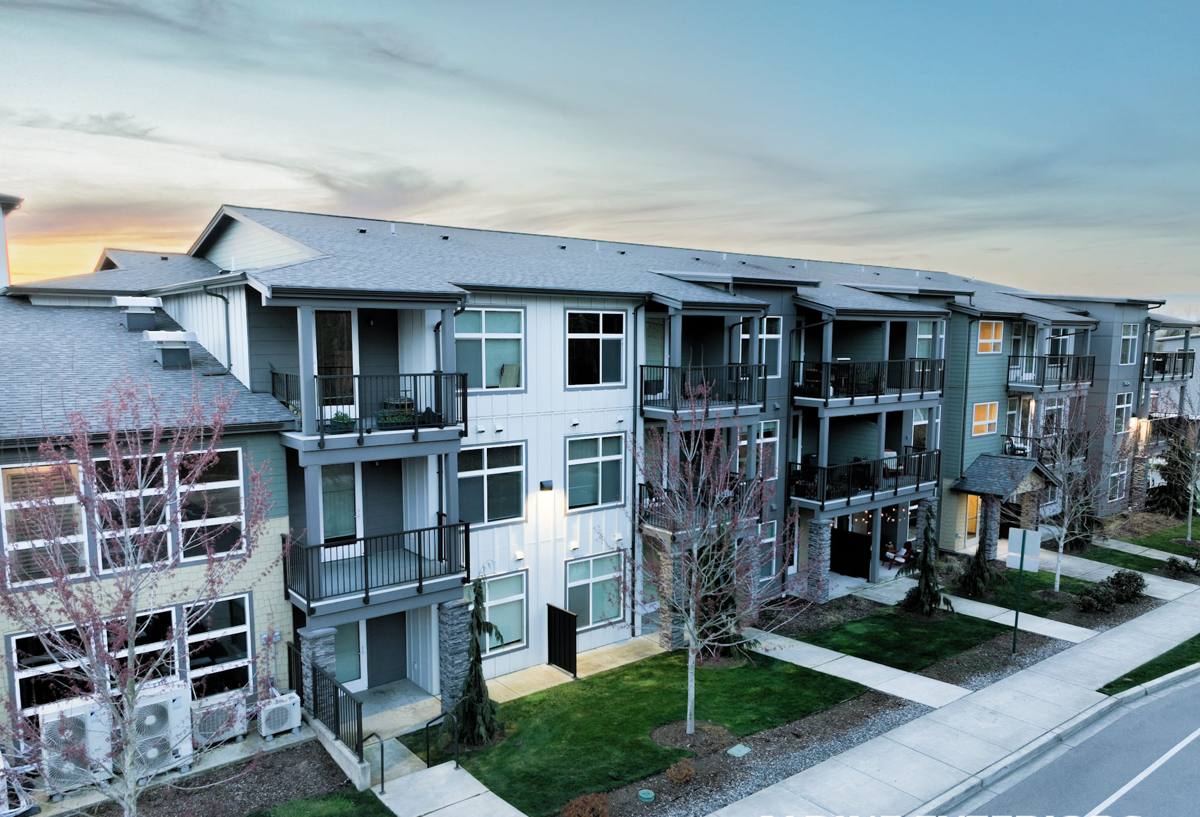
What This Climate Does to a Fiber Cement Wall
Salt Air and Fastener Corrosion
Direct waterfront exposure means Birch Bay homes take on more salt-laden air than most of the county, and salt is hard on the metal components of a siding system even when the siding panel itself is inert. Nail and screw fasteners, corner flashing, and trim connectors all need corrosion-resistant hardware here, because a fiber cement board can be in perfect condition while a corroding fastener behind it loosens the panel or streaks the finish with rust. This is one of the more overlooked details on bay-facing jobs — the panel gets the attention, and the hardware holding it on gets an afterthought.
Wind-Driven Rain at Laps and Joints
Rain on the water side of Birch Bay rarely falls straight down. Wind drives it sideways into lap joints, butt seams, and trim intersections, which is a heavier and more persistent moisture load than an inland home with the same siding sees. Fiber cement itself doesn't absorb and swell the way wood-based products do, but the joints between boards are only as good as how they're lapped, caulked, or flashed. A wall that would perform fine in a calm, sheltered yard can still take on water here specifically because the wind pushes rain into a seam that was cut a little short or caulked a little thin.
Moss and Shaded, North-Facing Elevations
Mild temperatures, tree cover, and near-constant moisture add up to a moss and mildew season that runs most of the year on shaded walls around Birch Bay. Fiber cement resists organic growth better than porous or wood-based siding, but moss and algae will still take hold on a finish that's been compromised, or in trim and caulk joints that trap moisture against the substrate. North-facing walls and anything shaded by trees or a neighboring structure typically need more attention during both installation and ongoing upkeep than sun-facing elevations do.
Why James Hardie Fiber Cement Fits This Exposure
We install James Hardie fiber cement siding exclusively — not LP SmartSide, vinyl, Cemplank, Allura, primed spruce, or cedar. That's a professional standard, not a sales angle, and it comes down to how each of those categories of product actually behaves under sustained salt air and wind-driven rain rather than how it looks on a spec sheet.
- Non-combustible core: Fiber cement doesn't feed a fire the way wood-based siding can, which matters for household safety and can matter for insurance as well.
- Factory-applied ColorPlus finish: Color is baked on under controlled factory conditions instead of applied on-site, so it resists the fading and chalking that salt air and UV exposure accelerate on field-painted products.
- Climate-engineered HZ5 formulation: Hardie's HZ5 product line is built for regions with heavy moisture exposure and freeze-thaw cycling, which describes waterfront Whatcom County accurately.
- Dimensional stability: Fiber cement doesn't swell, cup, or warp the way engineered wood siding can after repeated wet-season soaking, which keeps joints tighter over time.
- Transferable warranty: Hardie backs the product with a strong warranty structure, provided the installation follows their published specification.
Vinyl, LP SmartSide, and the other products we don't install each have a legitimate place in the market, and plenty of homeowners elsewhere are satisfied with them. On a bay-facing exposure, though, we made the call that one system we can fully stand behind is worth more than offering a cheaper alternative that quietly shifts long-term maintenance risk onto the homeowner.
What a Correct Installation Involves Here
Fiber cement only performs the way it's engineered to when it goes on according to Hardie's specification, and a few of those details matter more in Birch Bay than they do inland.
Drainage Behind the Panel
A drainage plane or rainscreen gap behind the siding gives any water that does get past the outer surface a way to drain and the wall a way to dry out between storms. On a wind-exposed, waterfront lot, skipping or shortcutting this detail is one of the fastest ways for a technically correct-looking install to trap moisture against the sheathing over a wet season.
Fastening and Clearance
Fastener type, spacing, and embedment depth all follow Hardie's spec, and we use corrosion-resistant hardware throughout given the salt exposure. Clearance from grade, roof lines, and decks also matters more here — waterfront lots often have less setback and more splash-back exposure than inland properties, so we hold the manufacturer's minimum clearances rather than treating them as a suggestion.
Joint and Corner Treatment
Butt joints, corners, and trim intersections are where wind-driven rain finds its way in if they're rushed. We use factory-mitered corners and properly backed, sealed joints rather than relying on caulk alone to do the job — caulk is a component of a correct joint, not a substitute for a correctly lapped and flashed one.
Choosing a Profile and Finish for a Bay-Facing Home
Hardie's product line gives homeowners real choices in profile and finish, and the right pick depends partly on how directly a given home faces the water and the wind.
| Profile / Product | Typical Use | Consideration for Birch Bay |
|---|---|---|
| HardiePlank lap siding | Most common choice for full re-sides | Straightforward lap detailing performs well under wind-driven rain when joints are correctly lapped and caulked |
| HardieShingle | Accent elevations or full shingle-style homes | More individual joints than lap siding, so correct installation detail matters even more on exposed walls |
| HardiePanel with battens | Modern or board-and-batten style exteriors | Vertical panel seams need careful batten and flashing work to shed sideways-driven rain |
| ColorPlus factory finish | Any profile | Recommended over field-applied paint on bay-facing walls; the factory finish holds up longer against salt air and UV than site paint |
Darker ColorPlus colors and matte finishes tend to show salt residue and water spotting less than very light or high-gloss options on homes with direct bay exposure, though this is a preference call, not a performance requirement — any ColorPlus finish is built to hold up in this climate.
Our Process for Birch Bay Fiber Cement Projects
- On-site assessment: We walk the existing exterior and look specifically at how the current siding, trim, and flashing have handled moisture and salt exposure over time, not just how the wall looks from the street.
- Written scope and product selection: We put together a clear scope covering profile, HZ5 spec, color, and trim details before any work begins, so there's no ambiguity about what's being installed.
- Tear-off and substrate check: On full re-sides, removing the old siding lets us confirm the sheathing underneath is sound before new material goes on — a step that matters more on a waterfront lot where hidden moisture damage is more common.
- Water management and installation: Drainage plane, flashing, and fastening go in to spec as standard practice, followed by the siding, trim, and joint treatment.
- Final walk-through: We review the finished work with the homeowner and cover basic upkeep specific to a bay-facing exterior.
Maintaining Fiber Cement Siding in Salt Air
Fiber cement is a genuinely low-maintenance material compared to wood-based or vinyl siding, but "low-maintenance" isn't "no-maintenance" on a waterfront lot. A simple seasonal routine keeps it performing the way it's designed to.
- Rinse salt residue off the siding periodically, particularly on elevations that face the bay directly
- Check caulked joints around windows, doors, and trim once a year for cracking or separation
- Keep gutters and downspouts clear so runoff doesn't wash directly down the siding face
- Watch shaded and north-facing walls for early moss or algae growth and clean it before it spreads
- Trim back vegetation and tree limbs that keep a wall section damp and shaded longer than the rest of the house
- Have flashing and joints inspected every few years, especially after a particularly windy storm season
Cost Factors for a Birch Bay Fiber Cement Project
| Factor | What It Affects | Why It Matters in Birch Bay |
|---|---|---|
| Home size and wall complexity | Total material and labor | More corners, dormers, and trim mean more joints exposed to wind-driven rain |
| Tear-off vs. overlay | Labor scope and substrate access | Tear-off reveals hidden moisture or corrosion damage more common on waterfront lots |
| Wind exposure of the lot | Flashing and drainage detail required | Direct bay-facing elevations warrant more careful joint and drainage detailing than sheltered sides |
| Profile and finish selection | Material cost | Lap, shingle, and panel profiles carry different material and labor costs |
| Site access | Labor time and staging | Waterfront lots can have tighter access or more setup constraints than inland properties |
Exact numbers depend on the specific home and its exposure, which is why we walk the property in person rather than quoting from a generic price list.
Why Hiring a Crew That Already Works Birch Bay Matters
Fiber cement is a forgiving, durable material, but it's not installer-proof — the difference between a wall that holds up for decades and one that develops problems in a few wet seasons usually comes down to details a crew either knows to prioritize or doesn't. A contractor who already works Birch Bay regularly has seen how salt air, wind exposure, and prolonged shade actually play out on real houses here, not just how a product performs on paper. That shows up in which fastener grade gets used without being asked, where extra drainage detailing gets added on a wind-exposed elevation, and how joints get treated on the side of the house that takes the worst of the weather.
If you're weighing options for new siding, a repair, or an honest second opinion on an aging wall in Birch Bay, we're glad to take a look. Reach out below for a free, no-pressure estimate.