 Ferndale
 Why Fiber Cement Is the Right Call for Custer Homes
Custer doesn't get the dramatic weather that makes headlines, and that's part of the problem. There's no single storm that damages a home's siding here. Instead it's the steady combination of salt-laden air off the coast, wind-driven rain that hits walls sideways instead of falling straight down, and a moss and mildew season that runs most of the year thanks to mild temperatures and near-constant moisture. Siding that isn't built for that combination doesn't fail all at once. It fails slowly, over a decade or two, in ways that are expensive to catch late and cheap to prevent early.
Fiber cement handles that combination better than the alternatives we've worked with, which is why it's the only siding we install on Custer homes. It's an inorganic material, so it doesn't have a wood-based or vinyl core that swells, warps, or feeds mold the way organic and petroleum-based sidings can. That matters more here than it would in a drier inland market, because Custer properties are wet more months than they're dry.
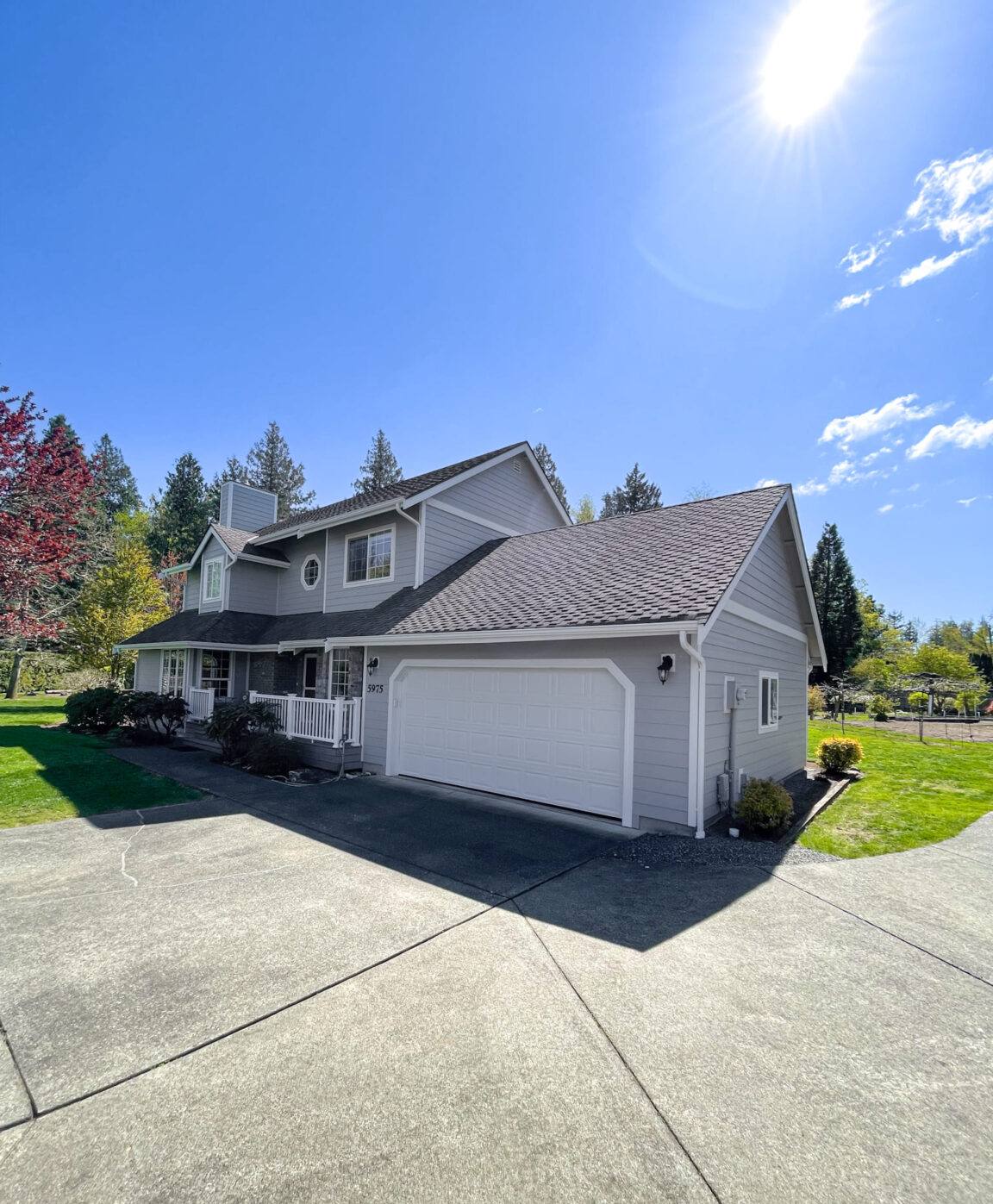
What James Hardie's Engineering Adds for This Climate
Fiber cement as a category is the right direction for this area, but the specific product line matters too. We install James Hardie's HZ5 line, which is engineered for climates with freeze-thaw cycles and sustained moisture exposure rather than for hot, dry regions. That's a better match for Whatcom County winters than a generic fiber cement product.
ColorPlus Finish
The color on Hardie siding isn't field-painted, it's baked on in multiple coats at the factory before the boards ever reach a Custer job site. That matters in a salt-air environment, where a site-applied paint job tends to chalk and fade faster than a factory-cured finish. ColorPlus carries its own finish warranty, separate from the substrate warranty on the board itself.
A Non-Combustible, Moisture-Resistant Core
Because the board is Portland cement, sand, and cellulose fiber rather than wood or vinyl, it doesn't absorb water the way a wood-fiber core can, and it's non-combustible. That combination is a large part of why fiber cement has become the standard material we recommend to Custer homeowners re-siding a house that's seen twenty or more years of coastal exposure.
What Happens Once the Old Siding Comes Off
The single biggest variable in a Custer siding job isn't the new material, it's what's underneath the old siding. Wind-driven rain finds its way into lap joints and trim over the years, and by the time siding is due for replacement, it's common to find some amount of moisture damage to the sheathing behind it, especially on north-facing walls and anywhere tree cover keeps a wall shaded and damp longer after a storm.
We treat tear-off as an inspection step, not just demolition. Once the old material is off, we check the sheathing for soft spots, rot, and any signs of long-term moisture intrusion, and we address what we find before anything new goes up. Installing new siding over damaged sheathing just hides a problem behind a fresh wall, and in this climate that problem doesn't go away on its own.
Water-Resistive Barrier and Rain Screen
Behind the new siding, we install a proper water-resistive barrier and a rain screen gap, typically furring strips that hold the siding slightly off the wall. That gap lets any moisture that does get past the surface drain and dry out instead of sitting trapped against the sheathing, which is the detail that matters most in a climate where driving rain is a regular occurrence rather than an occasional event.
Flashing, Clearances, and Fastening Done to Spec
Fiber cement's reputation depends heavily on installation quality. The material itself resists moisture and combustion, but a rushed or out-of-spec install can undercut all of that. These are the details we hold to on every Custer job:
| Detail | Why It Matters in Custer |
|---|---|
| Clearance from grade, roofline, and decks per Hardie's spec | Keeps splash-back and standing water off the board edge during heavy rain stretches |
| Flashing at every window, door, and penetration | Directs wind-driven rain away from seams instead of letting it collect there |
| Correct fastener type, spacing, and depth | Prevents cracking and keeps the water-resistive barrier intact behind the board |
| Factory-cut edges used wherever the layout allows | Preserves the ColorPlus finish's protection; field cuts are sealed per manufacturer spec |
| Rain screen gap maintained behind the full wall | Lets moisture that gets past the surface drain and dry instead of sitting against the sheathing |
None of this is exotic. It's the manufacturer's own installation spec, followed consistently rather than treated as optional when a job is behind schedule.
How the Job Actually Runs
Homeowners planning a re-side usually want to know what the process looks like in practice, not just what the finished wall will look like. For a typical Custer project, that's roughly:
- A walk-through of the property to look at current siding condition, note problem areas, and take measurements.
- A written estimate that spells out the product line, color, and scope, so there's no ambiguity about what's included.
- Tear-off of the existing siding and an inspection of the sheathing underneath, with any repairs priced and approved before we move forward.
- Installation of the water-resistive barrier, rain screen, and new fiber cement siding to manufacturer spec.
- Flashing, trim, and caulking at all the transition points, followed by a final walkthrough and cleanup.
Timeline depends heavily on square footage and how much sheathing repair turns up once the old siding is off, but weather is the other real variable. We schedule around stretches of driving rain rather than pushing through them, both because wet installation conditions compromise the work and because it isn't safe for the crew.
Fiber Cement Compared to What We Don't Install
We standardized on James Hardie fiber cement after years of comparing how different siding materials actually hold up in this specific climate, not just on a spec sheet.
| Material | How It Holds Up in Custer's Climate |
|---|---|
| James Hardie fiber cement | Inorganic core, factory-baked finish, engineered HZ5 line for freeze-thaw and moisture; higher upfront cost, low ongoing maintenance |
| Vinyl siding | Lower upfront cost, but lapped seams aren't built for sustained wind-driven rain and the material can warp under direct heat |
| Engineered wood (e.g. LP SmartSide) | Wood-fiber core needs every cut edge and fastener point kept sealed indefinitely in a climate that's wet most of the year |
| Cedar or primed spruce | Genuine curb appeal, but organic, combustible, and dependent on a paint or stain schedule that has to be kept current |
This isn't a claim that the other materials don't work anywhere. It's why, for the specific conditions Custer properties deal with, we only put fiber cement on the wall.
Maintenance a Custer Homeowner Should Actually Expect
Fiber cement is genuinely lower-maintenance than wood or engineered wood siding, but "low maintenance" doesn't mean "no maintenance," especially with a moss season that runs most of the calendar here.
- Rinse the siding periodically to keep moss, algae, and mildew from establishing on shaded or tree-covered walls, which describes a lot of Custer lots.
- Keep gutters and downspouts clear so roof runoff isn't concentrating extra water against any one section of wall.
- Check and refresh caulking at trim and penetration points every few years rather than waiting for a visible gap.
- Trim back vegetation and tree branches that keep a wall shaded and damp longer than the rest of the house after a rain.
Why It Matters That We Already Work in Custer
A crew that's worked other Custer properties already knows which orientations tend to see the worst wind-driven rain, which lots hold onto moisture longest under tree cover, and what Whatcom County permitting and inspection expects for a re-side. That local familiarity shortens the guesswork on both sides, and it means the estimate you get reflects what we've actually seen on homes like yours rather than a generic regional average.
Before you commit to any siding contractor for a fiber cement installation, it's worth asking a few direct questions:
- Is the installer manufacturer-certified for James Hardie specifically, not just generally experienced with siding?
- Does the proposal include a rain screen or drainage gap, or does the siding go directly against the water-resistive barrier?
- What happens if sheathing damage turns up once the old siding is off, and how is that priced?
- Is the warranty transferable to a future buyer if you sell the home?
- Will cleanup and debris haul-away be included, or billed separately?
Get a Free, No-Pressure Estimate
If your Custer home's siding is showing its age or you're planning ahead for a re-side, we're glad to walk the property, look at what's actually going on with the current siding and the wall behind it, and give you a straight answer about scope and cost. Use the form below to schedule a free estimate, no pressure and no upsell script.