 Ferndale
 Building Decks for Fairhaven's Coastal Conditions
Fairhaven homes sit close enough to the water that salt air is a daily fact of life, not an occasional nuisance. Add Whatcom County's long wet season and the moss that comes with it, and a deck here works harder than a deck almost anywhere else in the state. A deck built without that reality in mind can look fine for a year or two and then start showing problems — corroding hardware, soft spots at the ledger board, boards that stay slick with moss from October through May. We build decks for this specific environment, not a generic one, because the environment here is not generic.
This page covers what a Fairhaven deck actually needs, what correct construction looks like, and how our process works from first visit to final walkthrough.
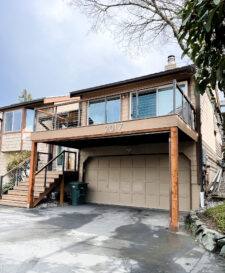
What Local Conditions Do to a Deck
Salt Air and Metal Fasteners
Airborne salt accelerates corrosion on any exposed metal — nails, screws, joist hangers, post bases. Standard electro-galvanized fasteners that hold up fine inland can start rusting and staining within a couple of seasons this close to the bay. Rust-streaked decking is a cosmetic issue at first, but corroding structural hardware — joist hangers, ledger bolts, post-to-beam connectors — is a safety issue over time.
Driving Rain and Water Intrusion
Whatcom County doesn't just get rain, it gets sideways rain during winter storms. That matters most where a deck attaches to the house at the ledger board. If that connection isn't flashed correctly, water gets behind the flashing and into the rim joist and framing, where it can sit and rot for years before anyone notices from the outside.
Moss, Algae, and Slick Surfaces
Long damp stretches with limited sun grow moss and algae readily, especially on decks that get shade from trees or the house itself. Beyond looking neglected, a mossy deck surface is genuinely slippery — a real fall hazard on stairs and near entry doors. Material choice and board spacing both affect how fast moss takes hold and how easy it is to keep off.
Wet Soil and Footings
Coastal Whatcom County soils hold moisture and can shift seasonally. Footings that aren't poured to proper depth and bearing can settle unevenly, which shows up later as a deck that's no longer level or a railing post that's gone slightly out of plumb.
What a Correctly Built Deck Includes
Ledger Attachment and Flashing
The ledger board is the single most important detail on an attached deck, and it's the one homeowners see least. It needs to be through-bolted (not just nailed) to the house framing, sit against properly installed flashing that directs water out and away from the wall, and have a gap or drainage plane behind it so any moisture that does get in can escape instead of pooling. This is the detail that determines whether a deck lasts twenty years or develops hidden rot in five.
Hardware Rated for Coastal Exposure
For a property this close to salt air, we specify stainless steel or heavy hot-dip galvanized fasteners and connectors rated for coastal/marine exposure, not the standard-grade hardware that's fine for inland builds. It costs more up front. It also doesn't rust streak your decking or weaken at the connections ten years in.
Footings Sized for the Site
Footing depth and diameter get set based on the actual soil conditions and local frost depth, not a one-size assumption. This is one of the few parts of a deck that's genuinely difficult and expensive to fix after the fact, so we don't shortcut it.
Framing and Structural Spacing
Joist spacing, beam sizing, and post placement follow the load requirements for the deck's actual use — furniture, hot tub, grill, gathering space — not the minimum the code will technically allow. A deck that's marginal on day one only gets worse as connections weather.
Decking Material Suited to the Climate
Board choice affects how the deck handles moisture, moss, and salt air over its life. We'll walk through the honest trade-offs for your project rather than pushing one product for every job.
Comparing Decking Materials for a Coastal Property
| Material | Moisture & Moss Behavior | Maintenance | Typical Lifespan Here |
|---|---|---|---|
| Pressure-treated wood | Sheds water well when sealed; can hold moisture in shaded, damp areas if the seal isn't maintained | Needs re-sealing/staining every 1-3 years in this climate | 15-25 years with upkeep |
| Cedar | Naturally decay-resistant; still needs finish upkeep to resist moss and graying | Regular cleaning and periodic sealing | 15-20 years with upkeep |
| Composite decking | Doesn't absorb water like wood; textured boards still need occasional cleaning to prevent surface moss/algae | Periodic washing, no staining or sealing | 25-30+ years, manufacturer-dependent |
| PVC decking | Fully water-resistant; least prone to moisture-related issues | Lowest maintenance of the group | 25-30+ years, manufacturer-dependent |
There's no universally "right" answer here — it depends on your budget, how much upkeep you want to do, and how much sun or shade the deck actually gets. A shaded deck under trees is a very different maintenance conversation than one in open sun, regardless of material.
Our Process for a Fairhaven Deck Build
1. On-Site Assessment
We look at sun and shade exposure, existing drainage patterns, soil conditions where footings will go, and how the deck will attach to the house. For a rebuild, we also check the condition of the existing ledger connection and framing before quoting anything.
2. Design and Material Selection
We talk through decking material, railing style, and layout based on how you'll actually use the space, plus straight talk about the maintenance each option requires in this climate.
3. Permitting
Deck projects above a certain height or size typically require a permit, with requirements around guardrail height, stair geometry, and setbacks. We handle this as part of the project so you're not tracking down inspections yourself.
4. Construction
Footings first, then framing with coastal-rated hardware, then correct ledger flashing where the deck meets the house, then decking and railing. Each stage gets checked before the next one starts — you don't want framing covered up before the connections have been verified.
5. Final Walkthrough
We walk the finished deck with you, cover basic care for the material you chose, and make sure everything is solid before we consider the job done.
Why Local Experience on This Specific Job Matters
Deck building itself isn't exotic — it's the details that change with location. A crew that mostly builds inland may not default to coastal-rated hardware unless asked, may not think through ledger flashing with the same urgency, and may not have a real opinion on how a given material handles a shaded, damp Whatcom County winter. None of that shows up in a quote. It shows up three to five years later.
Working in and around Ferndale and Whatcom County regularly means we're not guessing at how salt air, driving rain, and moss season affect a deck over time — we see the results on other projects and build accordingly from the start.
Maintaining Your Deck After It's Built
- Sweep debris and standing leaves off the deck surface regularly, especially in fall — trapped moisture under leaves is what starts moss and rot
- Rinse or wash the surface periodically to slow moss and algae growth, more often in shaded areas
- Check railing posts and stair connections once a year for looseness or corrosion at the hardware
- Reseal or restain wood decking on the schedule appropriate to the product — don't wait until it looks obviously weathered
- Keep an eye on the ledger area where the deck meets the house for any staining, soft wood, or gaps that could signal water getting behind the flashing
- Clear gutters and downspouts near the deck so roof runoff isn't draining directly onto or under it
Cost Factors to Expect
Every deck is priced around its own specifics, but the main variables that move the number are consistent:
- Size and footprint of the deck
- Decking material chosen (treated wood, cedar, composite, or PVC)
- Height off the ground and whether stairs are involved
- Railing style and material
- Site conditions — soil, slope, and access for equipment
- Whether it's new construction or a rebuild on existing footings
We'll give you a clear, itemized quote before any work starts, with the reasoning behind each recommendation so you understand what you're paying for and why.
If you're planning a new deck or need an honest look at whether an existing one is holding up the way it should, we're happy to walk your property and give you a free, no-pressure estimate — just fill out the form below.