 Ferndale
 Why Point Roberts Decks Wear Out Faster Than You'd Expect
Point Roberts sits on its own peninsula, surrounded on three sides by the Strait of Georgia and Boundary Bay. That location is part of what makes it a great place to have a deck — but it's also exactly why decks out here take more punishment than a deck in a sheltered inland yard. Salt-laden air moves across the property nearly year-round, driving rain comes in sideways off the water during fall and winter storms, and the shaded, damp stretches of the year let moss and algae get a foothold on any surface that doesn't shed water quickly. None of that is unique to any one house — it's the baseline condition for wood and composite decking anywhere on this peninsula.
A deck built to a generic spec, without accounting for that combination of salt exposure, wind-driven moisture, and long wet seasons, tends to show problems earlier than it should: fasteners that corrode from the inside out, boards that cup or split at the ends, ledger connections that trap water against the house, and surfaces that stay slick with moss well into spring. We've replaced enough decks out here to know which failure patterns are avoidable and which materials and details actually hold up.
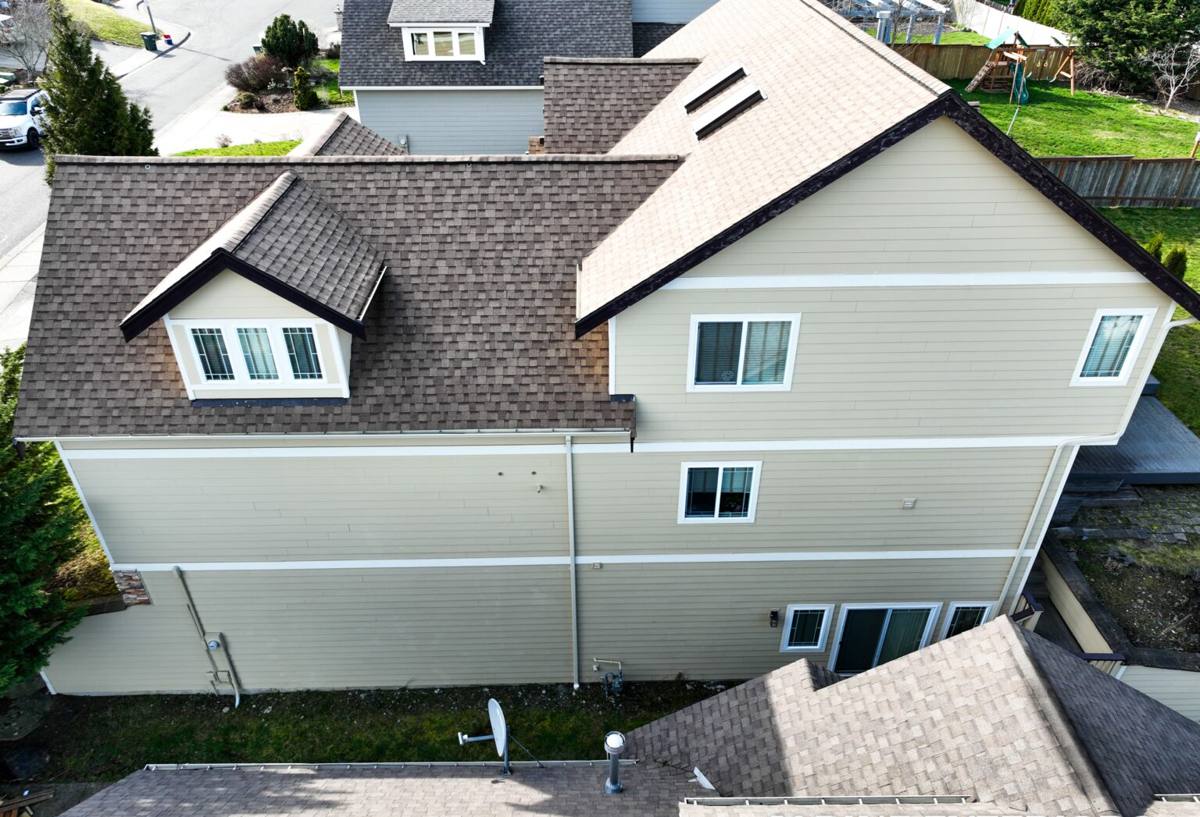
What Point Roberts' Climate Does to a Deck Over Time
Salt Air and Metal Fasteners
Airborne salt accelerates corrosion on anything that isn't rated for coastal exposure — nails, screws, joist hangers, and structural hardware. Once fasteners start to rust, they lose holding strength long before the wood around them looks obviously bad. This is one of the most common hidden problems we find when we pull up an old deck: the boards look salvageable, but the hardware underneath is failing.
Driving Rain and Water Intrusion
Wind off the water pushes rain sideways and upward, which means water finds its way into gaps and joints that would stay dry in a calmer climate. Ledger boards (where the deck attaches to the house), stair stringers, and any point where decking meets a wall or post are the areas most likely to trap moisture and start rotting from the inside.
Moss, Algae, and Long Wet Seasons
Whatcom County's wet season runs long, and a peninsula setting like Point Roberts holds humidity even on drier days. Decking that doesn't drain well, or that sits in shade for much of the day, grows moss and algae faster than most homeowners expect. Beyond looking bad, a mossy deck surface is a real slip hazard — and moss holds moisture against the board surface, which speeds up rot in wood decking.
Signs Your Point Roberts Deck Needs Replacing (Not Just Repairing)
- Soft, spongy spots underfoot, especially near the house or stairs
- Visible rust streaks around fasteners or hardware
- Boards that have cupped, twisted, or split at the ends
- A ledger board that looks darker or swollen compared to the rest of the deck
- Railing posts that wiggle or feel less solid than they used to
- Persistent moss or algae that comes back within weeks of cleaning
- Structural posts or beams showing rot at or near ground contact
A few of these issues can sometimes be repaired in isolation. But when several show up together, or when the framing underneath is compromised, patch repairs usually cost more over time than a proper replacement — you end up paying for band-aids on a structure that's already past its useful life.
What a Correct Deck Replacement Looks Like Out Here
Replacing a deck on Point Roberts isn't just swapping old boards for new ones. Given the exposure this peninsula gets, the details that matter most are the ones you won't see once the project is done.
Framing and Fasteners
We use corrosion-resistant hardware — stainless steel or coated fasteners rated for coastal and treated-lumber exposure — on every connection, not just the visible ones. Joist hangers, structural screws, and ledger bolts all get the same treatment. This is the single biggest difference between a deck that lasts and one that starts failing at the connections within a few years.
Ledger and Flashing Details
Where the deck meets the house is the most common point of water intrusion on any deck, and it's even more critical with driving rain in the mix. Proper flashing, correctly lapped and sealed, keeps water from working its way behind the siding or into the rim joist over time.
Drainage and Board Spacing
Correct board spacing and a slight slope away from the house help water shed instead of pool. On a deck with heavy moss history, we also look at whether nearby trees or structures are keeping the surface shaded and damp longer than it needs to be, and factor that into material choice.
Material Selection
We'll walk you through the honest trade-offs between wood and composite decking for this specific site — sun exposure, shade, budget, and how much maintenance you actually want to do. There's no universal right answer; there's a right answer for your yard and your tolerance for upkeep.
Wood vs. Composite Decking for Coastal Exposure
| Factor | Wood (Cedar/Treated) | Composite |
|---|---|---|
| Salt air resistance | Good if sealed/stained regularly | Very good, no sealing needed |
| Moss/algae resistance | Moderate — needs cleaning | Better, but not immune in shaded, damp spots |
| Upfront cost | Lower | Higher |
| Long-term maintenance | Staining/sealing every 1-3 years | Occasional washing only |
| Fastener sensitivity | High — corrosion-rated hardware is essential | High — same hardware standard applies |
| Typical lifespan (coastal exposure) | 10-20 years with upkeep | 20-30+ years |
Whichever direction you go, the fasteners and framing underneath need to meet the same coastal standard — a composite deck built on corroding hardware fails just as surely as a neglected wood one.
Our Process for a Point Roberts Deck Replacement
- On-site assessment — we inspect the existing deck, framing, ledger connection, and any rot or fastener corrosion before quoting anything.
- Honest scope and estimate — you get a clear breakdown of what needs replacing structurally versus cosmetically, with material options and a straightforward price range.
- Demo and disposal — the old deck comes out, including any hidden rot in ledger or framing that wasn't visible from the surface.
- Framing and flashing first — this is the part that determines how long the new deck actually lasts, and it's not something we shortcut.
- Decking, railing, and stairs — installed with corrosion-rated fasteners and correct spacing for drainage.
- Final walkthrough — we go over care and maintenance specific to the material you chose and this location's climate.
What to Ask Any Contractor Before They Start
- What fastener and hardware grade will be used, and is it rated for coastal/salt exposure?
- How will the ledger-to-house connection be flashed?
- Will they inspect and replace compromised framing, not just the visible decking?
- Do they carry liability insurance and applicable licensing for work in Washington?
- Can they give a realistic timeline that accounts for Point Roberts' logistics?
Why Logistics Matter More Here Than Most Places
Point Roberts is a U.S. exclave — the only way in or out by land is through Canada, which means material deliveries, crew scheduling, and permitting all take a bit more planning than a typical job in Ferndale proper or elsewhere in Whatcom County. A contractor who hasn't worked here before often underestimates this, which leads to delays, rushed work, or corners cut to make up lost time. We've built our scheduling and material ordering around this reality, so a Point Roberts project runs on the timeline we actually quote you, not one padded with surprises — or worse, one that falls apart once the border crossing throws off a delivery.
Working this area regularly also means we already know which details tend to fail first in this specific climate, instead of learning that on your project.
Maintaining Your New Deck in This Climate
- Rinse off salt residue and debris a few times a year, more often near the water
- Sweep or blow off standing leaves and organic debris before they trap moisture
- Address moss growth early with a deck-safe cleaner rather than letting it establish
- Re-stain or reseal wood decking on the schedule your material calls for — don't wait until it looks dry and gray
- Check railing posts and stair connections annually for any looseness
- Keep gutters and downspouts clear so runoff doesn't dump directly onto the deck surface
A little seasonal attention goes a long way toward getting the full lifespan out of whichever material you choose — the climate here rewards decks that get looked after and punishes the ones that don't.
Ready for a Straight Answer on Your Deck?
If your deck is showing rot, loose railings, rusted fasteners, or just isn't holding up the way it should, we're happy to take a look and give you an honest assessment — no pressure, no upsell. Fill out the form below for a free estimate on your Point Roberts deck replacement.