 Ferndale
 Windows Built for the Nooksack Area, Not Just Any House
The Nooksack area sits in a part of Whatcom County where the weather doesn't do you any favors. You get driving rain off the water for months at a stretch, salt-laden air working on anything metal, and a moss season that seems to stretch longer every year. Windows here take a beating that windows in drier parts of the country never see. A custom window job in this area isn't about picking a fancy shape for the front of the house — it's about matching the window, the flashing, and the installation method to conditions that will find every weak point in a job done halfway.
We work on homes throughout Ferndale and the surrounding county, and the Nooksack area has its own quirks worth calling out separately: older openings that were never quite square to begin with, a mix of farmhouse-style construction and newer builds, and enough tree cover in spots that north- and west-facing walls stay damp longer than the rest of the house. Custom windows done right account for all of that before the first piece of trim comes off.
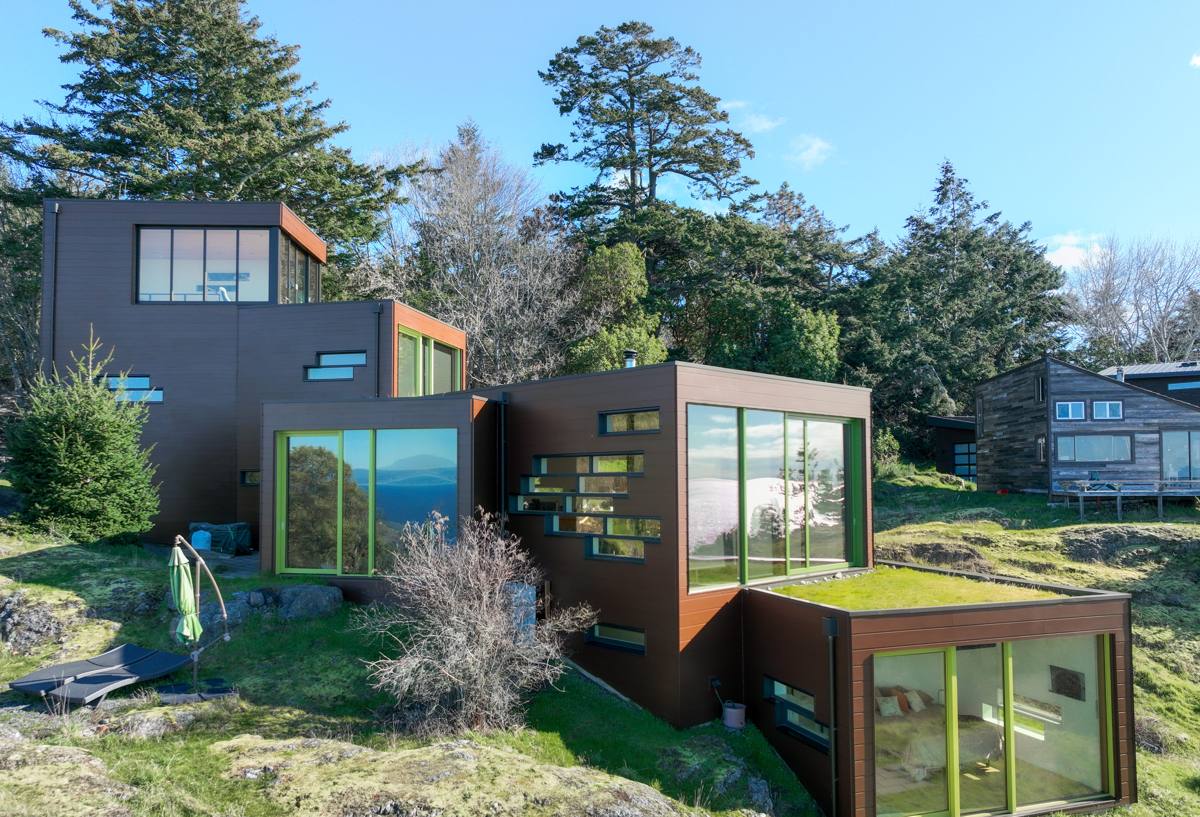
What "Custom" Actually Means Here
Custom doesn't mean expensive for the sake of it. It means the window is built or selected to fit an opening and a home that a stock size won't serve well. That shows up in a few common ways around here:
- Older homes with openings that have shifted slightly over decades — rarely a perfect rectangle anymore
- Non-standard proportions on farmhouse and cottage-style homes where a stock window would look out of place
- Rooms added or altered over the years where the original window opening doesn't match any current standard size
- Homeowners wanting taller sightlines, added grilles, or a specific glass tint or coating for sun exposure on a particular elevation
In all of these cases, "custom" means we measure the actual opening, account for how it will move seasonally, and either special-order a window built to that size or field-modify the installation so a near-standard unit fits correctly without gaps that get packed with foam and called good.
The Problems We Actually See on Nooksack-Area Homes
Moisture Intrusion at the Frame
Driving rain doesn't fall straight down here — wind pushes it sideways into the wall. Any window installed without proper flashing integration into the water-resistive barrier will eventually let water behind the siding, not through the glass. That's the failure point we find most often on older replacement jobs: the window itself is fine, but whoever installed it didn't lap the flashing correctly with the house wrap.
Moss and Algae Staining Around Frames
A long moss season means anything that stays damp for weeks at a time will grow something on it eventually. Vinyl and wood sills on shaded elevations pick up green and black staining faster than most homeowners expect. It's mostly cosmetic, but it's also a signal — if moss is thriving on your sill, that surface is holding moisture longer than it should.
Corrosion and Hardware Fatigue
Salt air moving inland from the coast is harder on window hardware than most people realize. Cheaper locks, hinges, and balance mechanisms corrode and stiffen years before the glass or frame shows any wear. It's one of the reasons hardware quality matters as much as frame material in this specific part of the county.
Condensation Between Panes
Failed seals on older double-pane units show up as fog or streaking between the glass that never clears. Once the seal is gone, the insulating gas is gone too, and no amount of cleaning fixes it — the sash has to be replaced.
Frame Material Comparison for This Climate
There's no single "best" material for every home — it depends on exposure, budget, and how the house is built. Here's how the common options hold up specifically against driving rain, salt air, and moss:
| Material | Rain/Moisture Behavior | Salt Air Resistance | Maintenance |
|---|---|---|---|
| Vinyl | Won't rot; seams need good design to shed water | Good — doesn't corrode | Low — occasional cleaning |
| Fiberglass | Very stable, minimal expansion/contraction | Excellent | Low |
| Wood-clad | Good if cladding stays intact; interior wood needs protection | Fair — hardware is the weak point | Moderate — periodic inspection of seals and cladding |
| Aluminum | Durable but conducts cold and can condensate | Poor without upgraded coatings | Moderate |
We steer most Nooksack-area homeowners toward vinyl or fiberglass for exposed elevations simply because they hold up with the least fuss. Wood-clad still has a place where the look matters and the homeowner is willing to keep an eye on it. We don't push aluminum on this side of the county unless a specific design calls for it — the condensation and corrosion trade-offs aren't worth it for most homes here.
What a Correct Installation Actually Involves
Sill Pan Flashing
Every opening should get a sloped sill pan that directs any water that does get past the window back outside, not down into the wall cavity. This is one of the most skipped steps on lower-end jobs because it takes extra time — and it's the single biggest reason for hidden rot showing up years later.
Integration With the Water-Resistive Barrier
Flashing tape needs to lap correctly with the house wrap above and below the window in the right shingle-style order, so water always drains down and out rather than getting trapped behind the siding. Done out of sequence, it works like a shelf that holds water against the sheathing instead of shedding it.
Shimming and Squaring
On older Nooksack-area homes especially, the opening is rarely perfectly square. Shimming has to correct for that so the sash operates smoothly and the seal compresses evenly all the way around — not just wherever the frame happens to touch first.
Interior and Exterior Sealing
Low-expansion foam at the frame gap, backer rod and sealant at the exterior trim, and proper interior air sealing all matter. Over-foaming a gap can actually bow a frame out of square, which is a mistake we see fairly often on DIY and rushed jobs.
Our Process, Start to Finish
1. On-Site Assessment
We look at each opening individually — not just measure the glass, but check the condition of the framing, sheathing, and existing flashing behind the trim. This is where we catch rot or moisture damage before it becomes a surprise mid-installation.
2. Measuring and Ordering
For true custom sizes, we measure multiple points on each opening since older openings are rarely uniform top to bottom. We account for the specific exposure of that wall — a west-facing wall catching driving rain gets treated differently than a sheltered side yard.
3. Installation Day
Old units come out carefully so we can inspect the framing underneath. Any soft or damaged wood gets addressed before a new window goes in — installing a new window over a rotten sill just hides a bigger problem. Flashing, shimming, and sealing follow in the correct order every time, not whatever's fastest.
4. Final Walkthrough and Cleanup
We check operation, seal lines, and exterior trim before we consider the job finished, and walk the homeowner through basic care specific to their exposure — particularly for shaded sides prone to moss.
What Drives the Cost
We won't quote a number without seeing the home, but the main factors that move a custom window job up or down in price are consistent:
- Whether it's a true custom size or a near-standard size with a modified installation
- Frame material and glass package (standard double-pane vs. upgraded low-E coatings)
- Condition of the existing framing and sheathing — hidden rot repair adds time and material
- Number of openings done at once (per-window cost typically drops with volume)
- Access and elevation — second-story or hard-to-reach openings take longer
- Trim and siding work needed to tie the new window into the existing exterior cleanly
A ballpark for most homeowners is that custom or near-custom sizing adds a real but not extreme premium over a stock replacement window of similar quality — the bigger cost swings usually come from framing repair or full trim/siding replacement around the opening, not the glass itself.
Why a Local Crew Matters for This Job
Custom window work rewards a crew that's already seen how homes in this specific area are built and how the weather treats them. We know which elevations in the Nooksack area take the worst of the driving rain, which sides tend to grow moss fastest, and how salt air ages hardware faster than the glass itself. That's not something you learn from a manual — it's from doing this work on homes in Whatcom County, season after season.
It also means straightforward accountability. We're not driving in from out of the area for one job and gone by the time a flashing detail fails two winters later. If something needs a follow-up look, we're still local and still reachable.
Living With Your New Windows: Moss Season and Beyond
Even a correctly installed window needs a little seasonal attention in this climate. A short list worth keeping to:
- Rinse sills and frames on shaded elevations a couple times during the wet months to keep moss and algae from establishing
- Check exterior sealant lines yearly for cracking or separation, especially after a hard winter
- Operate every window at least once each season so hardware doesn't seize from disuse and moisture
- Keep gutters and downspouts clear — overflow near a window opening undoes good flashing work fast
- Wipe down interior sills if condensation forms during cold snaps, so moisture doesn't sit on the sill long-term
None of this is high-maintenance — it's just what keeps a well-installed window performing for decades instead of years in a climate that doesn't let anything sit dry for long.
If you're weighing custom windows for a home in the Nooksack area, we're happy to take a look and give you an honest read on what your openings actually need — no pressure, no upsell. Use the form below to request a free estimate.