 Ferndale
 Siding Installation in Everson: Built for Whatcom County Weather
Everson sits inland along the Nooksack River in Whatcom County, in one of the wetter, greener corners of Washington State. Homes here deal with a long wet season, heavy tree cover in many neighborhoods, and the kind of persistent moisture that comes with river-valley living. Siding that works fine in a drier climate often struggles here — and siding that's installed even slightly wrong shows it within a few winters, not a few decades.
We install siding across Whatcom County, and Everson comes with its own set of conditions worth understanding before you replace a single board. This page covers what siding installation actually involves for a home in this area, why we've standardized on one product system, and what to expect if you hire us for the job.
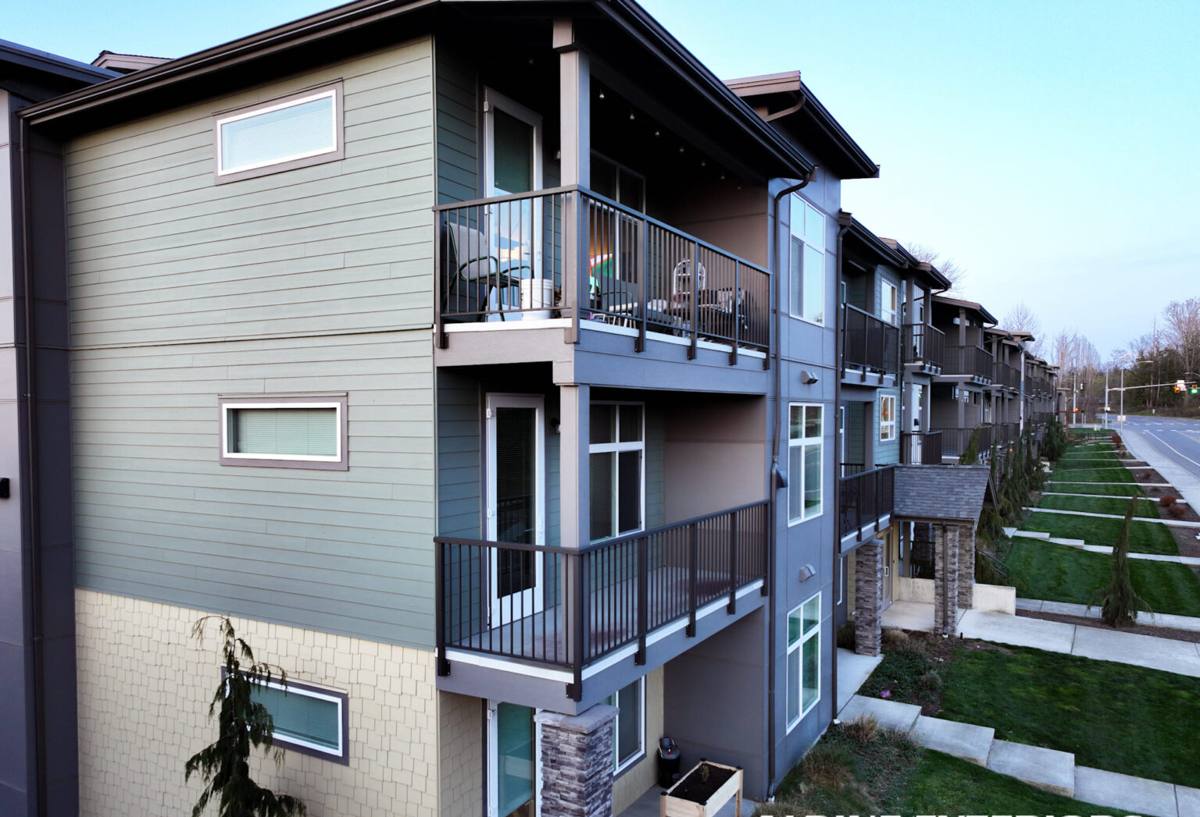
What Makes Everson's Climate Hard on Siding
Whatcom County's marine-influenced climate brings driving rain off the Salish Sea and long stretches of overcast, damp weather that can linger for months. Inland communities like Everson don't get direct salt spray the way waterfront properties do, but the same weather systems that carry salt air along the coast also push moisture-laden storms well inland — and the Nooksack River valley traps humidity close to the ground longer than more open, exposed sites do.
That combination shows up on siding in a few predictable ways:
- Extended moss and algae growth on north-facing and shaded walls, especially where tree cover blocks sun and airflow
- Prolonged wet-dry cycling that stresses paint films, caulk joints, and any siding material prone to swelling
- Ground-level moisture from agricultural fields, ditches, and the river itself, which raises humidity around foundations and lower wall sections
- Driving, wind-blown rain that finds gaps in flashing and trim that a calmer climate might never expose
None of this is unusual for Whatcom County — it's just a fact of the region. The point of good siding installation is designing for it, not hoping the weather cooperates.
What a Correct Siding Installation Actually Involves
Siding is a system, not just a set of boards nailed to a wall. Most siding failures we see on older Everson homes trace back to shortcuts in the parts you can't see once the job is finished.
Water-Resistive Barrier and Flashing
Every wall gets a continuous water-resistive barrier before a single piece of siding goes up, with careful attention to window and door flashing, roof-to-wall transitions, and any penetration through the wall. In a climate that gets driving rain for months at a time, this layer is what keeps incidental moisture from reaching the sheathing and framing behind it. Skipping or rushing this step is the single most common cause of rot we find when we tear off old siding.
Fastening and Clearances
Fiber cement siding has manufacturer-specified nailing patterns, fastener types, and clearances from grade, roof lines, and decks. Getting these wrong doesn't usually cause an immediate problem — it causes a slow one, showing up as swelling, cracking, or moisture intrusion two or three years down the road. We follow James Hardie's published installation instructions to the letter, because that's also what keeps the manufacturer's warranty intact.
Finish Details
Caulking, trim, and touch-up paint at cut edges matter more in a wet climate than a dry one. We factory-finish with ColorPlus wherever possible so the color and protective coating are baked on before the material ever reaches your house, then we seal field cuts properly rather than leaving raw edges exposed to the weather.
Why We Install Only James Hardie Fiber Cement
We don't install vinyl, LP SmartSide, cedar, or primed spruce siding, and that's a deliberate standard, not a limitation of what we're capable of doing. Each of those products has real strengths, but each also has a trade-off that doesn't hold up well against Everson's climate over the long run: vinyl can warp and fade with sun and temperature swings and traps moisture behind it if installed too tightly; engineered wood products depend entirely on every cut edge staying sealed, which is hard to guarantee over a home's lifetime; and cedar or spruce require repainting and moisture maintenance on a schedule most homeowners don't want to keep up with in a climate this wet.
James Hardie fiber cement is non-combustible, doesn't swell or rot the way wood-based products can, and holds its factory finish for years with minimal upkeep. It's also engineered in climate-specific HZ formulations, which matters in a region that cycles through wet winters and drier summers the way Whatcom County does. We stand behind one product system because we know exactly how it performs here, how to install it correctly, and how to back it with a real warranty.
Our Installation Process
Every Everson project follows the same sequence, regardless of the size of the home:
- On-site assessment — we look at your current siding, trim, moisture points, and any problem areas before quoting anything
- Written estimate — a clear scope of work, product selection, and price, with no pressure to sign on the spot
- Tear-off and inspection — old siding comes off and we check the sheathing and framing underneath for hidden rot or moisture damage before covering it back up
- Repairs as needed — any damaged sheathing or framing gets addressed before new siding goes on, not papered over
- Water-resistive barrier and flashing — installed to manufacturer spec at every window, door, and penetration
- Hardie panel or plank installation — fastened, spaced, and finished according to James Hardie's installation guidelines
- Final walkthrough — we go over the finished work with you before calling the job complete
Signs Your Everson Home May Need New Siding
A lot of siding problems are visible if you know what to look for. Walk your home's exterior and check for:
- Persistent moss or algae streaking that returns within weeks of cleaning
- Soft or spongy spots when you press on siding, especially near the bottom courses
- Visible warping, buckling, or gaps between boards
- Paint that's peeling, bubbling, or failing faster than it used to
- Cracks at corners, seams, or around window and door trim
- Rising energy bills that suggest air or moisture is getting past the wall assembly
- Visible rot at the bottom edge of siding near grade or decks
If you're seeing more than one of these, it's worth having a contractor take a look before the problem spreads to the framing underneath.
Cost Factors to Understand Before You Get Quotes
Siding costs vary by home size, complexity, and current condition, so we don't publish blanket pricing — but the factors below are what actually move a quote up or down, and understanding them makes it easier to compare estimates fairly.
| Factor | Why It Matters | Typical Impact on Cost |
|---|---|---|
| Extent of hidden damage | Rot or moisture damage found during tear-off requires sheathing or framing repair before new siding can go on | Moderate to significant |
| Home complexity | Dormers, multiple stories, and cut-up wall lines take more labor and material than simple rectangular walls | Moderate |
| Siding profile | Lap siding, panel systems, and shingle-style Hardie products differ in material and labor cost | Low to moderate |
| Trim and detail work | Corner boards, window trim, and fascia detailing add labor time | Low to moderate |
| Access and site conditions | Tree cover, tight lot lines, or difficult access can slow the job down | Low |
An honest quote should walk you through each of these rather than handing you a single number with no explanation of what's driving it.
Why a Crew That Already Works in Everson Matters
Installation quality is the biggest factor in how long siding lasts, but local familiarity still matters. A crew that regularly works in Everson and the surrounding Whatcom County communities already understands how the local moisture and moss patterns behave against different wall orientations, knows what permitting looks like in the area, and isn't guessing at how a product will hold up in this specific climate versus a drier region. That experience shows up in the small decisions made on-site — where extra flashing attention is warranted, how tight to run clearances near grade, which walls need the most careful moisture detailing — decisions that don't show up on a spec sheet but show up in how the siding performs ten years later.
Caring for Your New Siding After Installation
One of the practical benefits of James Hardie fiber cement with a factory ColorPlus finish is how little ongoing maintenance it needs compared to wood-based alternatives. In Everson's climate, we still recommend a periodic rinse-down to keep moss and algae from taking hold on shaded walls, an annual visual check of caulk joints and trim, and prompt attention if you ever notice a soft spot or a section pulling away from the wall. That's a fraction of the upkeep that painted wood or engineered wood siding demands in a climate this wet, and it's part of why we recommend it over the alternatives.
If your Everson home is due for new siding, or you're not sure whether what you have is still doing its job, we're happy to come take a look. Fill out the form below for a free, no-pressure estimate.