 Ferndale
 Windows in Semiahmoo Work Harder Than Windows Anywhere Else in Whatcom County
If you own a home in the Semiahmoo area, you already know your windows take a different kind of beating than a house a few miles inland. Salt-laden air off the water settles on glass, frames, and hardware every single day. Wind-driven rain doesn't just fall straight down here — it comes in sideways during winter storms, hunting for any gap in a window's seal. And the long, damp moss season that defines this stretch of the Pacific Northwest coast means anything with a horizontal surface or a shaded north face stays wet longer than it should. Windows that would last two or three decades in a drier, more sheltered part of the county can start failing in half that time near the water if they weren't installed with that exposure in mind.
This page is about one thing: doing window installation correctly for Semiahmoo's specific climate. Not a generic overview of window replacement — the details that actually matter when your home sits close to salt water and takes the full brunt of a Whatcom County winter.
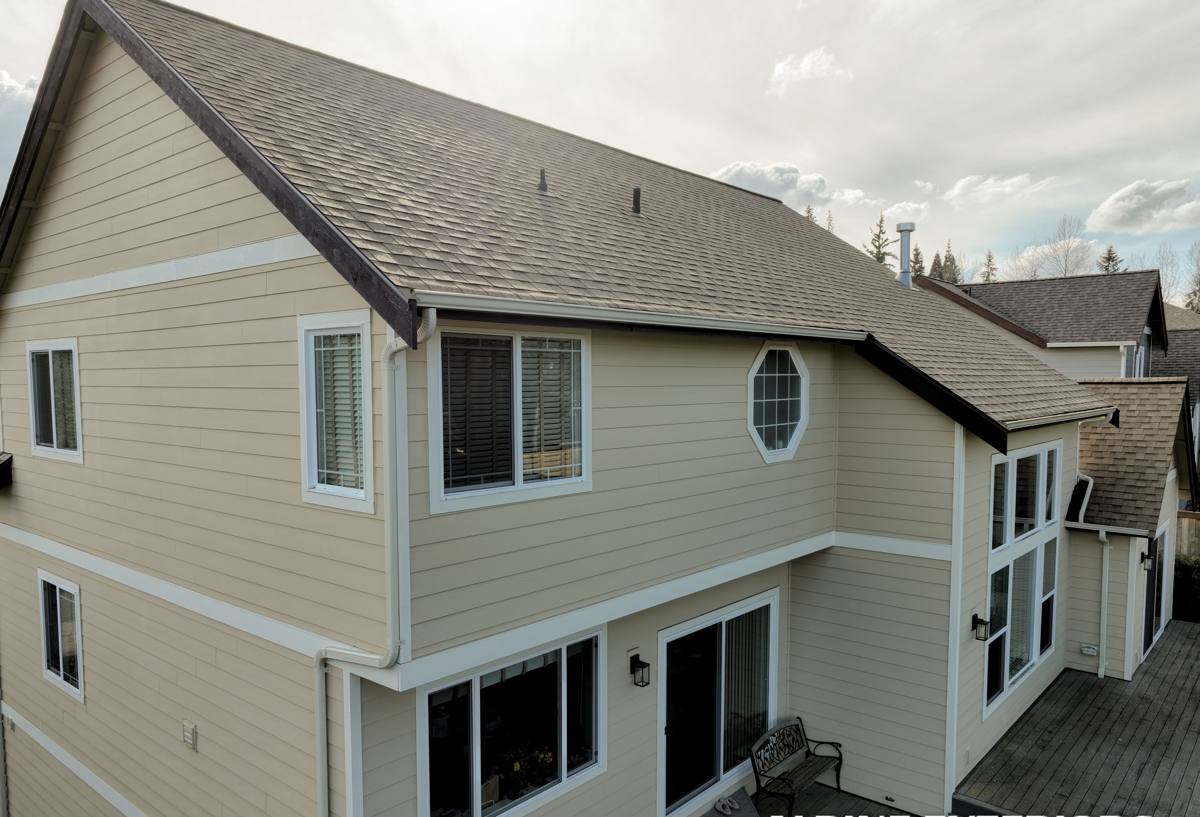
What Salt Air, Driving Rain, and Moss Actually Do to a Window
Homeowners who haven't dealt with coastal exposure before are often surprised by how specific the damage is. It's worth understanding the mechanisms, because they determine what "correct installation" looks like.
Salt Air and Corrosion
Salt is hygroscopic — it pulls moisture out of the air and holds it against whatever surface it lands on. On a window, that means the fine mist carried inland off the water settles on hardware, screws, hinges, and metal cladding, and stays damp far longer than plain rainwater would. Over years, that accelerates corrosion on anything that isn't genuinely rated for coastal use. Cheap fasteners rust, aluminum cladding pits, and mechanical hardware — locks, cranks, balance systems — starts to bind or fail well before the glass itself gives out.
Wind-Driven Rain and Water Intrusion
A window doesn't fail because rain hits it — it fails because rain gets behind it. Semiahmoo's exposure to wind coming off the water means rain regularly hits windows at an angle, under pressure, rather than sheeting straight down. That pressure finds any weakness in the flashing, the sealant, or the rough opening and pushes water into the wall cavity. Once that happens, the damage is often invisible for months or years — soft framing, mold, and rot inside the wall before anything shows up on the interior trim.
Moss, Mildew, and Prolonged Dampness
Whatcom County's long wet season keeps shaded and north-facing surfaces damp for extended stretches. Around windows, that shows up as mildew staining on sills, moss creeping into exterior trim joints, and wood components that never fully dry out between rain events. Persistent dampness is what turns a small sealant gap into a rot problem — it's rarely one big storm that causes the damage, it's months of low-grade moisture exposure the window was never built to handle.
Signs Your Current Windows Are Losing That Fight
Because coastal window failure is often gradual, it helps to know what to look for before it becomes a structural repair instead of a replacement decision.
- Fogging or condensation between panes of double- or triple-glazed windows — a sign the seal has failed
- Hardware that's stiff, corroded, or won't lock cleanly anymore
- Soft or discolored wood on the interior sill or exterior trim
- Visible moss, algae, or black staining on sills, especially on shaded or north-facing walls
- Drafts or a noticeable temperature difference near the window in winter
- Paint or finish that's bubbling, peeling, or chalking faster than on other parts of the house
- Windows that are difficult to open, close, or that no longer sit flush in the frame
Any one of these on its own might just mean a repair. Several at once, especially on a home that's had its original windows for 15+ years and sits close to the water, usually means the whole assembly — not just the glass — has reached the end of its useful life.
What Correct Installation Actually Involves
Most window failures we see in coastal exposure aren't a bad window — they're a window that was installed without accounting for wind-driven rain and salt exposure. The product matters, but the installation is what determines whether that product actually performs for 20-plus years near the water.
Flashing and Water Management
This is the part of the job nobody sees once it's finished, and it's the part that matters most. Proper installation means integrating window flashing with the home's existing weather-resistive barrier in the correct shingled order — so that any water that does get past the window sheds down and out, rather than getting trapped behind the siding. In a driving-rain climate like Semiahmoo's, sill pan flashing at the bottom of the rough opening is non-negotiable — it gives any water that does intrude a way out instead of a place to pool.
Sealing and Insulation
Gaps between the window frame and the rough opening need to be sealed and insulated correctly — not just caulked on the exterior face and called done. A quality low-expansion foam or backer rod and sealant around the full perimeter closes air and water paths without bowing the frame out of square, which can itself cause the window to seal poorly.
Hardware and Fastener Selection
Near salt water, fastener choice isn't a minor detail. Stainless steel or coated corrosion-resistant fasteners hold up where standard galvanized screws will start rusting within a few years. The same logic applies to hinges, cranks, and locking hardware — coastal-rated components cost a little more up front and save a service call five years down the road.
Level, Plumb, and Square
A window that isn't set level, plumb, and square won't operate correctly and won't seal correctly, no matter how good the product is. This is basic installation discipline, but it's the single most common thing rushed on cut-rate jobs — and it's the thing that causes the operational problems homeowners notice first.
Choosing a Frame Material That Actually Holds Up Here
There's no single "best" window material for every home — it depends on your budget, your home's style, and how much maintenance you're willing to take on. But near salt water, some trade-offs matter more than they would a few miles inland.
| Frame Material | Coastal / Salt-Air Durability | Maintenance Needs | Relative Cost |
|---|---|---|---|
| Vinyl | Good — won't corrode or rust; UV-stable modern formulations hold up well | Low — occasional rinsing to clear salt film | Lower |
| Fiberglass | Excellent — dimensionally stable, resists pitting and corrosion better than most materials | Low | Higher |
| Aluminum | Fair to good with proper coatings — uncoated or poorly finished aluminum pits and corrodes faster near salt air | Moderate | Mid |
| Wood / Wood-Clad | Requires the most protection — exposed wood is vulnerable to the region's prolonged dampness and moss growth | High — regular refinishing and moisture checks | Higher |
For most Semiahmoo homes, vinyl and fiberglass strike the best balance of coastal durability and manageable upkeep. We're not against wood or aluminum windows — some homeowners want the look wood provides, or already have aluminum-frame architecture to match — but we're honest about what each material asks of you in this specific climate before you commit to it.
How We Approach a Semiahmoo Window Installation Project
- On-site assessment. We look at existing window condition, framing health, exposure direction, and any signs of past water intrusion before recommending anything.
- Material and product discussion. We walk through frame material, glazing options, and hardware suited to your home's specific wind and salt exposure — not a one-size-fits-all recommendation.
- Removal and opening inspection. Once old windows come out, we check the rough opening and surrounding framing for hidden rot or moisture damage before anything new goes in. This is often where coastal exposure shows up that wasn't visible from outside.
- Correct flashing and sealing. Sill pan flashing, properly shingled water-resistive barrier integration, and full-perimeter sealing — done in that order, every time.
- Precision setting. Windows are shimmed, leveled, plumbed, and squared before final fastening, then tested for smooth operation.
- Interior and exterior finish work. Trim, caulking, and paint or finish matched to the rest of the home's exterior.
- Final walkthrough. We confirm every window operates, locks, and seals the way it should before we consider the job done.
Why Local Experience in Semiahmoo Specifically Matters
A lot of window installation problems trace back to a crew applying a general Pacific Northwest approach to a specific coastal microclimate. Semiahmoo's proximity to open water means more consistent wind-driven rain exposure and more salt content in the air than you'd find on a typical Ferndale or inland Whatcom County job. A crew that's worked in this specific area knows to size up flashing and sealant details accordingly, knows which fastener and hardware upgrades are worth the extra cost here, and has already seen how the local moss and dampness cycle affects sills and trim over time.
That's the difference between a window installation that looks right at completion and one that's still performing correctly ten winters later.
Maintaining Your Windows Once They're In
Correct installation dramatically extends a window's service life near salt water, but it doesn't eliminate maintenance entirely. A little seasonal attention goes a long way in this climate.
- Rinse frames and glass periodically to clear salt film buildup, especially after storms
- Keep gutters and nearby drainage clear so water isn't pooling near window openings
- Check and re-caulk exterior sealant joints every few years, sooner if you notice cracking
- Clear moss or algae from sills and trim promptly rather than letting it establish
- Operate locks and hardware periodically through the winter so they don't seize from disuse and moisture
None of this is complicated, but skipping it is exactly how a well-installed window ends up with an avoidable problem a decade in.
Get a Straight Answer About Your Windows
If your windows are showing any of the warning signs above, or you're simply planning ahead for a home near the water in Semiahmoo, we're happy to take a look and give you an honest read on what you're working with — no pressure, no upsell. Use the form below to request a free estimate, and we'll walk the property with your home's actual exposure in mind, not a generic checklist.