 Ferndale
 Windows Built for a Kendall Winter, Not a Showroom
Homes in the Kendall area take a specific kind of beating. Between the marine air drifting in off Bellingham Bay and the Georgia Strait, the near-constant fall and winter rain, and the long stretch of gray, damp months where moss and mildew get a real foothold, a window that's merely "fine" somewhere drier will show its age fast here. Frame corners split, seals fail, and glass fogs between panes years before it should. We install and repair windows around Ferndale and the surrounding Whatcom County communities, and Kendall is part of our regular route — not a place we drive out to once and never see again.
This page is about window replacement specifically for Kendall homes: what the local climate actually does to windows, what a correct installation looks like, and how to tell a job that will hold up for twenty years from one that will need attention again in five.
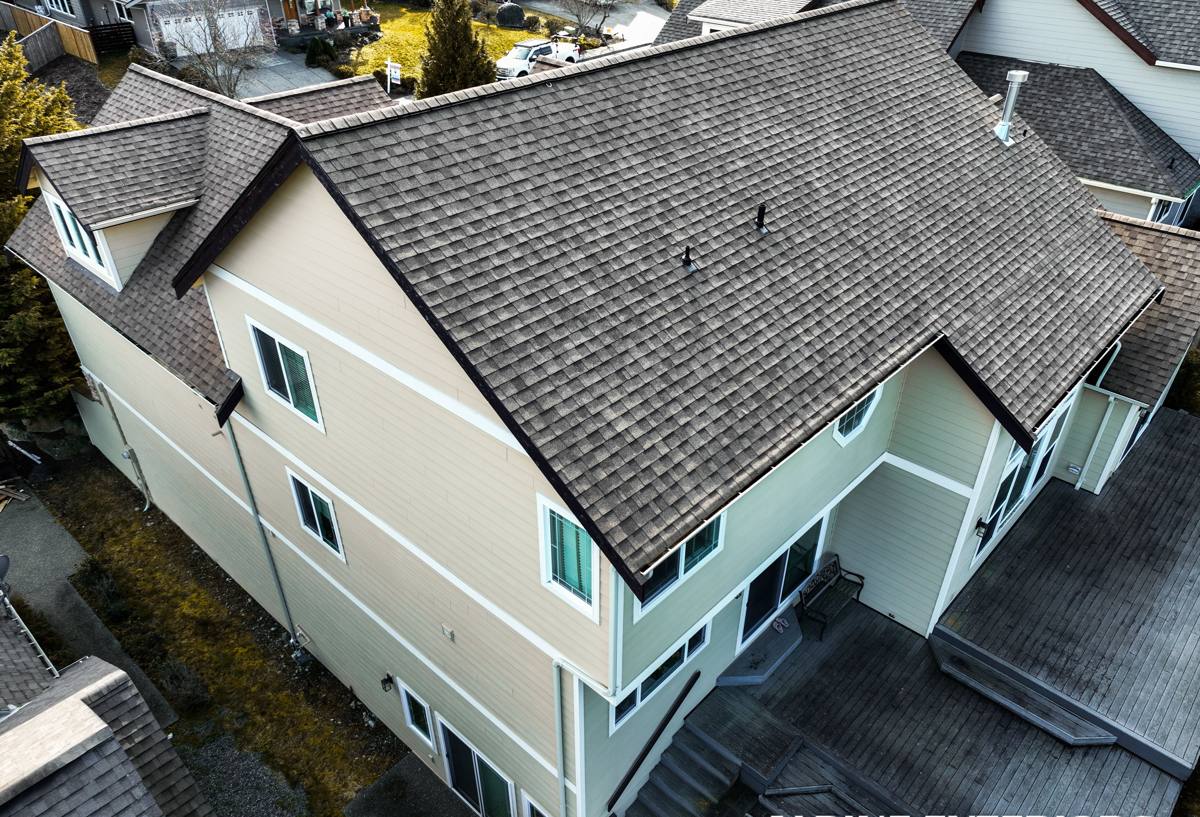
What Salt Air, Driving Rain, and Moss Season Actually Do to a Window
It helps to understand the mechanism, not just the symptom. Three things work against windows in this part of Washington:
- Salt-tinged marine air accelerates corrosion on metal hardware — hinges, cranks, and lesser-grade fasteners — and can degrade weaker aluminum or vinyl compounds faster than inland climates would.
- Driving, wind-blown rain doesn't fall straight down here, it gets pushed sideways into the wall assembly. A window that relies on caulk alone instead of proper flashing will eventually let water behind the trim, where it does damage you can't see until the drywall or sheathing is already soft.
- A long moss and mildew season means anything that traps moisture — poor drainage at the sill, a missing weep system, wood trim without a paint or stain barrier — stays wet longer and grows something on it. Once moss or mildew sets into wood trim around a window, it's a maintenance problem for the life of that trim.
None of this means Kendall homes need exotic materials. It means the installation details — flashing, sealant choice, drainage path — matter more here than they would in a drier climate, and cutting corners on them shows up sooner.
Signs a Kendall Home's Windows Need Replacing, Not Just Repair
Not every drafty window needs full replacement. Here's a practical checklist we actually use when evaluating a home:
- Visible fogging or a milky haze between panes — the seal has failed and the gas fill (if there was one) is gone for good.
- Soft or spongy wood at the sill or lower frame corners — a sign moisture has been getting behind the window, not just condensing on the inside.
- Windows that are difficult to open, close, or lock — frames can warp or swell from repeated wetting and drying cycles.
- Visible daylight or a noticeable draft along the frame edge when it's windy.
- Persistent moss, algae, or black mildew staining on the exterior trim that comes back within a season of cleaning it off.
- A noticeable jump in heating costs during the wet months with no other explanation.
If what you're seeing is limited to failed weatherstripping or a stuck sash, that's often a repair, not a replacement. We'll tell you honestly which situation you're in — a straightforward repair costs a fraction of full replacement and there's no reason to sell a homeowner more than the house needs.
What a Correct Window Replacement Job Involves
Removal and Inspection
The old window comes out carefully so we can actually see the condition of the rough opening underneath — the studs, the sill, and whatever house wrap or building paper is back there. This is the point where hidden rot or old water damage gets found. On a home that's been sitting in Whatcom County weather for a few decades, it's not unusual to find some softened framing that needs to be addressed before a new window goes in. Skipping this step and just dropping a new window into a bad opening is how a "new" window ends up with the same leak problem in three years.
Flashing and Weatherproofing
This is the step that matters most for this climate. Proper flashing integrates with the house wrap in a shingled, water-shedding order — meaning each layer overlaps the one below it, so water is always directed outward and down, never trapped behind the wall. Sealants are a backup to good flashing, not a substitute for it. A window that's caulked in place without correct flashing may look fine on installation day and still fail wet-season testing eighteen months later.
Insulation and Air Sealing
The gap between the new window frame and the rough opening gets sealed with an appropriate low-expansion foam or backer rod and sealant — not stuffed with excess fiberglass insulation, which does little to stop air movement and nothing to stop bulk water. This step affects both your energy bills and how drafty the room feels on a windy January night.
Final Fit, Hardware, and Finish
The sash gets checked for square, smooth operation, and a tight seal at every closing point. Exterior trim is fitted and finished in a way that sheds water rather than collecting it at a joint. Interior trim is finished to match the room. We walk the homeowner through operation before we call the job done.
Choosing a Window Type for This Climate
There's no single "best" window — the right choice depends on the home's exposure, budget, and how much maintenance the homeowner wants to take on. Here's how the common frame materials compare for a wet, coastal-influenced climate like Kendall's:
| Frame Material | Moisture Resistance | Maintenance | Typical Cost Position |
|---|---|---|---|
| Vinyl | Very good — won't rot, minimal corrosion risk | Low — occasional cleaning only | Most affordable |
| Fiberglass | Excellent — dimensionally stable in wet/dry cycles | Low | Mid to upper range |
| Wood (unclad) | Requires diligent upkeep to resist rot and moss staining | High — regular painting or staining | Mid to upper range |
| Wood-clad (vinyl or aluminum exterior) | Good — exterior shell protects the wood core | Moderate — interior wood still needs occasional attention | Upper range |
For most Kendall homes, we steer people toward vinyl or fiberglass for anything facing prevailing wind and rain, simply because it removes an ongoing maintenance chore in a climate that doesn't give painted wood much of a break between wet spells. If a homeowner wants the look of wood on the interior with less exterior upkeep, wood-clad is a reasonable middle ground. We'll walk through the trade-offs for your specific home rather than pushing one product line.
Glass Packages Worth Considering
Beyond frame material, the glass package matters for comfort and condensation control:
- Double-pane, argon-filled, low-E glass is the standard baseline for this region and handles typical Whatcom County temperature swings well.
- Triple-pane adds cost and weight but is worth discussing for north-facing rooms or homes closer to open water where wind exposure is higher.
- Warm-edge spacers (instead of older metal spacer bars) reduce cold spots at the glass edge, which cuts down on interior condensation during cold, damp mornings.
How Our Process Works
We keep the process straightforward because most homeowners have never gone through a window replacement before and don't need extra steps added to it:
- Free on-site estimate. We look at the actual windows and openings, not just a photo, since rot and drainage issues aren't always visible from inside.
- Written scope and pricing. You know what materials, what work, and what it costs before anything is ordered.
- Measuring and ordering. Replacement windows are made to the exact opening — this is not a stock size off a shelf.
- Installation. Most single-window jobs finish in a day; whole-home replacements are scheduled around weather windows to keep openings covered and dry.
- Walkthrough and cleanup. We check operation with you and clear the site before we leave.
Why a Crew That Already Works in Kendall Makes a Difference
Window replacement isn't a one-size-fits-all trade. A crew that regularly works Ferndale and the surrounding Whatcom County area already understands how local homes were built across different eras, what building departments here expect for permitting when it applies, and how the region's weather patterns actually behave through the seasons — not from a manual, but from having pulled apart enough old window openings in these conditions to know what to expect. That local familiarity shortens the estimate process, reduces surprises once the old window comes out, and means we're not learning the region's quirks on your house.
It also matters for accountability. A crew that lives and works in this area has a reputation to protect with neighbors, not just a single job to finish and move on from.
Living With New Windows Through the Wet Season
A correctly installed window is close to maintenance-free, but a little seasonal attention keeps it that way:
- Clear debris and moss buildup from window sills and tracks before the wettest months set in — trapped organic matter holds moisture against the frame.
- Check that exterior caulking at the trim edges stays intact; a hairline gap is easy to reseal before it becomes a path for water.
- Operate each window at least occasionally through the year so seals and hardware don't seize from disuse.
- Keep gutters and downspouts clear — overflowing gutters are a common, avoidable source of water running down onto window trim.
None of this is heavy maintenance. It's the difference between a window that looks and performs the same in year fifteen as it did in year one, and one that starts showing problems early because moisture had a place to sit.
Get a Straight Answer on Your Windows
If you're not sure whether your Kendall-area home needs a full window replacement, a partial one, or just some targeted repairs, the honest answer usually comes from actually looking at the openings — not guessing from a description. We offer free, no-pressure estimates for homes in and around Kendall and Ferndale, and we'll tell you plainly what we find, including if the answer is less work than you expected. Use the form below to get a time that works for your schedule.